

Pine Kitchen Dining Table
When you search for a pine kitchen dining table, you are looking at utilitarian surfaces built to handle daily domestic life.
Pine Kitchen Dining Table
A pine kitchen dining table is a practical domestic piece designed for food preparation and family meals. These tables originate primarily from the nineteenth and early twentieth centuries, spanning Victorian, Edwardian, and regional country styles.
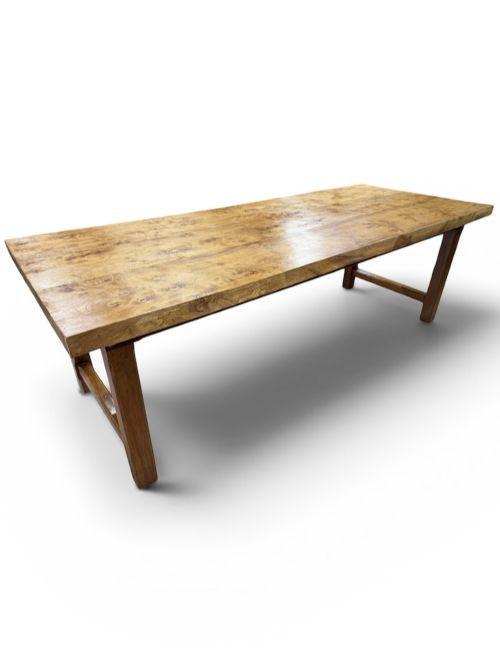
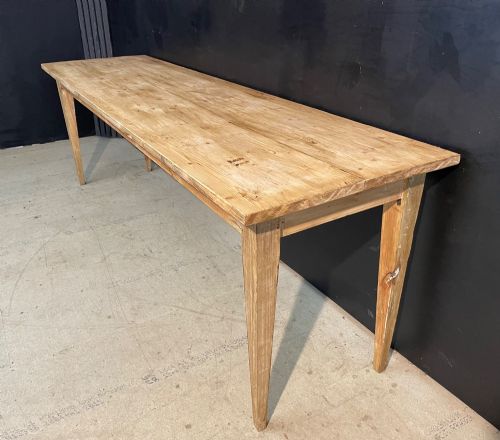
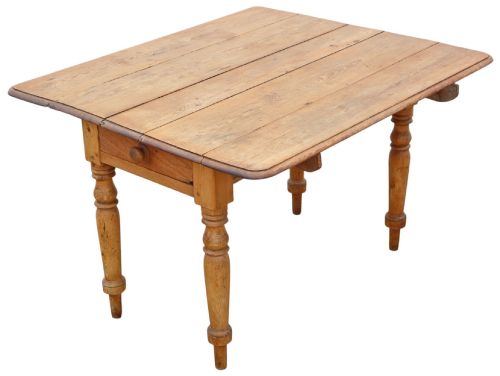
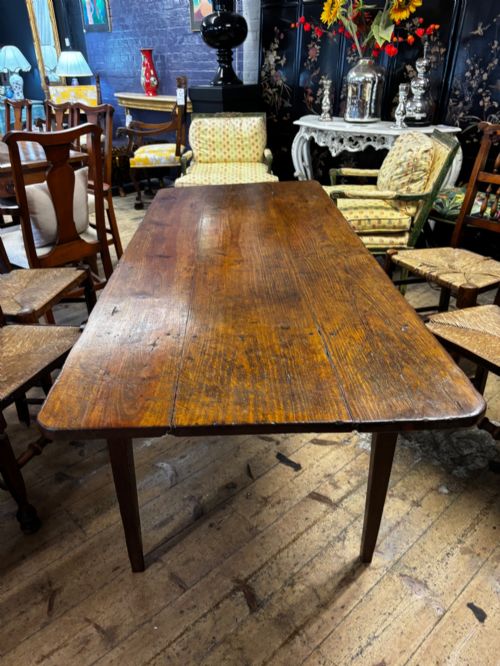
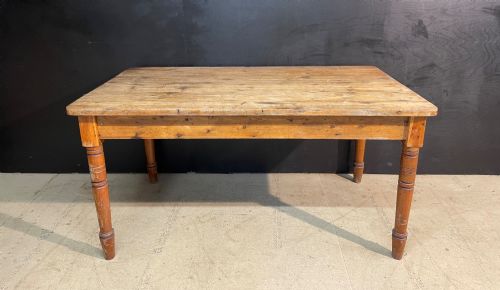
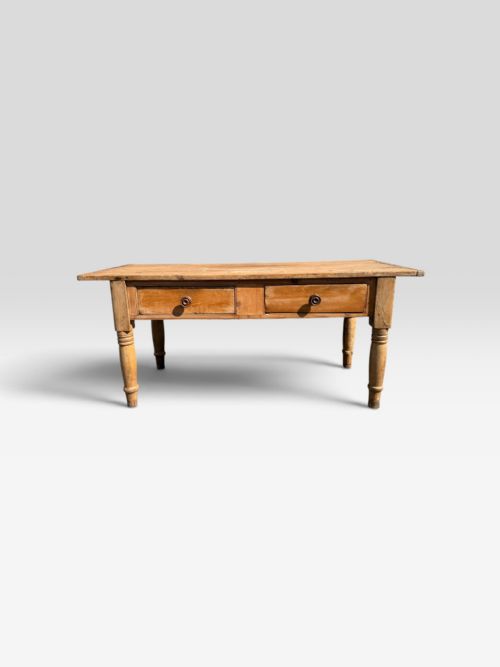
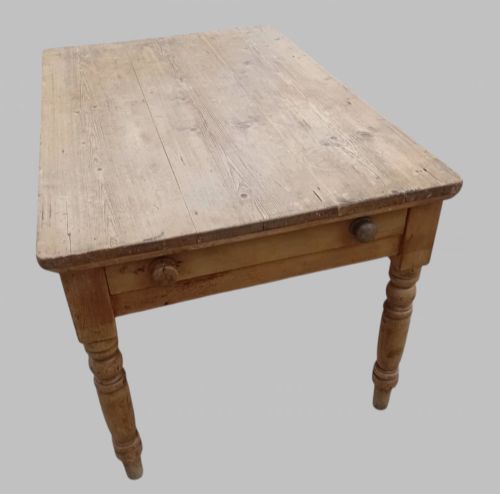
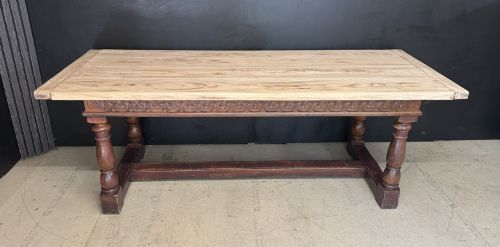
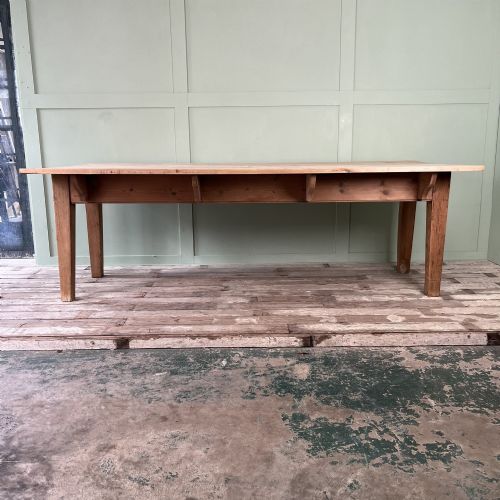
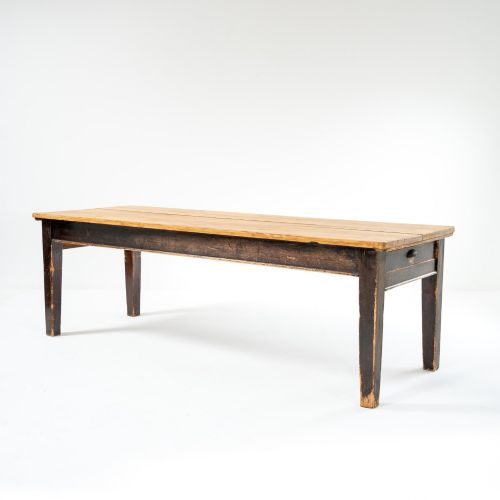
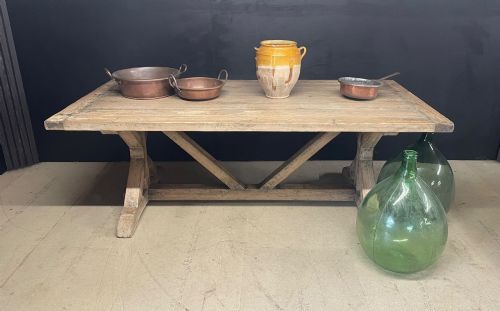
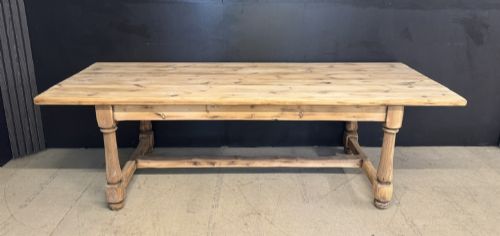
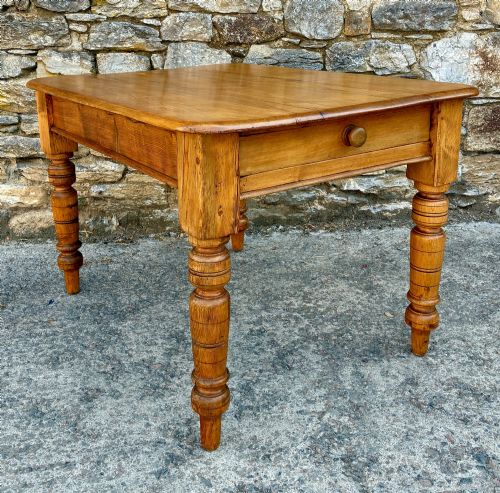
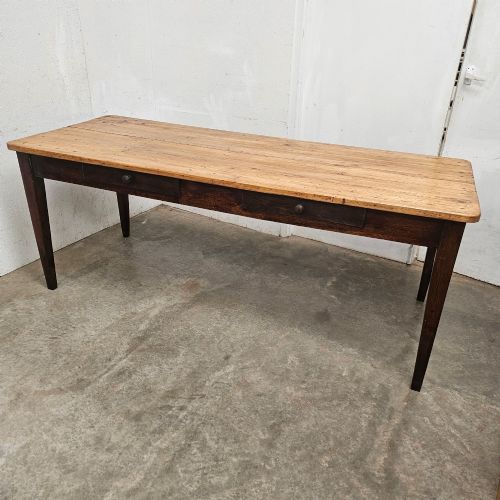
The version you are most likely to meet on this page is the farmhouse or refectory table, often featuring a rectangular plank top and turned or tapered legs. Many examples include integrated drawers for storage or drop leaves to adjust the surface area.
Originating from British, French, Swedish, and wider European traditions, these pieces reflect the specific utilitarian needs of rural and urban kitchens alike. Their forms range from small four-seat kitchen tables to large multi-seat harvest tables.
Materials and construction
Construction relies heavily on solid timber, with pine being the primary material alongside complementary woods like oak, fruitwood, elm, and pitch pine used for structural strength or contrasting tops. Scrub tops, designed to be repeatedly scoured clean with water and sand, appear frequently on kitchen and pantry tables.
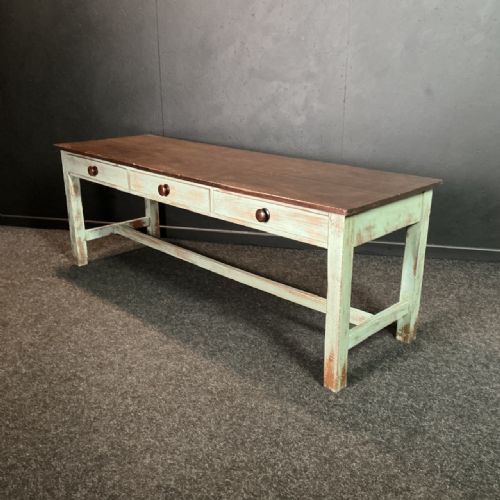
Joinery methods typically include traditional pegged mortise and tenon frames, solid plank construction, and dovetailed drawers. Secondary materials such as iron and brass hardware reinforce joints, while painted finishes sometimes appear on the bases or skirts.
Some multi-drawer tables boast up to eight separate compartments, ensuring maximum storage for frantic kitchen prep.
What separates the range
The distinction between tiers of quality rests upon the integrity of the timber and the depth of the construction. Tables fashioned from dense pitch pine or older slow-grown timber exhibit greater resilience than younger softwoods.
Proportion and scale dictate the upper end of the range, where larger refectory formats or tables retaining original painted legs and functioning end drawers demonstrate superior domestic utility. Subtle details like thick plank tops and uncompromised structural frames elevate an ordinary kitchen table into a notable piece.
The Pine Kitchen Dining Table Glossary
- Scrub top
- A bare wooden tabletop designed to be repeatedly scrubbed with water and abrasives to maintain hygiene. This finish shows the natural grain stripped of any polish or wax.
- Refectory table
- A long, narrow dining table historically used for communal dining. In domestic settings, these pieces provide substantial length and seating capacity.
- Drop leaf
- A hinged section of the tabletop that can be folded down to reduce the overall surface area. This mechanism allows the table to fit into smaller kitchen spaces when not in use.
- Frieze
- The horizontal band or rail running beneath the tabletop, frequently housing one or more storage drawers. The construction of this area often dictates the stability of the legs.
- Pitch pine
- A durable softwood variety containing high resin content, yielding a harder and darker surface than standard pine. It provides exceptional strength for heavy-use kitchen furniture.
Pine Kitchen Dining Table: Frequently Asked Questions
What is a pine kitchen dining table?
A pine kitchen dining table is a traditional utility table constructed primarily from softwood timber for household food preparation and dining.
These pieces were standard fixtures in nineteenth- and early twentieth-century homes, built to endure rigorous daily use.
How do I care for a scrub top?
A scrub top requires gentle cleaning with mild soap and water, avoiding excessive moisture that can warp the old timber planks.
Applying a light coat of natural wax helps protect the dry wood without sealing the authentic historical surface.
How can I tell the period of a table?
Dating relies on examining the construction methods, such as hand-cut dovetails in drawers, square-headed nails, and the density of the pine timber.
Earlier nineteenth-century examples often feature heavier planking and pegged joints, whereas later pieces show standardised machine milling.
Did these tables always have drawers?
Drawers were incorporated based on the intended domestic function, particularly in kitchen and pantry tables used for storing utensils and linens.
Many examples feature single or multiple end drawers, though simpler refectory and harvest formats were built without them.