


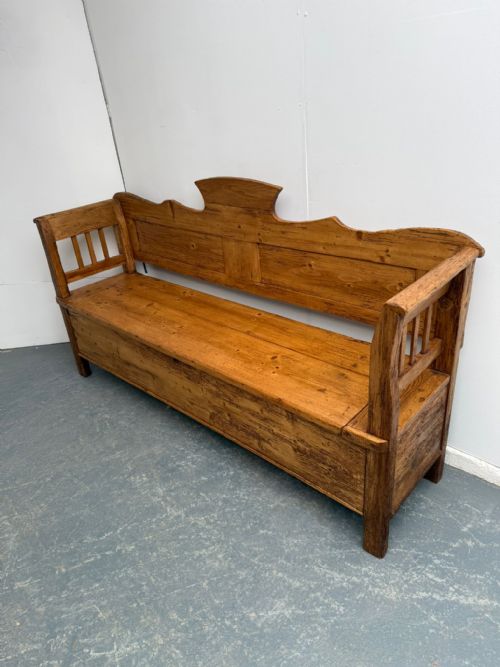


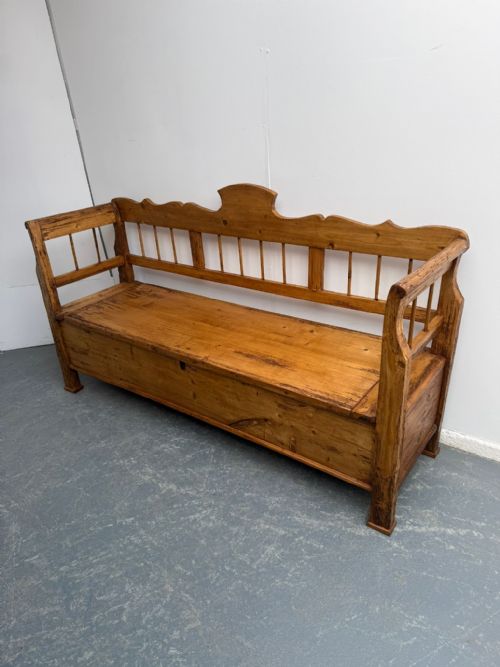
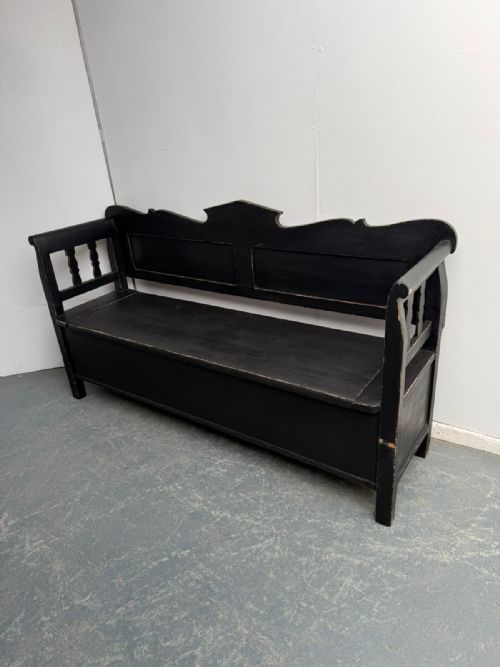


Pine Hall Storage Bench
A pine hall storage bench offers practical seating and discreet concealment, combining rustic character with everyday utility in the entrance.
Pine Hall Storage Bench
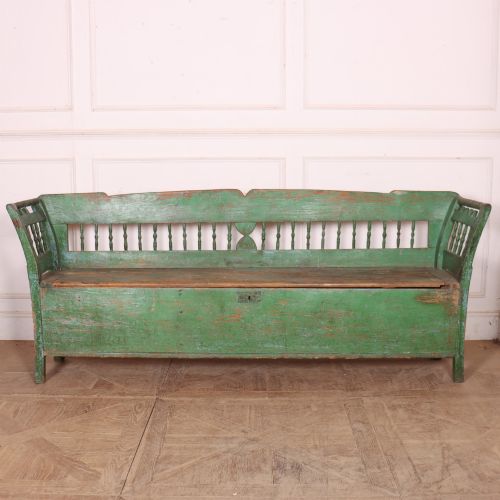
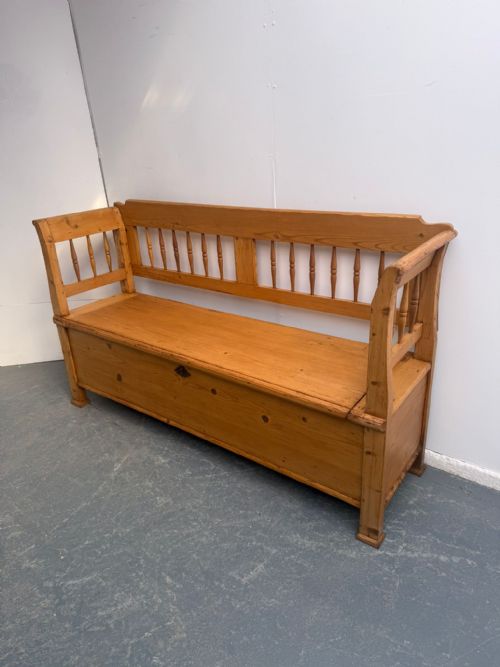
A pine hall storage bench serves as a functional seating option for corridors and vestibules, frequently incorporating a compartment beneath the seat for boots and outdoor gear. These items appear across multiple eras, spanning the eighteenth century through the Edwardian period, with Victorian and nineteenth-century examples forming the core of the selection.
The regional origins of these pieces vary widely, drawing on Scandinavian, Austrian, Italian, and English traditions. Buyers encounter regional variants including Hungarian box settles, Swedish painted sofas, and English hall benches, each reflecting local cabinet-making methods of the countryside.
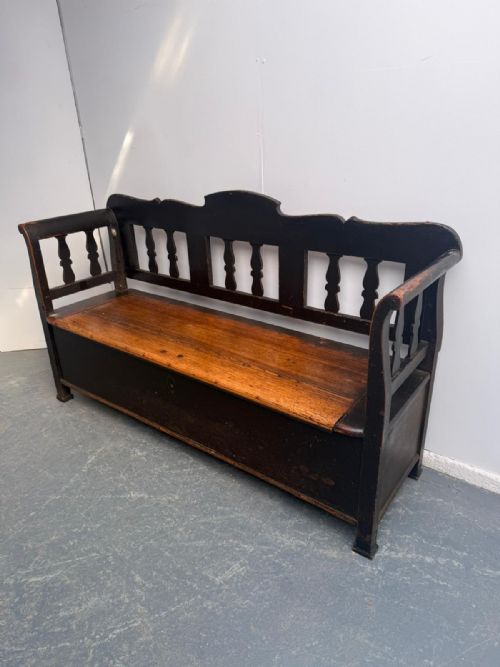
Forming the intersection of seating and storage, these settles and benches range from simple two-seater configurations to larger four-seater panelled formats. The construction prioritises heavy utility, often utilising pine as the primary timber alongside iron hardware.
Materials and construction methods
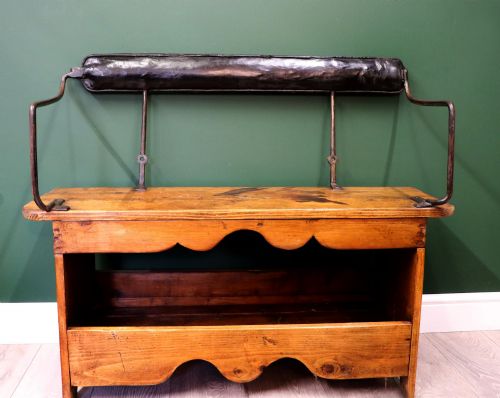
Construction relies heavily on solid pine planks, sometimes combined with walnut or supported by wrought iron and leather elements. Carpenters built these pieces for robust service, utilising panelled backs and box bases to ensure structural rigidity over decades of heavy daily use.
Surface finishes divide clearly between waxed treatments that highlight the natural grain of the timber and original applied paint in black, grey, or traditional hues. These protective coatings were renewed or maintained over generations, preserving the underlying wood while recording the decorative preferences of different European regions.
One Edwardian hall seat arrives with a novel twist.
Distinguishing quality in rustic seating
The standard of a piece depends on the integrity of its original construction and the preservation of its primary surface finish. Examples retaining untouched painted surfaces or deep, patinated wax hold greater integrity than those stripped or overly restored in later workshops.
Proportion and scale distinguish finer regional examples from utilitarian utility items. Well-proportioned panelled backs, integrated box compartments with sound internal floors, and original iron hinges elevate a piece beyond standard workshop production.
The Pine Hall Storage Bench Glossary
- Settle
- A wooden bench with a high back, solid arms, and a box compartment beneath the seat. This form protected sitters from draughts in corridors and large halls.
- Box settle
- A specific variant of bench featuring a hinged seat that lifts to reveal a deep storage cavity. These items served a dual purpose for sitting and keeping household linens or footwear.
- Gustavian
- The Swedish neoclassical style popular during the late eighteenth and early nineteenth centuries. Pieces in this aesthetic often feature restrained carving and pale painted finishes.
- Panelled hall bench
- A large seating unit constructed with framed wooden panels forming the backrest. This technique provided stability for large items positioned in open entranceways.
- Country primitive
- A descriptor for furniture made by local rural craftsmen using straightforward techniques rather than urban joinery standards. These objects value utility and direct construction over refined ornamentation.
Pine Hall Storage Bench: Frequently Asked Questions
How do I use a storage bench in a modern hallway?
Place the bench against a main wall near the entrance to provide a convenient seat for putting on shoes. The interior compartment accommodates clutter like umbrellas, bags, and outdoor accessories.
Ensure there is sufficient clearance for the seat lid to open fully if the design incorporates a box storage base. Pair the timber surface with simple textiles to soften the rustic appearance in contemporary spaces.
Are these benches comfortable for daily seating?
Most antique hall benches were designed for brief utility rather than lounging, featuring upright wooden backs and solid seats. Adding a loose linen or wool cushion provides extra comfort for prolonged sitting.
The depth of the seat and the height of the backrest vary significantly between Hungarian settles and Swedish painted sofas, so check dimensions relative to your space.
How do I care for antique waxed pine?
Apply a traditional beeswax polish sparingly with a soft cloth to nourish the dry timber and maintain a soft sheen. Avoid placing the bench near direct heat sources or strong sunlight, which can dry out the pine and cause the wood to split.
Dust the carved details and panelled joints regularly with a dry brush to prevent dirt accumulation in the grain.
How can I tell original paint from later decoration?
Original paint typically exhibits natural wear, fine craquelure, and micro-abrasions consistent with decades of use in a domestic setting. Inspect edges and high-contact areas where layers reveal age-related thinning.
Surface textures that feel uniform or modern synthetic paints applied over stripped timber indicate subsequent redecoration rather than untouched historical finishes.