
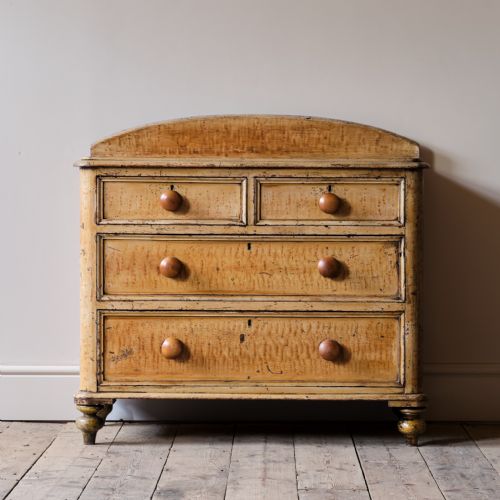


Pine Folk Art Commode
These pine folk art commode pieces bring rustic character to a room through traditional painted finishes and sturdy softwood construction.
Pine Folk Art Commode
When you search for a pine folk art commode, you are looking at practical storage furniture decorated with traditional hand-painted finishes, regional motifs, or simulated wood grains. The pieces collected here span the eighteenth, nineteenth, and early twentieth centuries, reflecting rural European craftsmanship from countries such as Hungary, Sweden, Austria, and the Netherlands. While the phrase specifically points to a commode, the selection includes related forms like chests of drawers, cupboards, and even a child's high chair.
Chest of drawers and cupboard forms predominate in this selection, often constructed with multiple storage drawers or enclosed shelving. You are most likely to meet nineteenth-century examples, along with specific dated pieces from nineteen-ten, nineteen-twenty, and nineteen-thirty, showing how domestic furniture was personalised by local makers. Styles range from continental folk art and rustic country to Scandinavian country and Victorian folk art.
The regional origins dictate much of the character you see in these items, whether it is Hungarian, Austrian, or Swedish work. Softwood construction forms the basis of every item, allowing decorators to apply thick coats of paint, scumble glazes, or simulated birch effects. Buyers choose these objects for their honest utility combined with colourful, decorative surfaces that bring warmth to modern interiors.
Materials and technique
Makers relied on pine and softwood timbers for the primary carcases, utilising readily available local woods that were easy to shape and assemble into chests and cupboards. Iron and brass hardware, such as hinges and pulls, provided durable functional details that secured doors and drawers against daily wear.
Paint is the defining medium of these pieces, applied in original layers that often include scumble glazes or simulated birch patterns to mimic costlier hardwoods. Artisans used hand-painting techniques to decorate surfaces with folk motifs, preserving the brush marks and subtle imperfections of regional workshops.
One cheerful Swedish chest wears a coat of simulated birch paint so convincing it might briefly fool a forest.
What varies in quality
The integrity of the original painted surface separates ordinary examples from exceptional survivals, particularly when layers remain untouched by later redecoration. Surface treatments that retain their authentic scumble glazes, simulated birch graining, or regional folk motifs demonstrate superior decorative value.
Structural honesty and the retention of period hardware, such as brass and iron fixtures, define the better specimens in this range. Pieces that keep their original softwood carcases intact without extensive timber replacement offer a more truthful representation of rural European craftsmanship.
Gemla Fabrikers
The Pine Folk Art Commode Glossary
- Scumble pine
- A timber surface treated with a translucent glaze that is manipulated with combs or brushes to create decorative patterns or simulated wood grains. This technique was widely used in the nineteenth century to elevate common softwood.
- Softwood
- Timber derived from conifers such as pine, which forms the physical foundation of all items in this category. It provided an affordable and workable material for regional cabinetmakers.
- Continental folk art
- A broad style descriptor encompassing traditional decorative items made by rural communities across mainland Europe. It is characterised by local manufacturing traditions and hand-applied ornamentation.
- Original paint
- Pigment layers applied during the period of manufacture that have survived without subsequent overpainting. Collectors prize these surfaces for their authentic historical patination.
Pine Folk Art Commode: Frequently Asked Questions
What is a pine folk art commode?
A pine folk art commode is a regional storage piece built from softwood and decorated with hand-applied paint, scumble glazes, or simulated wood grains. These items reflect the domestic traditions of rural European makers across the eighteenth, nineteenth, and early twentieth centuries.
They serve as both functional chests of drawers and decorative focal points that bring colourful historic character into contemporary living spaces.
How do I care for original painted pine?
Care for original painted surfaces by keeping them away from direct sunlight and maintaining stable room humidity to prevent paint flaking. Dust gently with a dry, soft cloth and avoid chemical cleaning agents that can strip historic pigment layers.
Treat the softwood carcase with mild, natural waxes only if the timber appears dry, taking care to test any product on an unnoticeable area first.
Where were these pieces made?
These pieces originated in various rural European regions, including Hungary, Sweden, Austria, and the Netherlands. Local workshops produced them using native softwood timbers and regional decorative techniques.
Each area developed distinct painting styles, from simulated birch finishes to continental folk motifs, which help identify their geographic roots.
How can I tell the age of these items?
Dating relies on construction methods, timber characteristics, and the physical evidence of the painted surfaces. Nineteenth-century and earlier pieces often display hand-cut joinery, forged iron hardware, and wear patterns consistent with long domestic use.
Specific dates or periods recorded by makers or dealers, such as nineteen-ten or the Victorian era, provide further chronological context for individual chests and cupboards.