
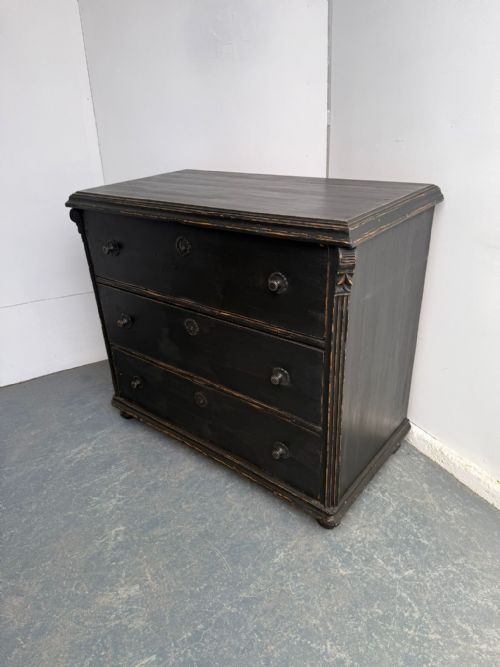
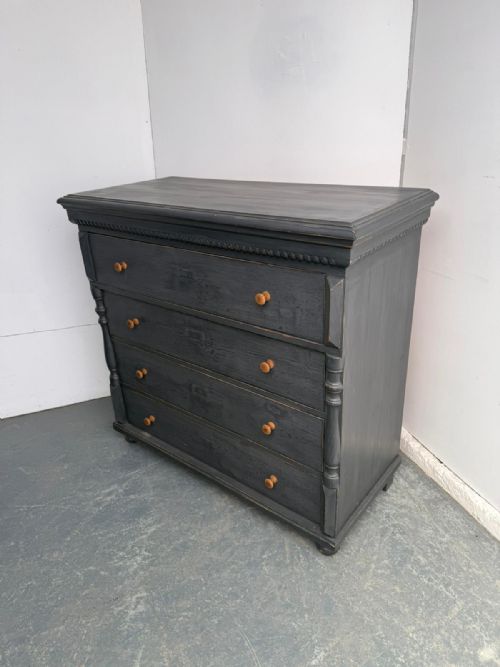
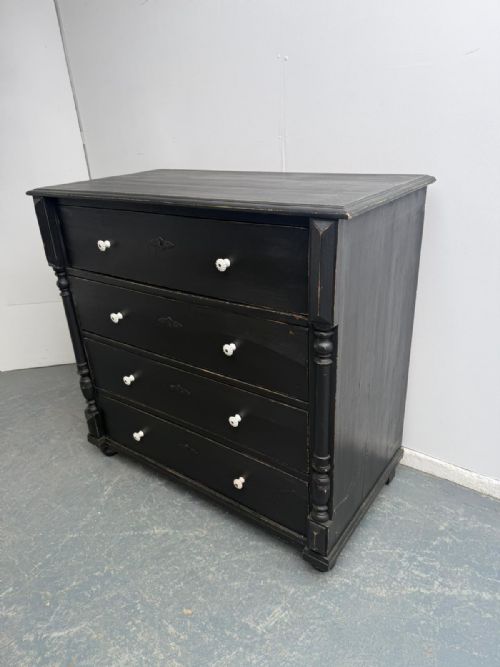
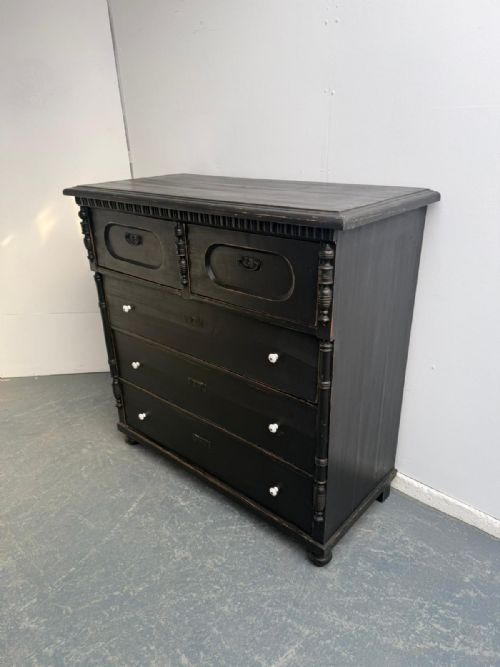


Hungarian Painted Chest Drawers
These Hungarian painted chest drawers combine robust pine construction with distinctive folk art finishes, offering practical storage with genuine character.
Hungarian Painted Chest Drawers
Hungarian painted chest drawers appear primarily in Victorian and Georgian periods, alongside examples from 1910, reflecting European folk art traditions. Buyers encounter sturdy forms constructed from pine, ranging from traditional three and four drawer chests to larger configurations and shop fittings.
The selection includes specialised variations such as cupboards, cabinets and multi-drawer banks, demonstrating the versatility of these painted wooden storage pieces. Many items retain original surface treatments in black, grey, blue, green, white, and cream.
These pieces function as striking focal points in contemporary interiors, merging utilitarian purpose with decorative painted finishes. The historical range spans modest domestic chests to substantial commercial shop fittings featuring numerous drawers.
Materials and construction
Makers built these pieces primarily from solid pine, utilising timber suited for everyday utility and stable panel construction. Metal, brass, iron, and ceramic elements appear as hardware, handles, and structural fastenings.
Applied paint finishes define the surface aesthetic, with original coats applied directly to the wood substrate. These paint layers, whether black, grey, blue, green, white, or cream, exhibit historical wear patterns from active use.
Listings feature pine pieces spanning the Georgian, Victorian, and 1910 periods, finished in black, grey, blue, green, white, and cream paint.
Assessing quality
Quality rests upon the originality of the painted surface and the integrity of the underlying pine structure. Pieces retaining their earliest layers of coloured paint without heavy modern intervention hold greater historic interest.
Proportion and scale distinguish standard domestic chests from exceptional multi-drawer shop fittings. The complexity of the drawer configuration and the retention of original hardware influence the overall character of each piece.
The Hungarian Painted Chest Drawers Glossary
- Pine
- A soft timber widely utilised for European country furniture and painted storage pieces. It provides a stable base for decorative surface treatments.
- Shop Fitting
- Commercial furniture designed for retail environments, such as multi-drawer cabinets built to hold stock. These items feature numerous small drawers.
- European Folk Art
- Traditional decorative styles rooted in regional craft practices. It manifests in the distinct hand-painted finishes found on these pieces.
- Georgian
- A historical period spanning the eighteenth and early nineteenth centuries. Pieces from this era display specific proportion and joinery characteristics.
Hungarian Painted Chest Drawers: Frequently Asked Questions
Where should I place a painted chest?
These chests suit living rooms, hallways, or bedrooms where their painted finishes can complement neutral walls. Their substantial presence makes them effective anchor pieces in domestic spaces.
Ensure adequate clearance for drawers and doors to function smoothly without obstruction in daily use.
How do I clean a painted finish?
Dust the surface regularly with a soft, dry cloth to prevent dirt accumulation on the historic paint layer. Avoid modern chemical solvents or abrasive cleaners that might strip the original pigment.
Maintain stable indoor humidity levels to protect both the underlying pine timber and the applied decorative coatings.
What is a shop fitting chest?
Shop fittings are large storage units originally built for commercial use, featuring grids of twenty-five or fifty small drawers. They offer immense practical storage capacity for modern homes.
Their substantial scale and numerous small compartments set them apart from standard domestic drawer chests.
How do I identify the period?
Examine the construction methods, timber thickness, and hardware fixings to gauge the age of the piece. Georgian examples generally exhibit different proportions compared to Victorian or nineteen-ten counterparts.
Compare the painted surface wear with the underlying wood oxidation to understand the history of the object.