



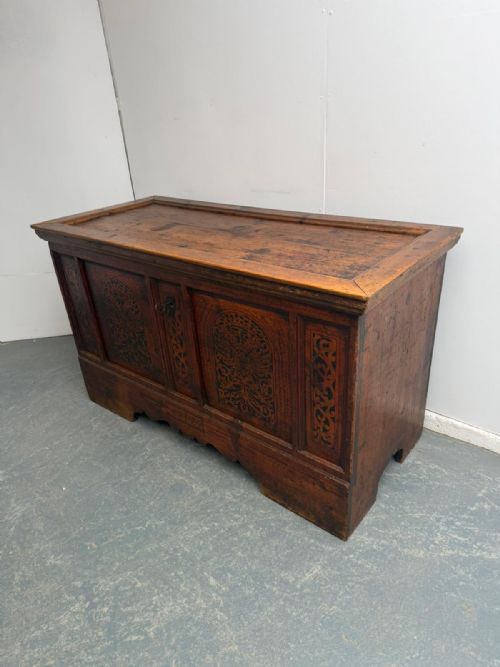


Pine Folk Art Chest
A pine folk art chest brings centuries of regional craft and original pigment straight into a room.
Pine Folk Art Chest
A pine folk art chest covers utilitarian storage pieces transformed by hand painting, carving, and regional decorative traditions. When searching this phrase, a buyer encounters everything from large marriage trunks to small boxes and chests of drawers originating across Britain, Scandinavia, and continental Europe.
The pieces span several periods, with nineteenth-century examples appearing most frequently alongside eighteenth-century works and later nineteenth to early twentieth-century variations. Common forms include dome-top trunks, blanket boxes, coffer boxes, and strong boxes built for domestic storage.
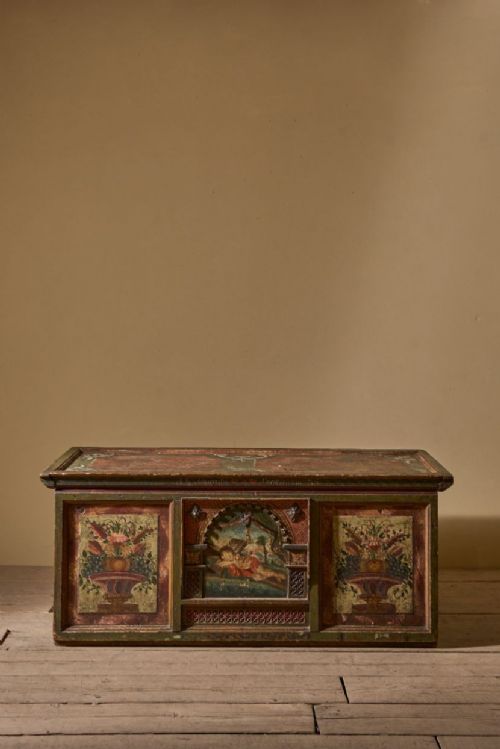
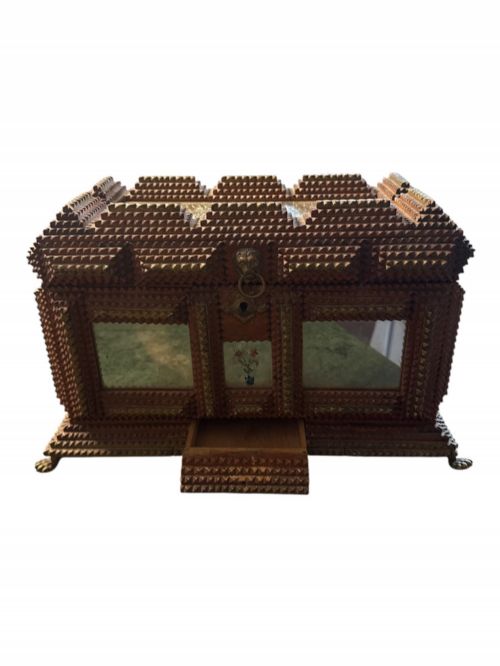
Stylistic influences range from Scandinavian country and alpine traditions to Hungarian folk art and tramp art. These containers served practical household needs while recording local aesthetic choices through pigment and wood.
How They Were Made
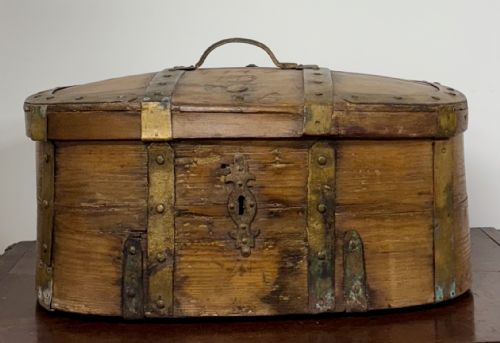
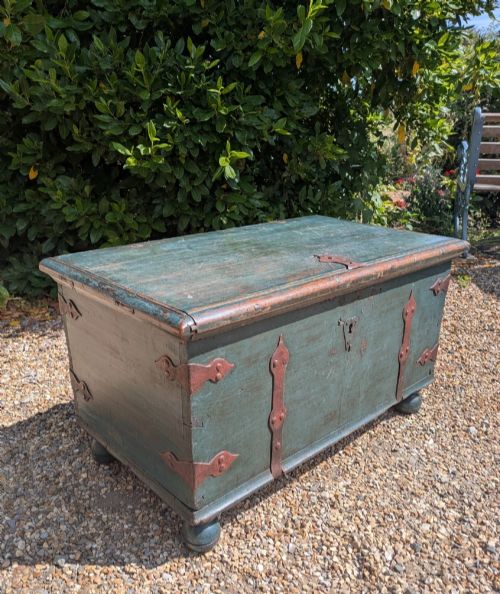
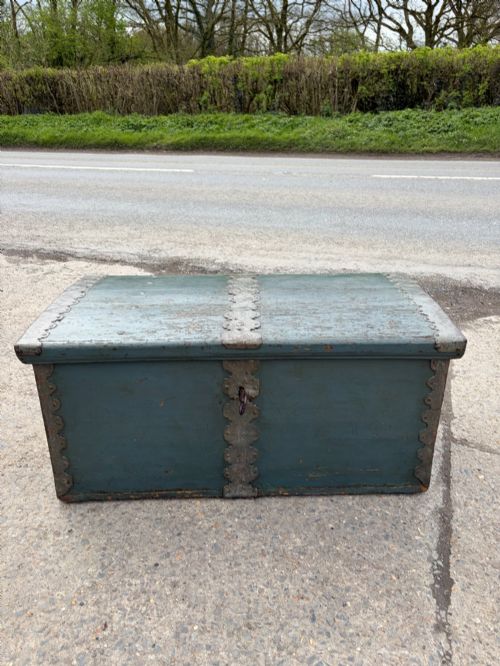
Construction relies primarily on pine timber, shaped into boards for bodies, lids, and drawers. Makers reinforced these wooden structures with iron, wrought iron, and brass hardware such as hand-forged strapwork hinges, corners, and locks.
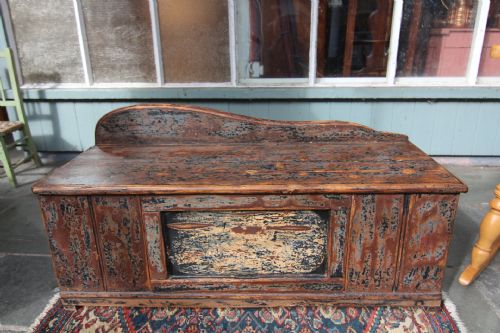
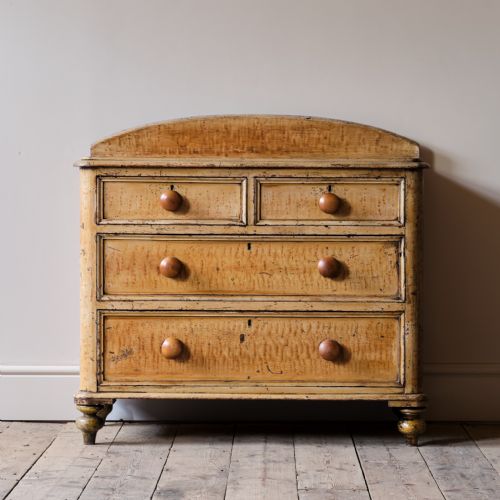
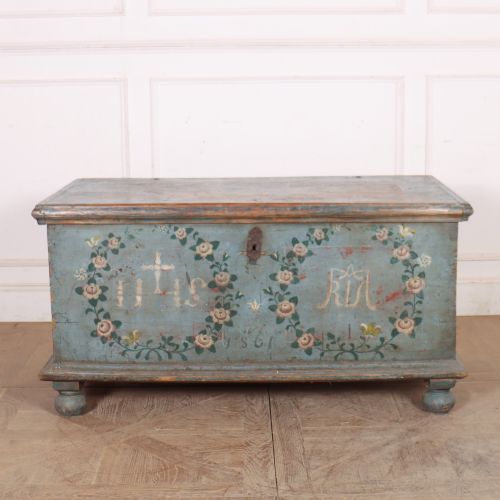
Surface decoration defines the category, utilising paint, pigment, and glass elements to create floral motifs and pictorial schemes. Artisans applied original paint layers directly to the wood, sometimes employing scumble techniques or simulated wood grain effects like birch.
Objects span multiple centuries, capturing forms from 18th-century Scandinavian trunks to 1930s simulated birch chests.
What Varies in Quality
The survival of original surface pigment largely determines a piece's visual impact and historical integrity. Pieces retaining untouched early paintwork carry greater character than those stripped or heavily repainted over generations.
The execution of hand-forged ironwork and structural joinery separates standard utility items from masterworks of regional craft. Finer examples display careful dovetailing, robust strapwork, and harmonious proportion suited to their specific stylistic origin.
Gemla Fabrikers·William Hall
The Pine Folk Art Chest Glossary
- Marriage trunk
- A large chest commissioned or decorated to celebrate a wedding, frequently inscribed with dates and initials. These pieces often feature elaborate painted floral motifs.
- Strapwork
- Ornamental metal bands of iron or brass applied to strengthen and decorate chest corners and lids. Hand-forged examples show individual smithing marks.
- Tramp art
- A style of woodwork created by carving chip-carved geometric patterns from discarded wood boxes and crates. It gained popularity during the late nineteenth and early twentieth centuries.
- Coffer
- A heavy wooden box traditionally used for storing valuables and documents. Many include secure locking mechanisms and internal till compartments.
- Scumble
- A decorative painting technique involving a translucent layer of glaze manipulated over a lighter base coat. It often mimics the appearance of more expensive timbers like birch.
Pine Folk Art Chest: Frequently Asked Questions
What is a pine folk art chest?
A pine folk art chest is a utilitarian storage container decorated with hand-applied paint, folk motifs, or regional carving. These pieces served domestic storage needs while reflecting local aesthetic traditions.
They encompass trunks, coffers, and blanket boxes originating from Britain, Scandinavia, and central Europe across the eighteenth and nineteenth centuries.
How were these chests used?
Households utilised these chests to store textiles, winter blankets, personal valuables, and household documents. Strong boxes with iron strapwork offered extra security for transport or important papers.
Marriage chests held dowry items and were prominently displayed in the home as symbols of a new household.
How do I care for original paint?
Keep painted wooden chests away from direct sunlight and dramatic humidity changes to prevent pigment flaking and wood movement. Dust gently with a dry cloth rather than using liquid polishes or chemical cleaners.
Allow the surface to breathe and maintain a stable indoor climate to preserve the historic finish.
How do I date a painted pine chest?
Examine the construction methods, nail types, hinges, and the composition of the paint layers. Hand-forged ironwork and eighteenth-century board construction differ noticeably from later Victorian or twentieth-century manufacturing.
Inscribed dates, marriage ciphers, and regional painting styles also provide specific chronological clues.