





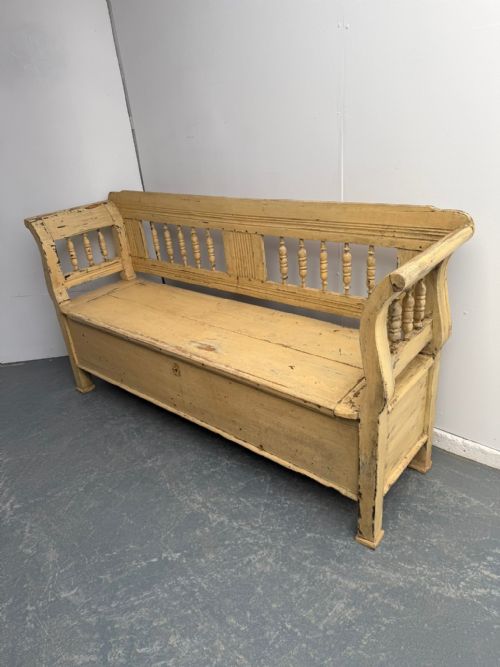
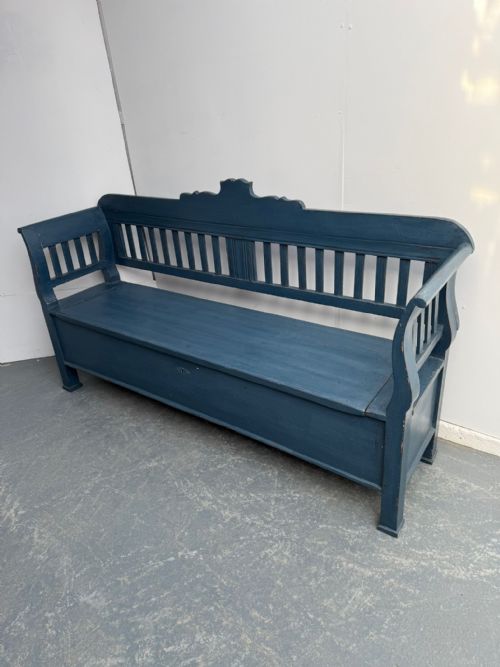

Pine Box Settle
A pine box settle combines seating and storage in a robust timber bench designed to keep cold draughts at bay.
Pine Box Settle
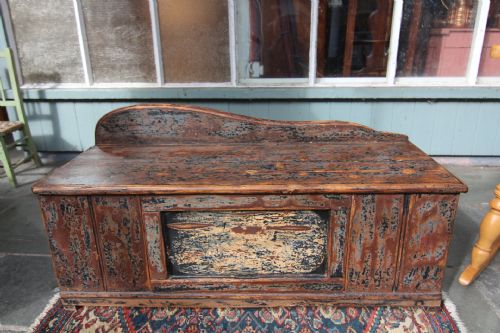
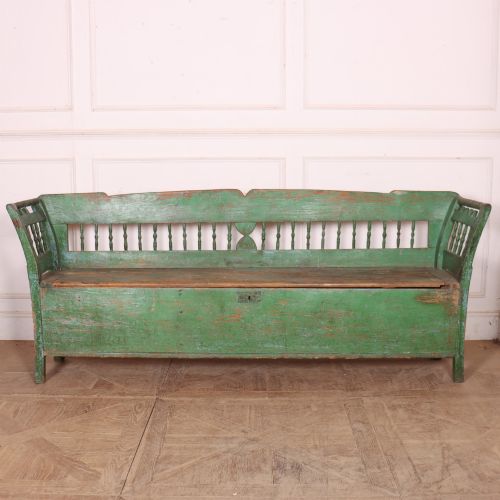
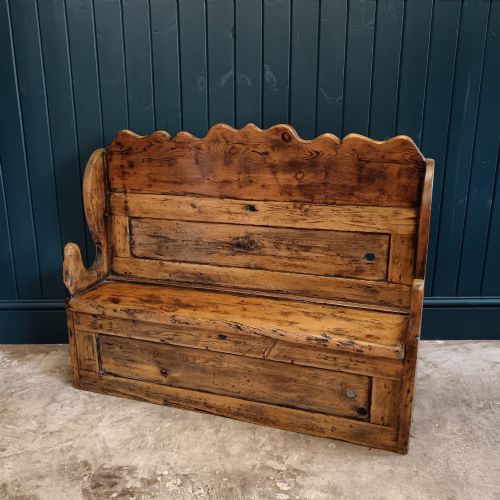
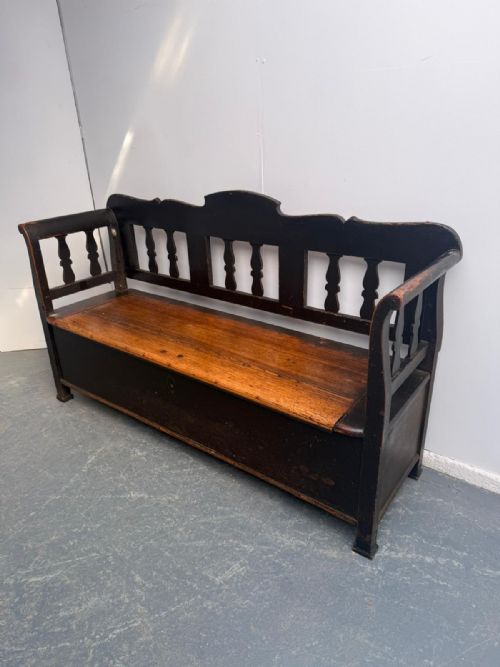
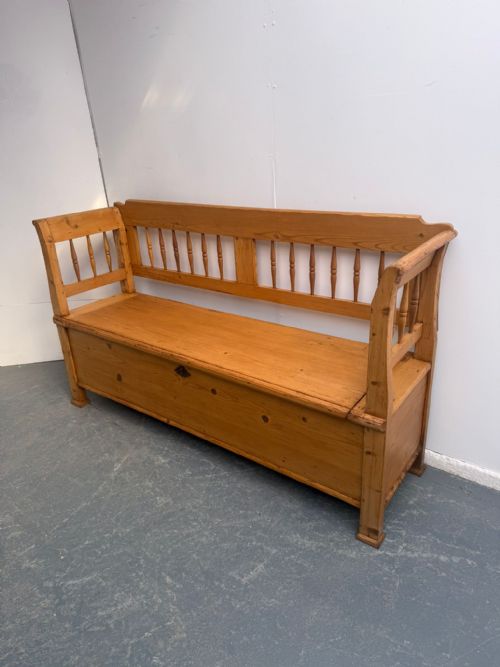
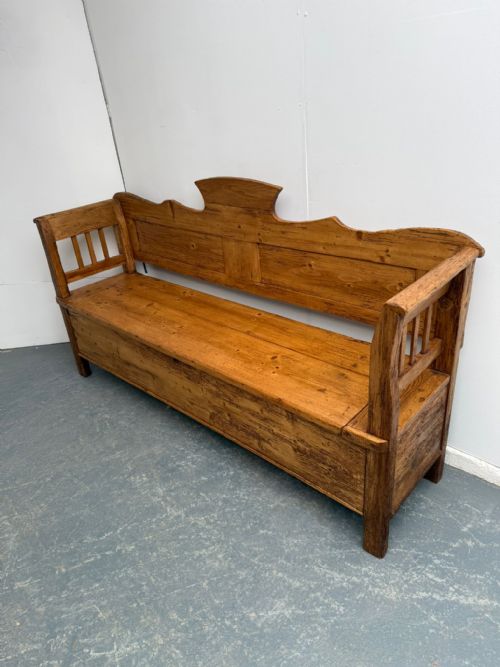
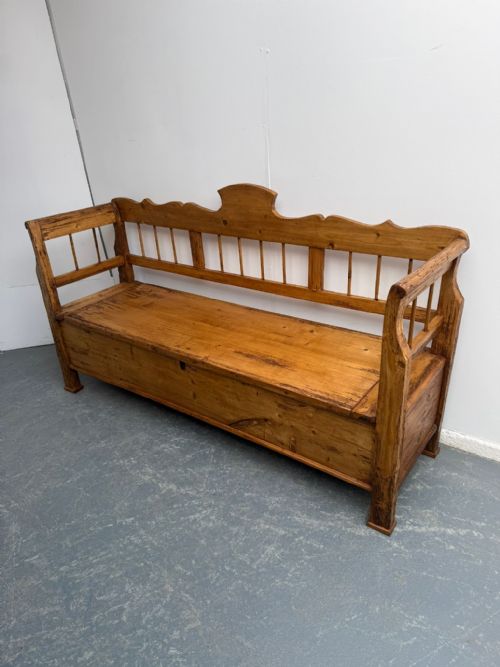
A pine box settle is a high-backed wooden bench featuring a hinged seat that lifts to reveal a deep storage compartment beneath. These sturdy pieces served practical domestic roles across rural households, providing both a fireside seat and a dry chest for household goods. When you search for this phrase, you encounter heavy seating built to anchor a hallway, kitchen or farmhouse parlour.
The examples appearing here span several decades of the nineteenth century alongside Georgian and Arts and Crafts pieces. Many originated in regional workshops across Wales, Hungary and Sweden, bringing distinct local traditions of carpentry and surface treatment to the basic form. You find versions ranging from compact two-seaters to long four-seater benches designed for communal gathering.
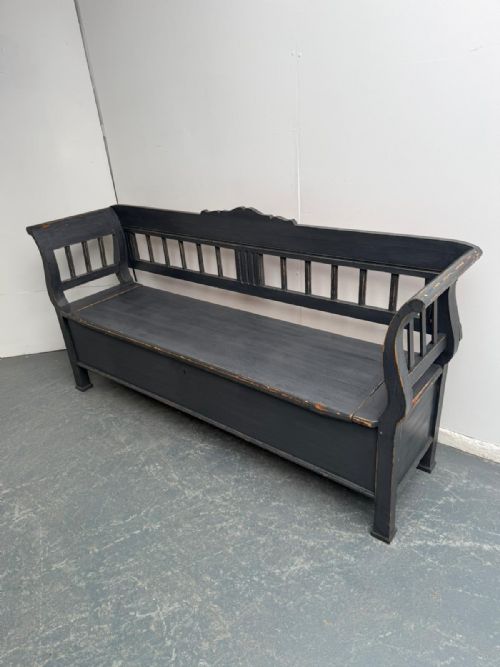
Most entries on this page combine structural softwood timbers with either a transparent wax finish or a painted surface. Plain waxed versions display the warm grain and knots of aged softwood, while painted alternatives retain historic coats of cream, grey, blue, black or polychrome pigments. This variation reflects the diverse domestic interiors from which these utilitarian items emerged.
How they were made
Makers constructed these settles primarily from pine planks, sometimes pairing the softwood with harder timbers such as elm, ash or oak for structural elements like armrests or floor-facing edges. Carpenters utilised tongue-and-groove joints and pegged mortise-and-tenon construction to build rigid panelled backs and enclosed storage boxes capable of withstanding heavy daily use. Iron hinges and fixings secure the lifting seat lids, adding industrial utility to the timber framework.
Surface finishes divide these pieces into two distinct categories: waxed and painted. Waxed settles rely on repeated applications of natural wax to protect the softwood while highlighting its grain and accumulated patina. Painted settles carry layers of lead-based or oil paints that seal the pine and provide colourful decoration, often surviving in worn original tones that show decades of domestic wear.
Listings for pine box settles encompass items from Georgian and Victorian periods, alongside specific regional styles like Gustavian and Hungarian Folk Art.
What varies in quality
The distinction between standard utility items and finer examples rests upon the integrity of the original construction and the survival of untouched surfaces. Pieces retaining their early or original painted finishes command particular interest, especially when the pigment displays natural weathering rather than modern intervention. Proportions also dictate quality, as longer benches or those with curved high backs require superior joinery to maintain structural stability.
Attention to detail in the panel work and arm design separates basic workshop output from more ambitious regional pieces. Elements such as moulded cornices, panelled lower boxes and well-fitted lidded seats demonstrate the care taken by the original maker. The condition of the underlying softwood, free from extensive timber decay, underpins the lasting value of any surviving box settle.
The Pine Box Settle Glossary
- Box settle
- A wooden bench featuring an enclosed storage compartment beneath a hinged seat and a high panelled back. This form kept sitters warm by blocking floor draughts while maximising domestic storage space.
- Polychrome
- Decoration employing multiple colours applied to the surface of the timber. Folk art pieces often use this technique to create bright panels or floral motifs.
- Gustavian
- The Swedish neoclassical style spanning the late eighteenth and early nineteenth centuries. Pieces from this tradition typically feature pale painted finishes and restrained classical mouldings.
- Patina
- The surface sheen and mellowing developed by wood and paint over decades of handling and exposure. Collectors value this visual evidence of age and use.
- Softwood
- Timber derived from conifers such as pine, used extensively in vernacular furniture making for its accessibility and ease of working.
Pine Box Settle: Frequently Asked Questions
How were pine box settles used?
These benches served as primary seating around the hearth in traditional homes, where the high wooden back protected occupants from cold draughts. The enclosed box beneath the seat provided secure storage for blankets, fuel or household provisions.
Over time, they moved into hallways and kitchens, functioning simultaneously as seating and utilitarian storage chests for everyday items.
How do I tell an old paint finish from a modern one?
Original paint finishes display natural craquelure, softening around edges where hands touched the wood, and subtle tonal variations beneath later dirt layers. Modern repainting often looks uniform and lacks the accumulated wear embedded in the timber grain.
Examining the surface under magnification reveals whether the pigment has bonded deeply with the underlying pine over generations.
Where did regional box settles originate?
The listings show strong traditions of box settles emerging from rural workshops in Wales, Hungary and Sweden. Each region imparted local design preferences, such as the curved high backs found in Welsh examples or the pale painted surfaces typical of Swedish Gustavian pieces.
Hungarian settles frequently exhibit distinct folk art painting and robust three-plank construction methods.
How do I care for a waxed pine settle?
Maintain waxed pine furniture by applying a traditional beeswax polish sparingly and buffing it with a soft cloth to preserve the sheen. Keep the timber away from direct heat sources and strong sunlight to prevent the softwood from drying out or splitting.
Regular dusting prevents particulate buildup in the grain and panel joints.