


Pierced Wood Table
A pierced wood table brings intricate fretwork and carved panels into domestic spaces, offering decorative utility through pierced surfaces and solid timber frames.
Pierced Wood Table
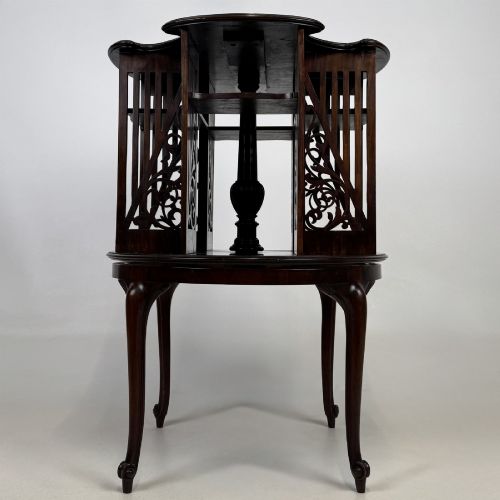
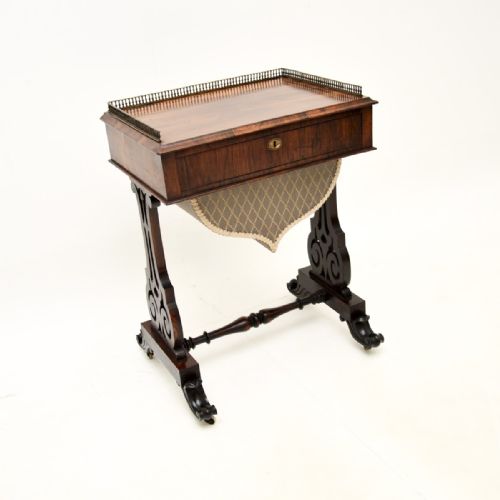
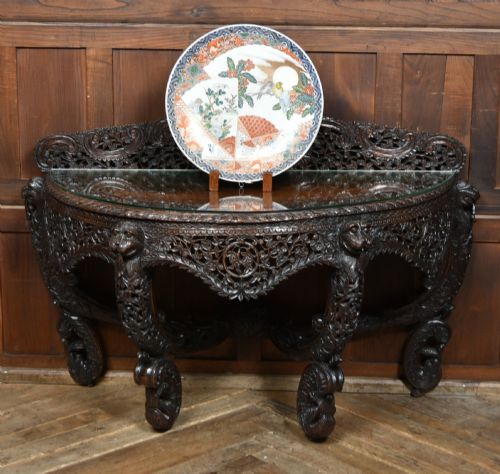
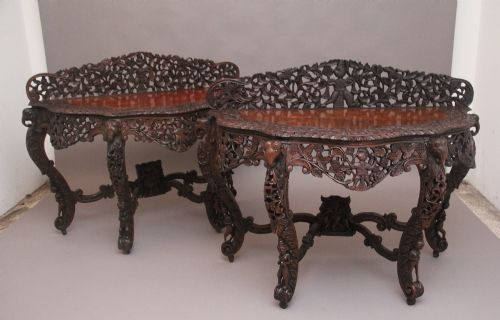
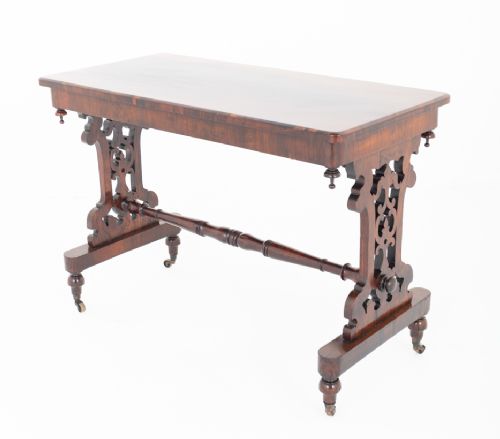
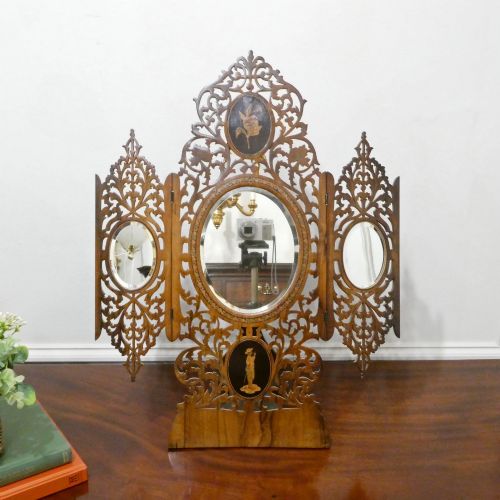
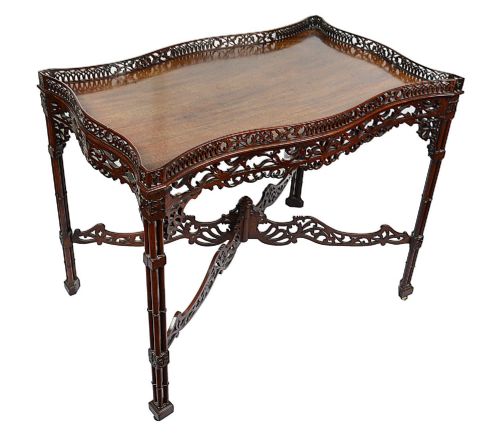
A pierced wood table unites domestic furniture with detailed openwork carving, taking forms such as occasional tables, plant stands, and console tables. These pieces draw on Anglo-Indian, Burmese, and Georgian design traditions, spanning the Victorian and Edwardian eras alongside the nineteenth century.
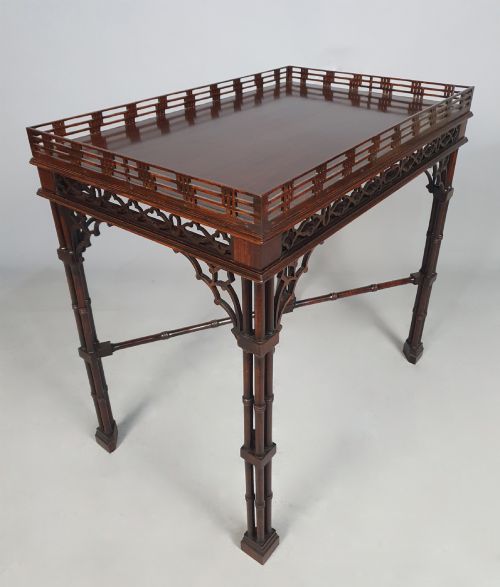
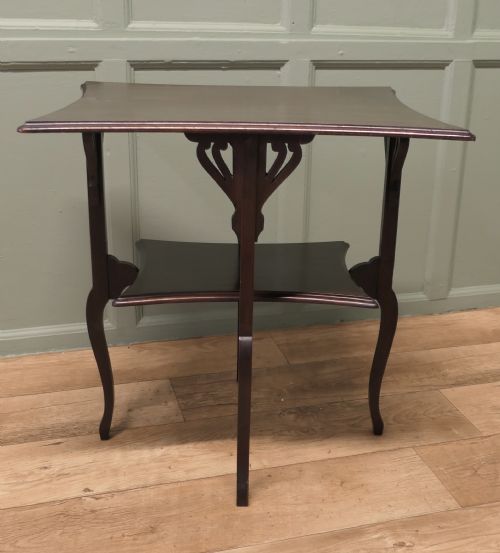
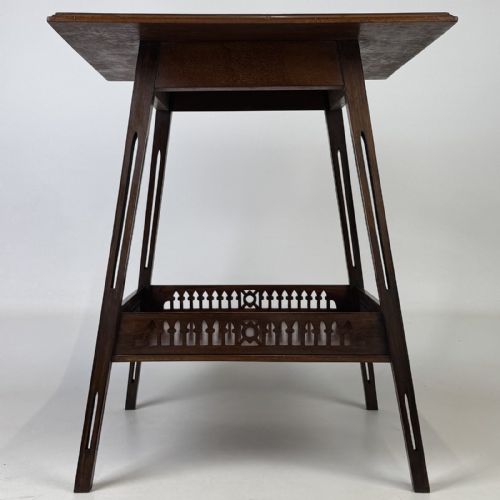
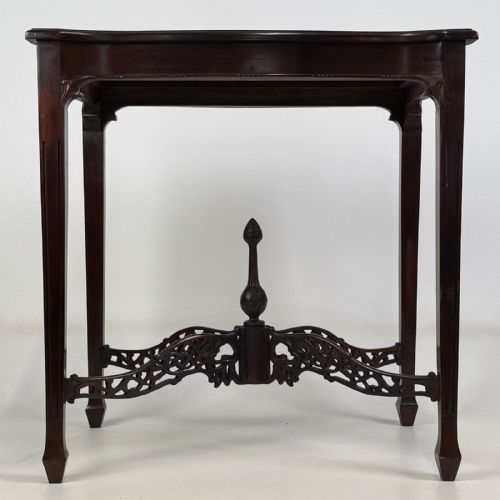
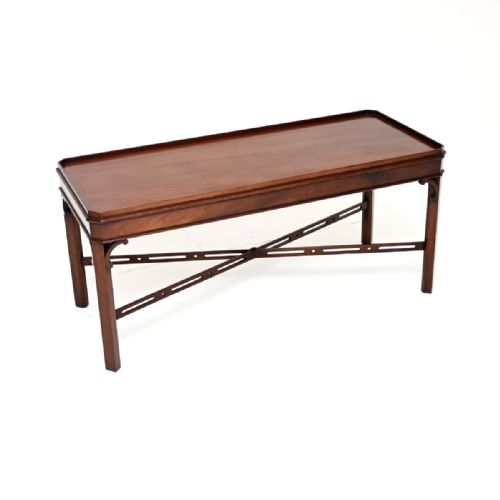
The most common examples on this page are side tables and lamp tables featuring pierced brackets, tray tops, or carved stretchers. Artisans constructed these items for functional household use while incorporating ornamental fretwork into the aprons and supports.
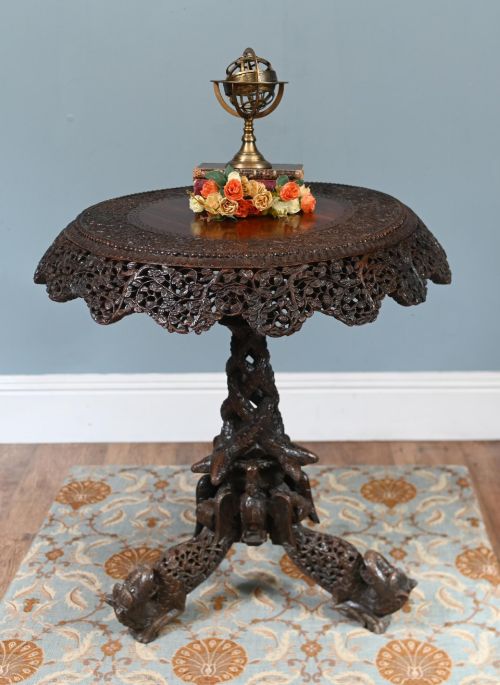
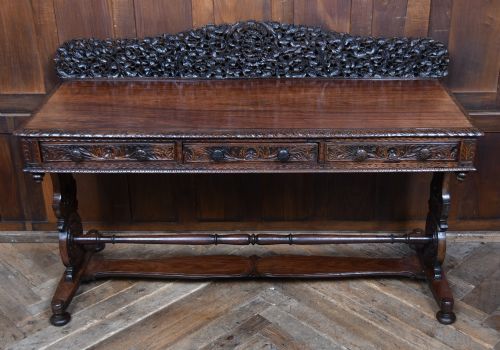
Origins range from British workshops working in the Chippendale and Arts and Crafts styles to colonial workshops in India and Myanmar producing padauk and teak furniture. Buyers encounter forms designed for display, tea service, or bedside use.
How they were made
Makers utilised dense tropical timbers such as padauk, teak, and rosewood alongside European hardwoods like mahogany, walnut, and elm. These timbers provided the structural stability required for intricate piercing and deep relief carving without splitting along the grain.
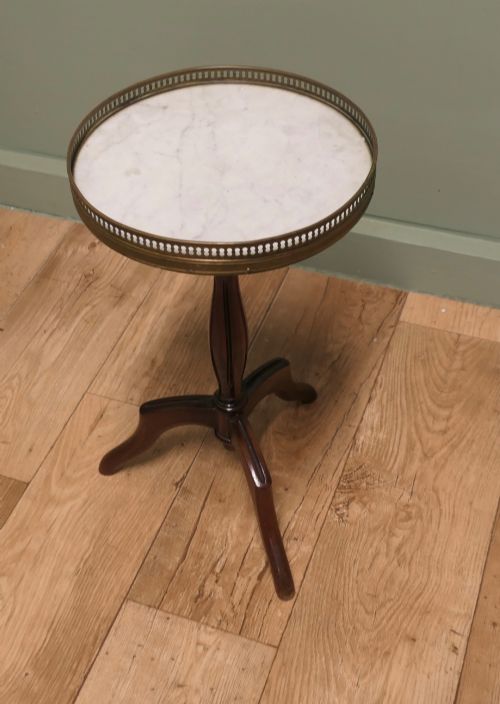
Craftsmen shaped the openwork patterns using fretsaws and chisels, piercing aprons, brackets, and gallery edges to create light effects through the woodwork. Secondary materials such as brass inlay and marble tops appear on specific regional variants.
Joinery methods combined traditional mortise and tenon frames with applied fretwork panels, carved stretchers, and turned legs. Workshop output ranges from British cabinetmaker productions to colonial craftsmanship involving specialised carving traditions.
Pierced Wood Table Retail Price Guide 2026
Typical asking prices for pierced wood table among the pieces listed under this phrase on Sellingantiques today, from the lower quarter to the upper quarter. They describe what is for sale here now, not the wider market.
Listings span multiple timber varieties including padauk, teak, mahogany, walnut, and rosewood across British, colonial, and European traditions.
What varies in quality
The precision of the piercing separates standard production from finer examples, with superior work showing crisp interior corners and smooth margins within the fretwork. Crisp detailing in the carved motifs indicates the skill of the individual carver.
Timber selection and grain matching influence overall construction quality, particularly in how well the solid wood responds to atmospheric changes. Tables retaining their original surface patination and stable joinery represent the upper tier of surviving examples.
Liberty & Co
The Pierced Wood Table Glossary
- Fretwork
- Openwork woodwork cut with a fretsaw to form decorative patterns. This technique defines the pierced elements found on aprons and brackets.
- Anglo-Indian
- Furniture made in India during the British colonial period, often combining local carving styles with British furniture forms. Padauk and teak are typical timbers for these works.
- Silver table
- A small display table with a raised gallery edge, traditionally used for holding silver tea services. Georgian and later cabinetmakers built these with pierced brackets and rails.
- Occasional table
- A small, versatile table designed for movable use around a room. Examples on this page often incorporate carved tops or pierced stretchers.
Pierced Wood Table: Frequently Asked Questions
What is a pierced wood table used for?
These tables served various domestic purposes including lamp placement, tea service, and general display in Victorian and Edwardian interiors. Their sturdy timber frames supported daily household items while adding decorative detail to sitting rooms and halls.
Smaller formats functioned as bedside tables or plant stands, whilst tray-top versions allowed items to be carried and displayed. The openwork design lightened the visual weight of heavy hardwoods.
How do I identify an Anglo-Indian table?
Anglo-Indian tables typically feature dense tropical timbers like padauk or teak, combined with intricate carved foliage, dragons, or geometric fretwork. Hoshiarpur examples often incorporate brass wire inlay alongside carved wooden panels.
These pieces reflect nineteenth-century colonial production where local artisans applied traditional carving techniques to British furniture forms such as occasional and coffee tables.
Are these tables sturdy enough for daily use?
Solid hardwood construction provides the structural integrity needed for everyday placement of lamps and decorative objects. The joints and frames were built to withstand normal domestic loads despite the delicate appearance of the pierced work.
Care should be taken with intricate gallery edges and cantilevered brackets to avoid impact damage during cleaning or movement.
How do I distinguish Georgian from Edwardian examples?
Georgian pierced wood tables generally follow neoclassical or Chippendale proportions with mahogany frames and subtle fretwork brackets. Edwardian revivals and contemporaneous pieces from 1900 to 1910 often exhibit lighter construction, machine-assisted fretwork, or specific inlay work.
Examining the tool marks, timber ageing, and secondary woods helps determine whether a table belongs to the eighteenth-century style period or later manufacturing eras.