
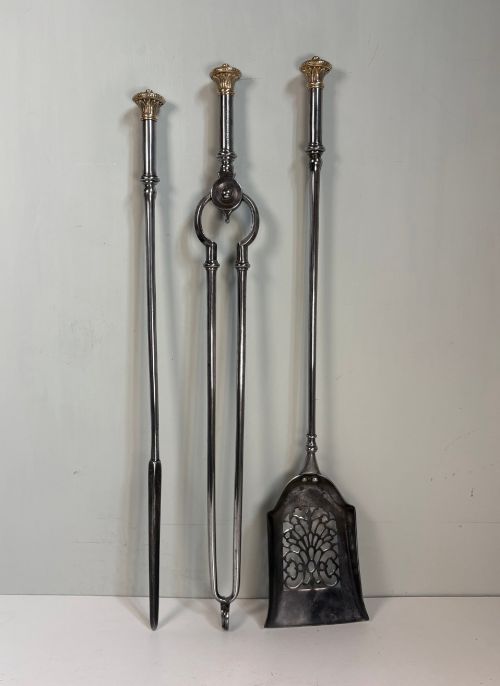
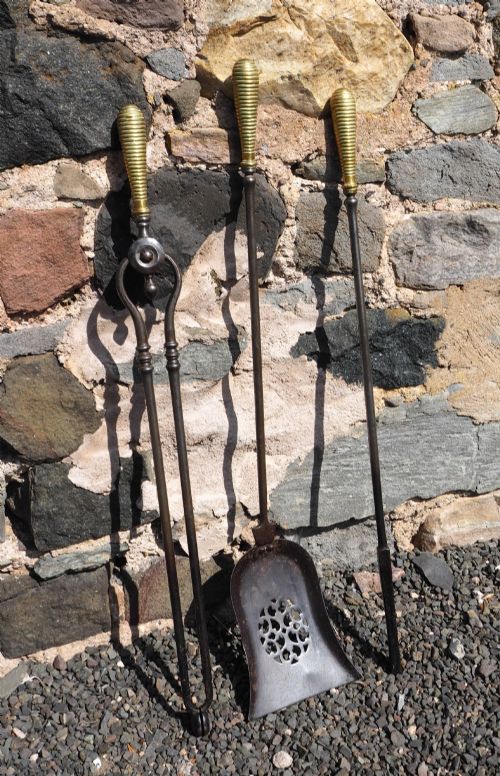
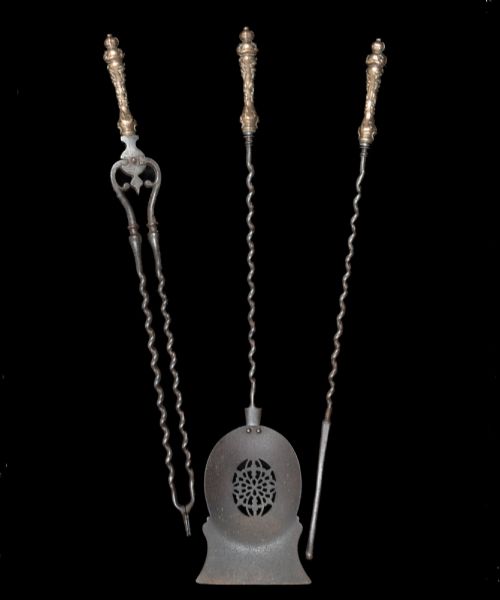
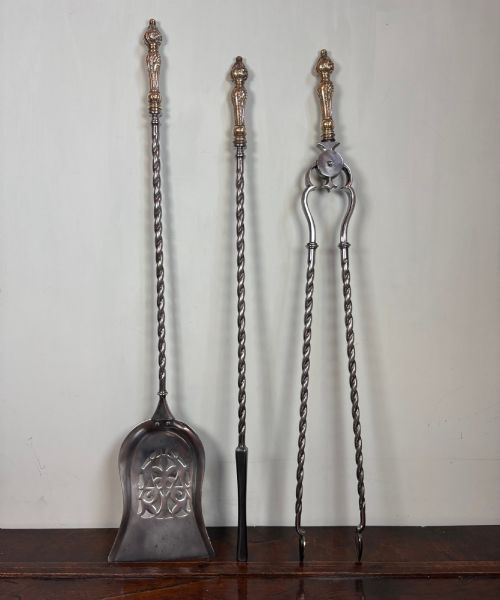
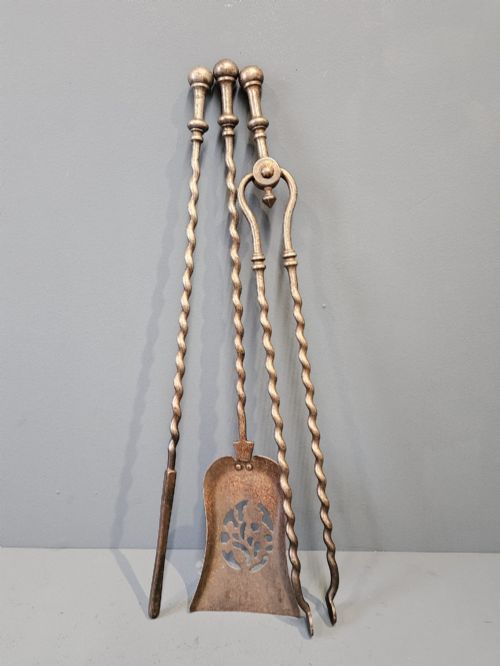
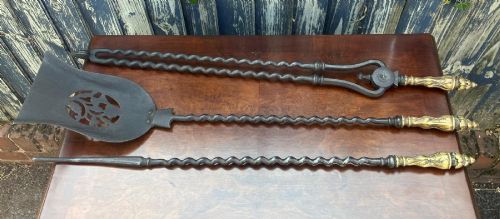


Pierced Steel Hearth Shovel
A pierced steel hearth shovel brings both function and bright metalwork to a period fireplace.
Pierced Steel Hearth Shovel
When you search for a pierced steel hearth shovel, you are looking for a functional fireplace implement designed to clear ash while allowing fine embers to fall through the cutwork blade. These pieces form part of larger fireplace tool sets or survive as individual items from past centuries.
The examples available on this page date primarily from the Georgian, Regency, and Victorian periods, alongside later nineteenth and early twentieth century items. They appear in steel, polished steel, burnished steel, and gunmetal, frequently paired with brass elements.
Most items on this page present as sets of fire irons or companion tools rather than isolated pieces, maintaining the matching metalwork characteristic of historic hearths. Their forms span standard fireplace accessories and dedicated fire tools intended for daily use.
How they were made
Makers shaped these tools primarily from steel, often polishing or burnishing the metal to achieve a bright reflective surface that caught the candlelight of a period room. Brass components were frequently incorporated into handles or mounts, offering a contrasting tone against the dark or polished iron.
The piercing on the shovel blade was executed by hand, cutting patterns into the metal plate to sieve ash efficiently. Iron and gunmetal also appear in the construction, reflecting the metalworking techniques available during the eighteenth and nineteenth centuries.
The inventory records pieces attributed to the Georgian, Regency, and Victorian styles alongside George IV examples.
What varies in quality
The refinement of the metal finish dictates much of the distinction between pieces, with burnished and polished steel surfaces showing a higher degree of initial labour than standard iron. The precision and delicacy of the pierced work on the shovel blade also signal the skill of the maker.
Completeness alters the character of an acquisition, as surviving sets of matching fire irons carry greater cohesion than single assembled tools. The inclusion of complementary brass detailing further distinguishes the more decorative examples from utilitarian counterparts.
The Pierced Steel Hearth Shovel Glossary
- Pierced steel
- Steel sheet worked with cut patterns. This technique allowed ash to sift through while retaining structural strength in the shovel blade.
- Burnished steel
- Metal rubbed to a high lustre. The process produced a smooth, reflective finish characteristic of finer fireplace equipment.
- Gunmetal
- A type of bronze containing copper, tin, and zinc. It provided an alternative dark metallic tone alongside traditional steel and brass.
- Companion tools
- A matching set of fireplace implements. These typically included a shovel, tongs, and poker displayed together on the hearth.
Pierced Steel Hearth Shovel: Frequently Asked Questions
What is a pierced steel hearth shovel used for?
These shovels were designed to clear ash from the hearth while letting unspent embers drop back through the perforated blade. They served as both practical tools and decorative accessories in period rooms.
Today they function effectively in traditional open fireplaces or remain collected as examples of historic metalwork.
Are these shovels sold individually or in sets?
The listings on this page include both standalone items and complete sets of fire irons. Many period examples survive as matched groups of companion tools.
Sets typically incorporate steel construction alongside brass details to coordinate with other fireplace furniture.
How do I identify the period of a hearth shovel?
Dating relies on stylistic markers associated with Georgian, Regency, and Victorian design, alongside the specific metal finish. Burnished and polished steel finishes were particularly favoured during the late eighteenth and early nineteenth centuries.
Construction methods and the presence of brass mounts also help distinguish earlier pieces from later nineteenth and twentieth century production.
What metals are used in these fireplace tools?
The primary material is steel, frequently found in polished or burnished forms to create a bright surface. Brass and gunmetal also appear as contrasting elements for handles and mounts.
Iron is occasionally present in earlier utilitarian items designed for heavy hearth use.