

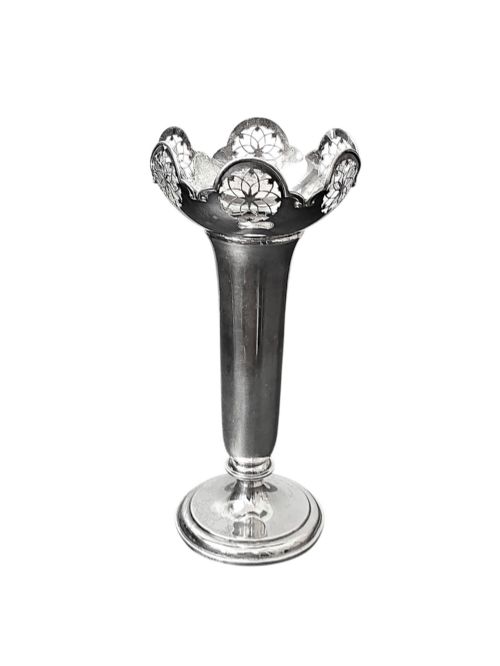
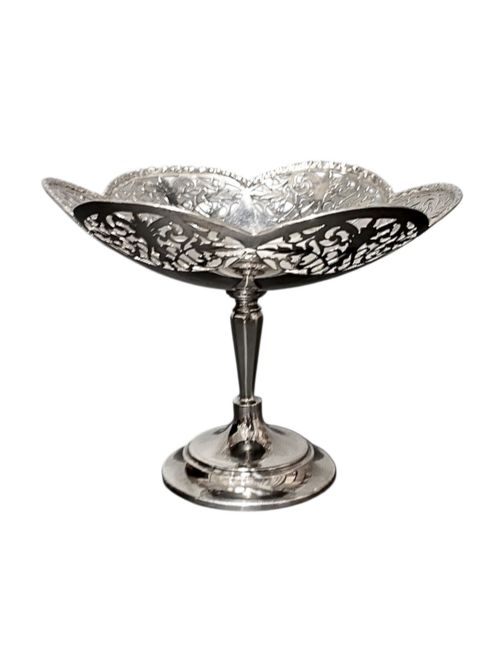
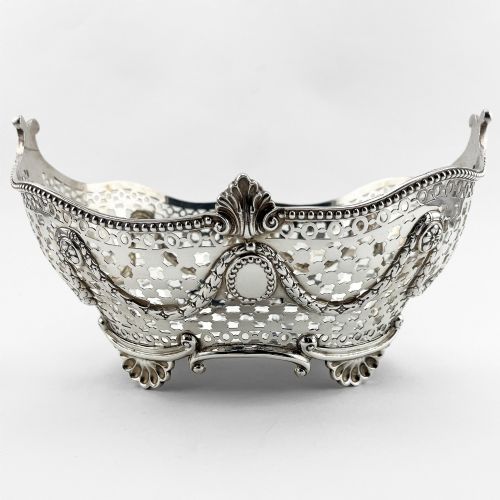
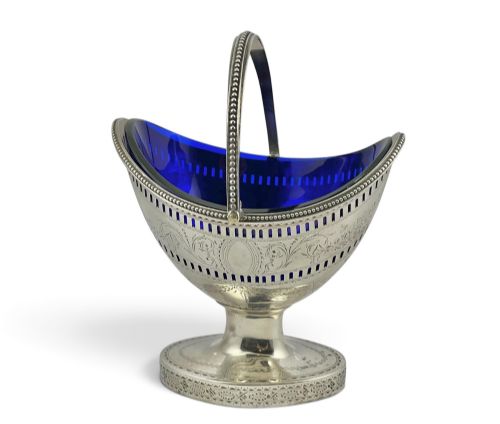
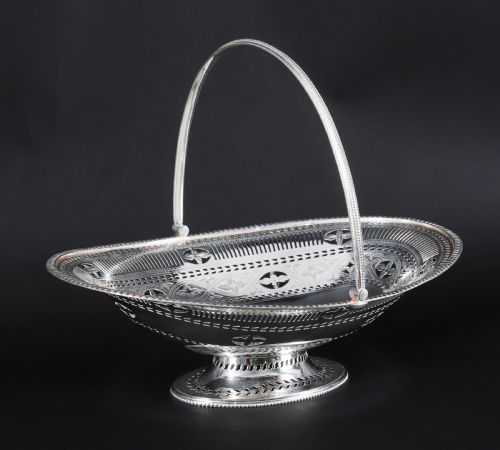


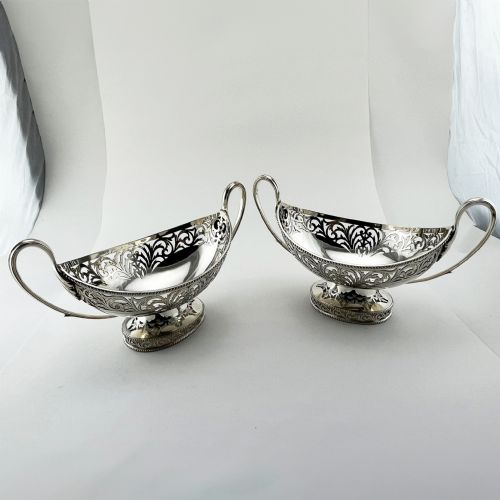
Pierced Silver Centerpiece
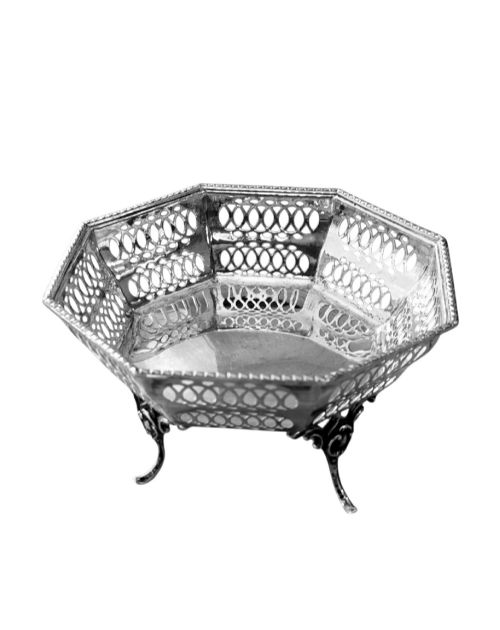
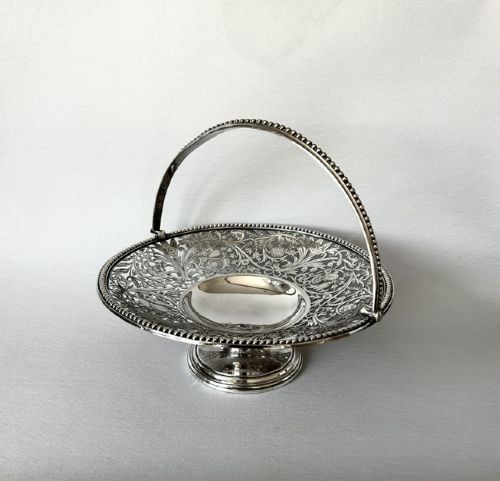
A pierced silver centerpiece brings weight and intricate openwork to a table, functioning as a decorative vessel for fruit, flowers, or glass liners.
Pierced Silver Centerpiece
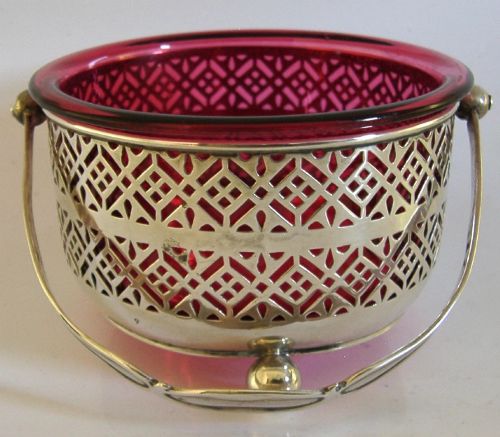
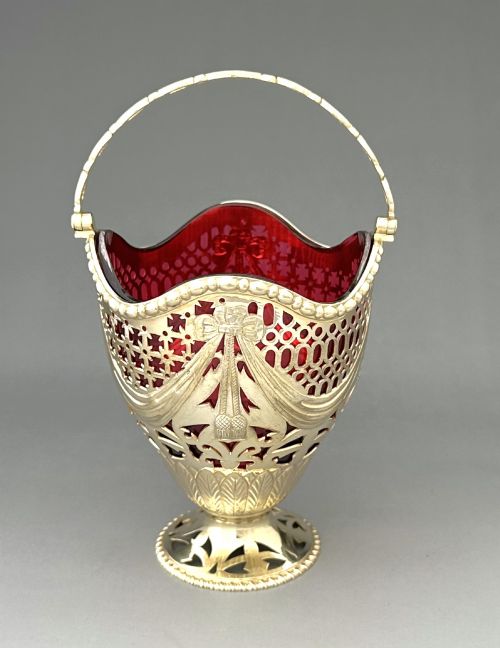
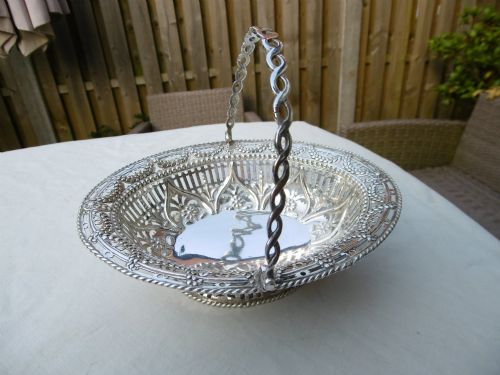
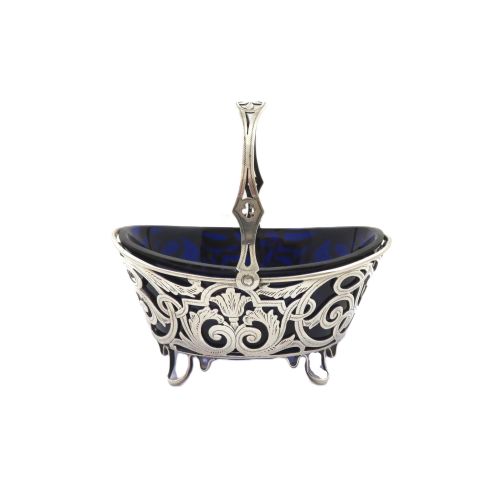
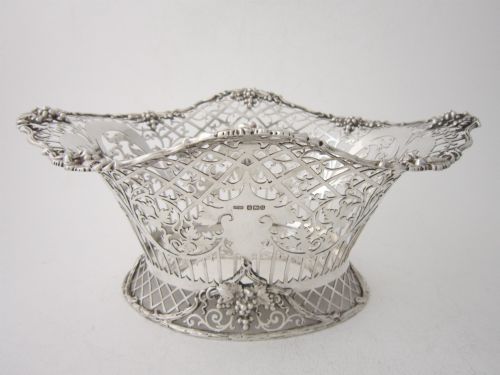
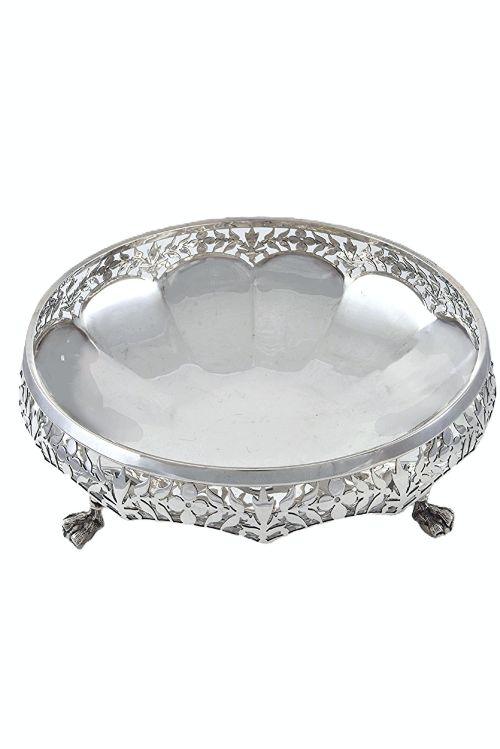
A pierced silver centerpiece is a table vessel designed to draw the eye, spanning forms like fruit baskets, sugar baskets, bread dishes, and large pedestal bowls. You are most likely to meet Edwardian and Victorian examples on this page, often shaped with openwork lattices or fretwork and frequently accompanied by coloured glass liners in cobalt, cranberry, or green.
The materials range from solid sterling silver and 800 silver to silver plate, grounded in periods stretching from the 18th century through the Georgian, Victorian, and Edwardian eras into the 1930s. Makers and silversmiths utilised piercing, fretwork, and wirework to lighten the heavy metal, creating decorative patterns that hold fruit or conceal glass inserts.
Originating as practical tableware for grand dining, these centerpieces served to display sweetmeats, bread, or fruit before becoming purely decorative focal points. The surviving pieces on this page reflect British, German, Chinese export, and Indian silversmithing traditions.
How they were made
Silversmiths constructed these pieces using sterling silver, 800 silver, or base metals coated in silver plate, shaping the body through hammering, spinning, or casting. Piercing and fretwork were then executed by hand or with early mechanical saws, cutting out lattice designs, foliate scrolls, and geometric patterns from the metal sheet.
Many designs incorporated blown glass liners in cobalt blue, cranberry, or green, requiring the metal baskets to be engineered with precise rims and feet to support the fragile glass safely. Handles, swing arms, and raised feet were cast separately and soldered or riveted to the pierced body, while silver gilt finishes were sometimes applied to the interior surfaces.
Punch marks, town marks, and maker's initials were stamped directly onto the silver during the assay process, providing a permanent record of the metal standard and year of production.
Pierced Silver Centerpiece Retail Price Guide 2026
Typical asking prices for pierced silver centerpiece among the pieces listed under this phrase on Sellingantiques today, from the lower quarter to the upper quarter. They describe what is for sale here now, not the wider market.
Some Edwardian bread baskets feature swing handles engineered to stay upright wherever you drop them.
What varies in quality
The quality of a pierced silver centerpiece rests on the precision and depth of the piercing work, where hand-cut fretwork shows crisp, clean edges rather than rounded, stamped impressions. Heavier gauge silver provides structural integrity to openwork designs, preventing the delicate lattice from bending or warping under pressure.
The integration of original glass liners - particularly coloured cranberry, cobalt, or green glass that fits the basket profile without wobbling - elevates the completeness and desirability of the piece. Crisp maker's marks and clear hallmarks assure the silver standard, distinguishing master workshops from standard commercial production.
Mappin & Webb·Thomas Bradbury·John Hunt·Joseph Rodgers·Goldsmiths & Silversmiths·Samuel Herbert·Viners·Fenton·William Comyns·Walker & Hall·Hammond Creake Co·William Hutton & Sons·James Dixon & Sons·Edward H Stockwell·Josiah Williams & Co·Martin Hall
The Pierced Silver Centerpiece Glossary
- Piercing
- The technique of cutting decorative openings through sheet metal to create light, openwork patterns. This process requires steady control to maintain symmetry across the design.
- Fretwork
- An elaborate ornamental design formed by pierced geometric or organic patterns. It frequently appears on Edwardian and Victorian baskets.
- Swing handle
- A movable arched handle attached to the rim of a basket by pivots. It allows the vessel to be lifted easily or lowered to display the contents.
- Silver gilt
- Silver that has been coated with a thin layer of gold on its surface. This technique protects the underlying metal from tarnishing and provides a warm interior contrast.
- Compote
- A raised bowl on a stem or pedestal used for serving fruit or sweets. These pieces often feature pierced detailing around the rim.
Pierced Silver Centerpiece: Frequently Asked Questions
What was a pierced silver centerpiece used for?
These vessels held fresh fruit, bread, or decorative glass liners filled with water for cut flowers during formal dining.
They stood in the middle of the dining table to catch the light and display provisions to guests.
How do I clean a pierced silver centerpiece?
Use a soft cloth and a gentle, non-abrasive silver cream to lift tarnish without clogging the openwork lattice.
Avoid harsh dips that can strip antique patina or damage fitted glass liners.
Are glass liners original to the baskets?
Many baskets retain their fitted cobalt, cranberry, or green glass liners, which were blown specifically for the dimensions of the metal frame.
A snug fit and matching period characteristics indicate an original pairing.
How can I tell the age of the silver?
British pieces feature hallmarks stamped into the metal, including assay office symbols, date letters, and maker's marks.
Comparing these stamps against official registry records provides the exact year of manufacture.