




Pierced Metal Fire Guard
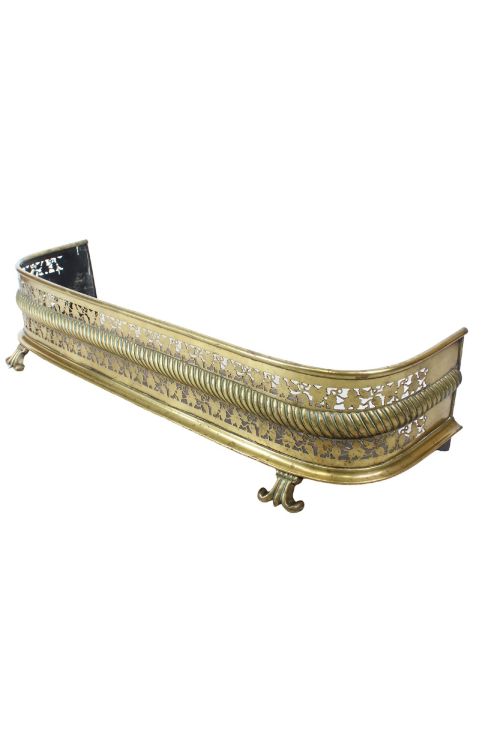
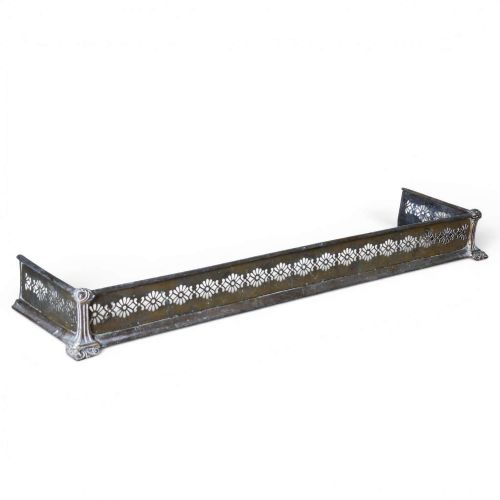
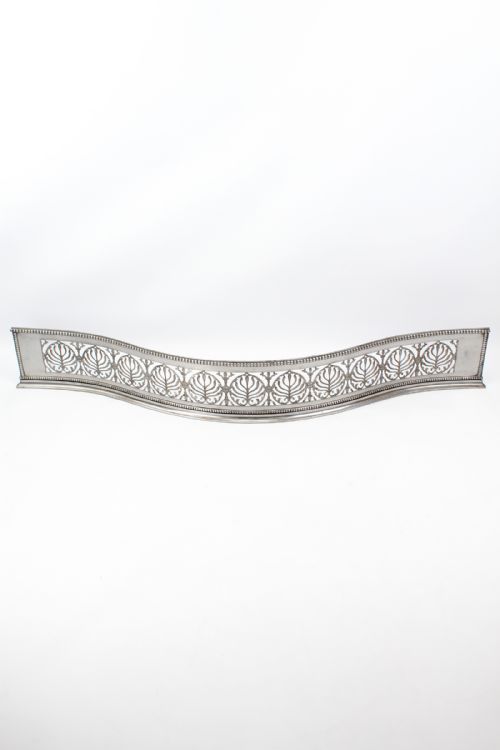
These pieces of pierced metal fire guard sit before the hearth to stop stray embers, built in brass, steel, and iron across the Georgian, Victorian, and Regency periods.
Pierced Metal Fire Guard
When you search for a pierced metal fire guard, you are looking at fireplace accessories designed to protect the room while containing the fire. The selection centres heavily on nineteenth-century pieces, alongside earlier Georgian examples.
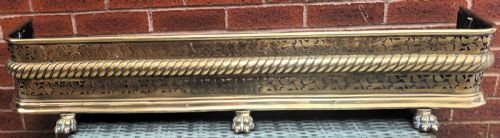
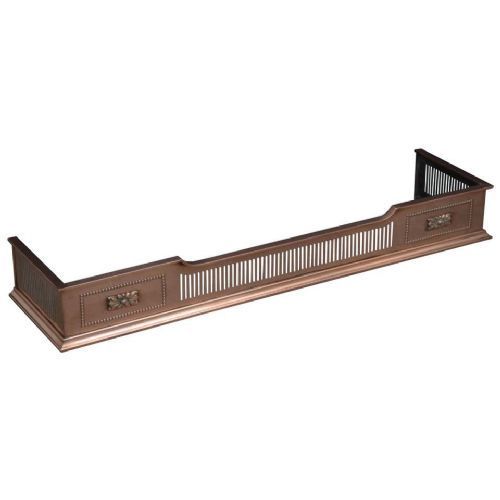
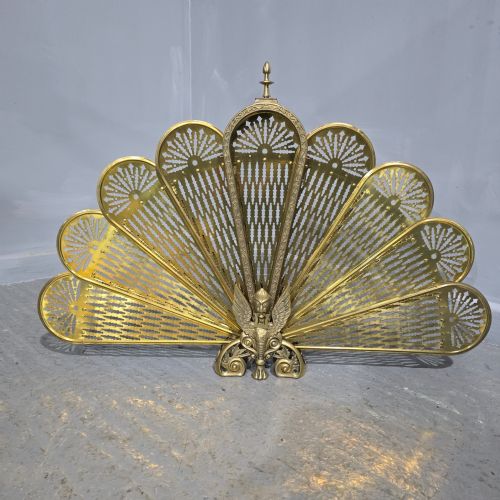
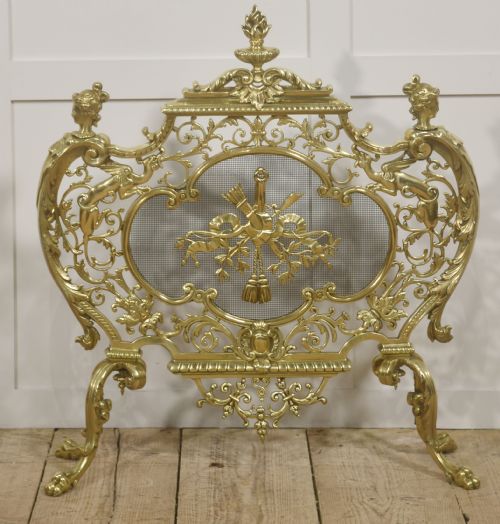
Most entries on this page take the form of fireplace fenders and kerbs, constructed to sit directly on the hearth around the grate. Alongside these frames, you will occasionally encounter upright fire screens made from pierced brass.
The styles range from the clean serpentine lines of the Georgian period to ornate Victorian floral motifs and flowing Art Nouveau designs. Brass and steel dominate the offerings, often paired together in a single piece.
How they were made
Makers shaped sheet metal using hand-piercing techniques to cut out delicate patterns, geometric designs, and flower patera motifs. Steel and iron components were forged and polished, while brass elements were cast and worked into decorative kerbs.
Detailing often included beaded decoration, engraved surfaces, and applied brass or copper elements. Iron and steel frames frequently received a black finish or a high-polish treatment to contrast with the warm tone of the brass.
A dragon detail hides among the floral patterns on a polished steel guard.
What varies in quality
The standard of a pierced metal fire guard rests upon the crispness of the hand-pierced cutouts and the weight of the metal used. Heavy gauge steel and thick cast brass denote a sturdier build than lighter, thin plates.
Finishing touches separate standard examples from finer ones, such as well-executed serpentine fronts, neat beaded decoration, and integrated tool sets. Patination on the metal surface also dictates visual appeal, showing how the piece has aged through the nineteenth century and beyond.
The Pierced Metal Fire Guard Glossary
- Fender
- A low metal guard placed on the hearth in front of an open fireplace to contain falling coals and sparks. Most examples on this page serve this exact function.
- Kerb
- An alternative term for a fender, particularly one that forms a distinct boundary or barrier around the fireplace opening.
- Serpentine
- A gently curved shape resembling a snake, featuring a convex centre flanked by concave curves. This contour appears frequently on Georgian and Regency steel frames.
- Patera
- A circular ornamental bas-relief resembling a classical libation dish, often carved or stamped with flower motifs on Victorian copper and brass pieces.
- Art Nouveau
- A decorative style characterised by flowing, organic lines and plant-inspired motifs, seen on late nineteenth-century steel and brass guards.
Pierced Metal Fire Guard: Frequently Asked Questions
What is a pierced metal fire guard used for?
These pieces protect the rug and flooring by catching stray embers and sparks thrown from an open fireplace. They also provide a physical barrier around the hearth.
Beyond safety, they frame the fireplace opening and anchor the visual arrangement of the room with polished brass or dark iron.
How do I place a fender around my hearth?
The fender sits directly on the floor or hearthstone, enclosing the front and sides of the fireplace opening. You simply align the frame to match the width of your hearth.
Ensure you measure the floor space carefully, as Georgian and Victorian pieces come in various lengths and depths.
How do I tell a Georgian guard from a Victorian one?
Georgian pieces often display refined steel serpentine fronts with restrained engraving and lighter proportions. They rely on the quality of the forged metal.
Victorian examples tend to use heavier brass, incorporating ornate floral patera, beaded decoration, and industrial-looking iron elements or Art Nouveau curves.
Can I clean polished steel and brass guards?
You can maintain the metal using appropriate non-abrasive cleaners designed specifically for brass or steel. Care must be taken not to damage historic patination.
Regular dusting and light wiping keep the pierced patterns clear of soot and ash accumulation.