

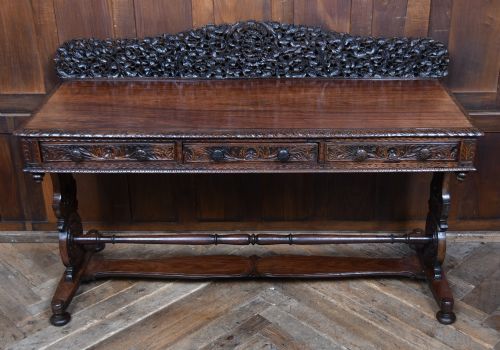
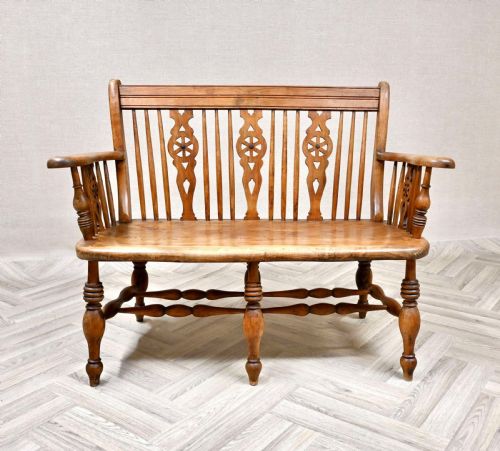
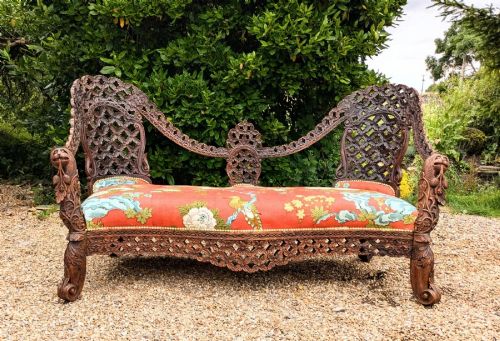
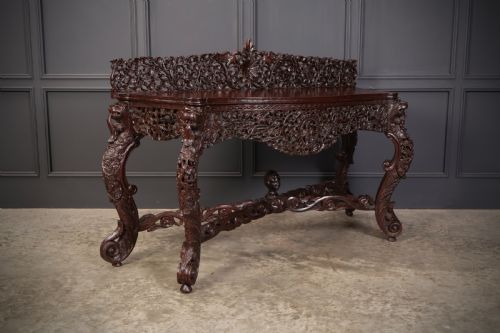


Pierced Carved Sofa
A pierced carved sofa brings intricate woodwork into a room, offering deep relief patterns and solid timber construction.
Pierced Carved Sofa
A pierced carved sofa represents a notable form of seating, combining deep openwork joinery with substantial timber frameworks. These pieces emerge predominantly in nineteenth-century contexts, though earlier Chippendale examples also appear on the market.
The most common iterations on this page showcase Anglo-Indian and Anglo-Burmese colonial craftsmanship alongside Victorian interpretations of eighteenth-century Chippendale styles. Buyers encounter both robust settees and elaborate benches that utilise open carving techniques across backs and rails.
Makers shaped these items from dense tropical hardwoods and native British timbers, producing furniture designed for prominent reception spaces. The forms range from two-seat settees to wider bench seats and shield back sofas.
How they were made
Craftsmen utilised heavy timbers such as mahogany, padauk, teak, rosewood, elm, ash, and yew to build the foundational frames. These woods provided the structural integrity required to support intricate pierced decoration without compromising the load-bearing strength of the settee.
Joiners executed the pierced carved sofa design by cutting completely through the timber panels to create openwork patterns, complemented by detailed surface relief. Upholsterers then finished the seating areas with traditional fabric coverings suited to the period.
Pierced Carved Sofa Retail Price Guide 2026
Typical asking prices for pierced carved sofa among the pieces listed under this phrase on Sellingantiques today, from the lower quarter to the upper quarter. They describe what is for sale here now, not the wider market.
Listings feature items spanning the eighteenth and nineteenth centuries, constructed from materials including mahogany, padauk, teak, elm, ash, yew, and fabric.
What varies in quality
The distinction between tiers rests upon the depth, crispness, and ambition of the carving across the wooden frame. Superior examples display fluent, undercut foliage and figures that retain sharp definition, whereas simpler pieces rely on shallow surface incisions.
Material selection further defines the standard of a pierced carved sofa, with dense exotic hardwoods like padauk and rosewood achieving a finer finish than standard domestic softwoods or plain hardwoods. The structural harmony between the carved wooden back and the upholstered seat dictates the overall success of the design.
The Pierced Carved Sofa Glossary
- Pierced carving
- Woodwork cut completely through from front to back to create an openwork pattern. This technique defines the visual lightness of the backrests on these settees.
- Padauk
- A dense tropical hardwood known for its reddish-brown colour and durability. Craftsmen utilised this material extensively in Anglo-Burmese and colonial furniture production.
- Shield back
- A chair or sofa backrest shaped in the outline of a heraldic shield. This style appears frequently in eighteenth-century and Victorian Chippendale revival designs.
- Settee
- A long wooden or upholstered seat with arms and a back designed for more than one person. These pieces function as principal seating items in traditional interiors.
- Anglo-Indian
- Furniture made in India by local artisans using traditional British forms combined with indigenous carving styles. These objects date largely from the nineteenth century.
Pierced Carved Sofa: Frequently Asked Questions
What is a pierced carved sofa?
A pierced carved sofa is a seating item featuring openwork wooden decoration cut directly through the frame. These pieces often date from the nineteenth century and reflect colonial or revival styles.
Craftsmen utilised dense hardwoods to achieve the intricate pierced patterns found along the backrests and rails. Buyers find various forms ranging from colonial settees to traditional British bench seats.
How do I date a carved sofa?
Dating relies on identifying the timber species, the regional carving style, and the structural form of the frame. Nineteenth-century examples often display colonial or Victorian revival characteristics.
Examining the joinery methods and the specific motifs used in the pierced woodwork helps distinguish earlier eighteenth-century Chippendale pieces from later Victorian interpretations.
Where were these sofas made?
These pieces originated in British workshops as well as colonial centres in India and Burma. Artisans in those regions adapted traditional British furniture forms using local timbers.
Workshop production methods varied significantly between domestic British cabinet makers and colonial carvers working in tropical hardwoods.
How do I care for carved wooden furniture?
Care involves maintaining stable indoor humidity levels and keeping the timber away from direct heat sources. Regular dusting with a soft cloth preserves the detailed surface relief.
Avoid using harsh chemical polishes on the exposed wood or the fabric upholstery to protect the original finish and structural integrity of the settee.