
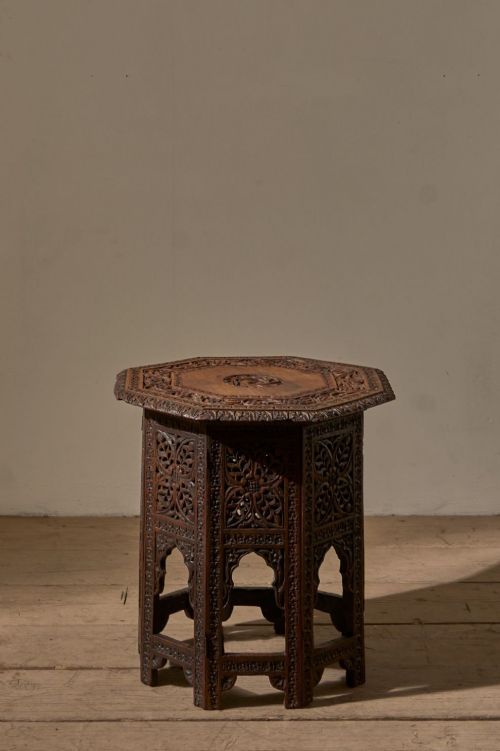
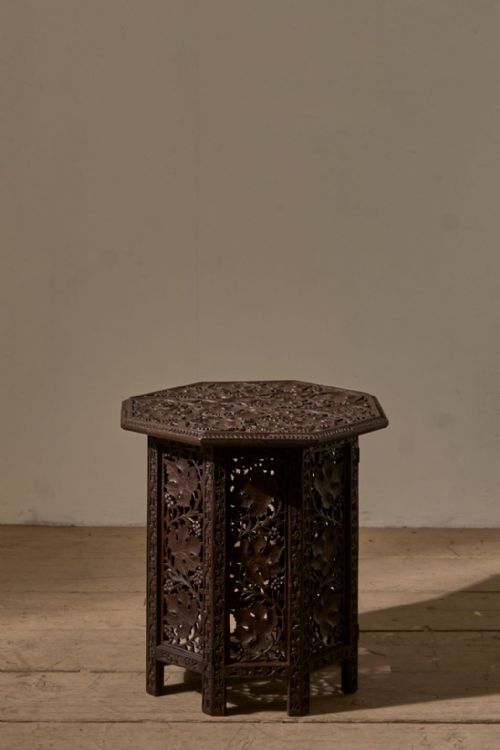
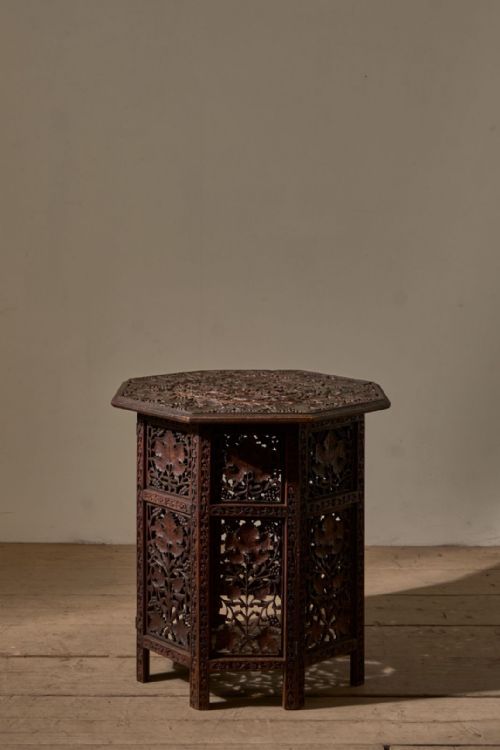


Pierced Carved Occasional Table
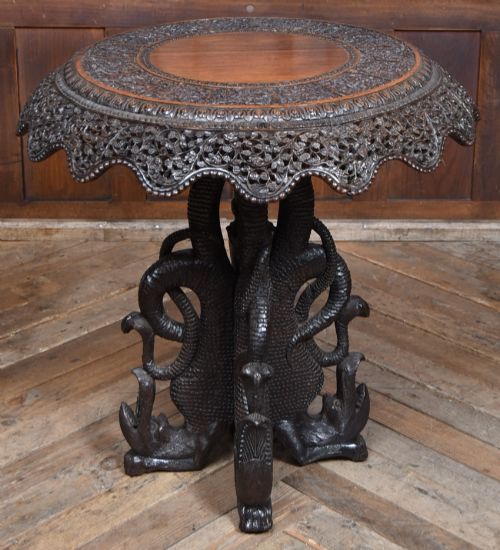
A pierced carved occasional table brings intricate colonial craftsmanship and rich timber into a room, offering a functional surface with deep relief carving.
Pierced Carved Occasional Table
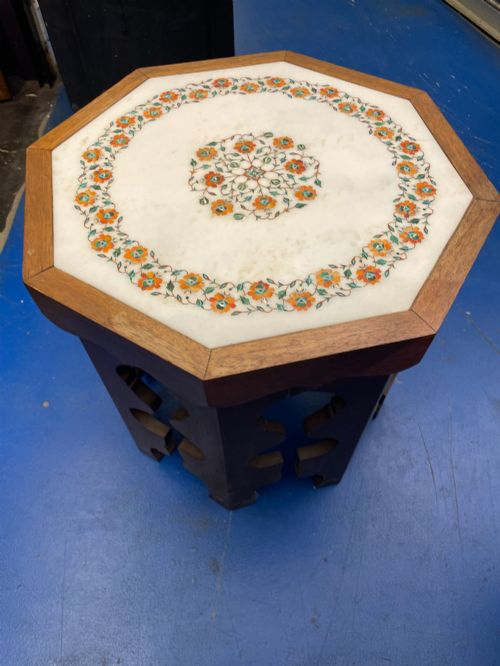
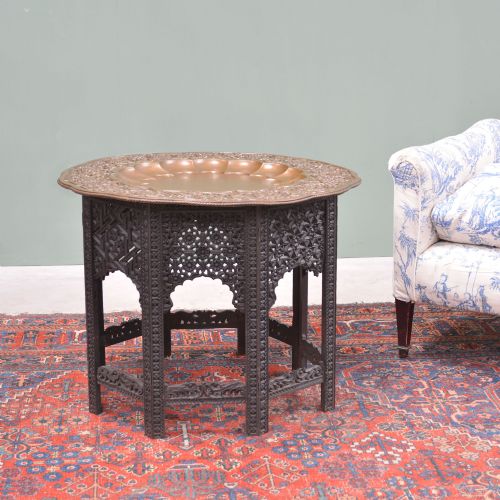
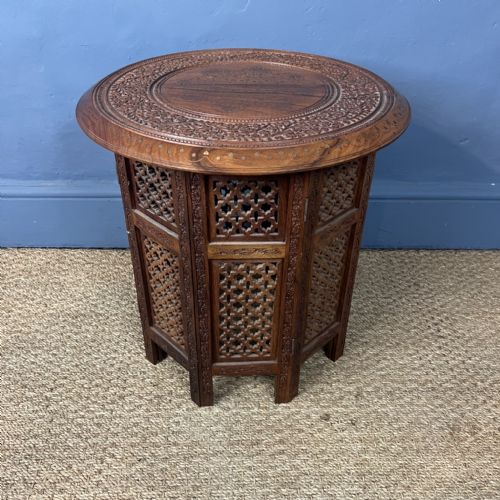
A pierced carved occasional table is typically associated with Anglo-Indian, Burmese, and Victorian production from the nineteenth and early twentieth centuries. These pieces appear most frequently in forms such as folding tray tables, octagonal side tables, and tilt-top lamp tables.
Makers utilised dense exotic timbers like teak, padauk, and hardwood, often enriching the carved surfaces with brass inlay, copper, or bone. The resulting objects served colonial households as portable campaign furniture or decorative display surfaces in metropolitan drawing rooms.
The aesthetic bridges British domestic requirements of the Victorian era with traditional South Asian and Southeast Asian woodcarving traditions. Buyers find both compact folding examples and larger stationary pieces intended for central placement in a room.
Materials and construction
Craftsmen selected heavily figured timbers including teak, padauk, mahogany, and burr oak for their stability under intricate hand chiselling. Dense grain allowed artisans to cut completely through the wood without losing structural integrity in the fretwork panels.
Surface decoration frequently combined deep relief carving depicting foliage, dragons, or peacocks with contrasting metal wire inlays of brass and copper. Folding mechanisms on campaign pieces relied on clever intersecting wooden frames that collapsed flat without metal hinges.
Common forms recorded across the inventory include octagonal side tables, folding tray stands, and tilt-top lamp tables.
Distinctions in quality
Quality rests in the crispness of the chisel work and the depth of the pierced lattice, where superior examples show sharp undercutting rather than flat, machine-like stamping. The choice of timber also dictates grade, with dense padauk and figured teak commanding greater presence than standard utility hardwoods.
Construction rigidity separates finer campaign tables from ordinary folding variants, particularly in how securely the top locks onto the folding base. The precision of inlaid brass or bone work, executed without gaps or missing fragments, marks the distinction between standard export wares and exceptional commissions.
The Pierced Carved Occasional Table Glossary
- Anglo-Indian
- Descriptive term for furniture made in India during the British colonial period, often combining European forms with local carving techniques. These items were largely produced for export to British homes.
- Fretwork
- Openwork ornamentation carved so that the pattern is pierced completely through the material. This technique creates a lace-like wooden screen effect characteristic of eastern occasional tables.
- Campaign table
- Portable furniture designed to fold or dismantle easily for transport by military officers or colonial administrators. They feature clever folding bases and removable trays.
- Padauk
- A heavy, durable tropical hardwood prized for its deep reddish-brown colour and stability. It provides an ideal dense ground for intricate hand carving.
- Tilt-top
- A tabletop hinged to its pedestal so it can be tipped vertically when not in use. This mechanism saved space in nineteenth-century parlours.
Pierced Carved Occasional Table: Frequently Asked Questions
Were these tables made for British homes?
A large proportion of these carved occasional tables were produced in India and Burma specifically for the British export market during the Victorian and Edwardian eras. Officers, merchants, and officials brought them back to furnish domestic interiors in Britain.
The designs successfully blended exotic materials with familiar European furniture forms such as wine tables, lamp stands, and tea trays. This made them instantly adaptable to formal drawing rooms and studies alike.
How should I clean carved teak?
Dust intricate fretwork regularly with a soft-bristled brush to prevent dirt settling deep within the carved recesses. Avoid wet cloths or harsh chemical polishes that can damage dry historic timber and loosen inlaid brass.
Feed the hardwood occasionally with a modest amount of neutral beeswax applied on a lint-free cloth. Buff gently along the grain to preserve the natural lustre of padauk or teak.
Are brass inlaid tables fragile?
The brass wire inlay is generally secure within the timber channels, but extreme changes in household humidity can cause the wood to expand and release the metal. Treat the surfaces with care when placing heavy ceramic lamps or hot cups on the tops.
Inspect the inlay periodically for lifted ends that might catch on clothing or dusters. A restorer can easily tap loose brass wire back into its seasoned wooden channel.