



Pier Table and Mirror
A pier table and mirror brings architectural balance and reflected light to a room, pairing a console base with a matched hanging glass.
Pier Table and Mirror
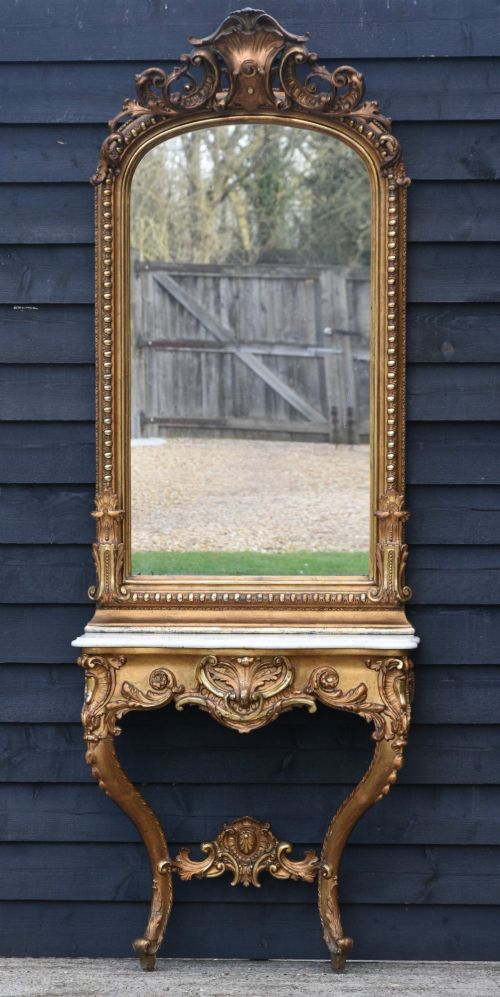
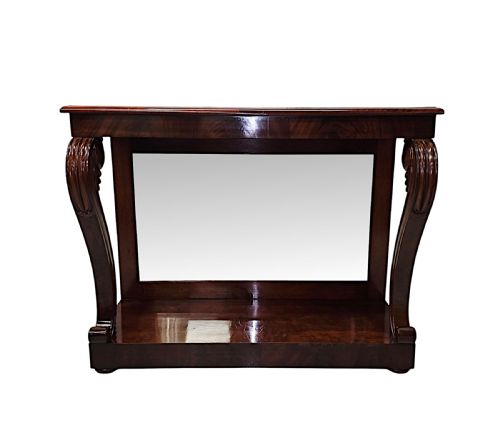
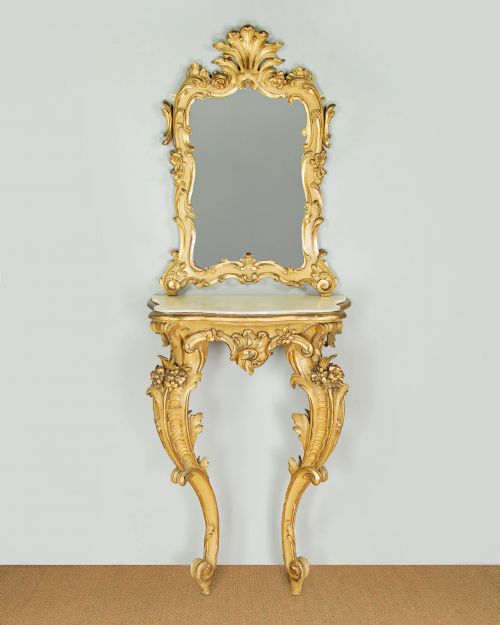
A pier table and mirror combines a low console or pier table designed to sit against a wall pier with a vertical looking glass mounted directly above it. The form dates prominently through the Regency and Victorian periods, often appearing as matched sets or unified console and mirror combinations.
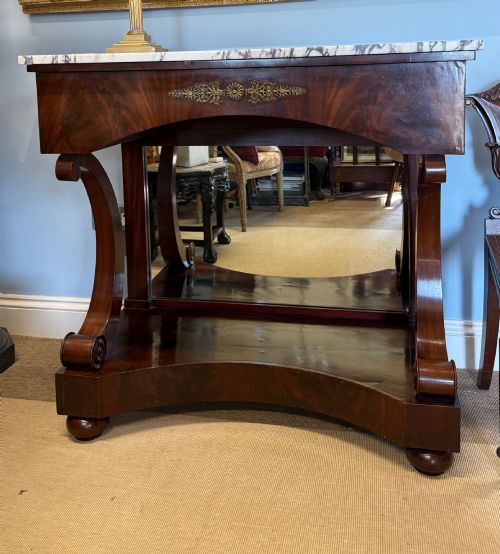
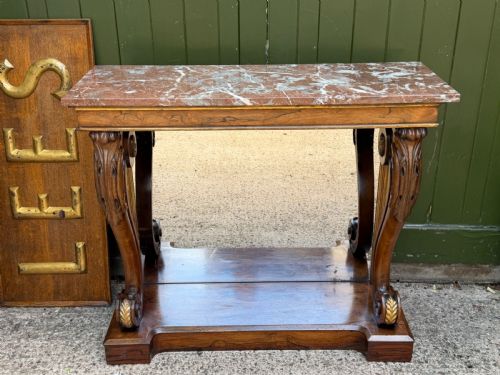
Evidence on this page shows pieces originating from French, Italian, and British workshops, spanning the nineteenth and early twentieth centuries. Console tables and chiffoniers also appear frequently alongside dedicated mirror sets.
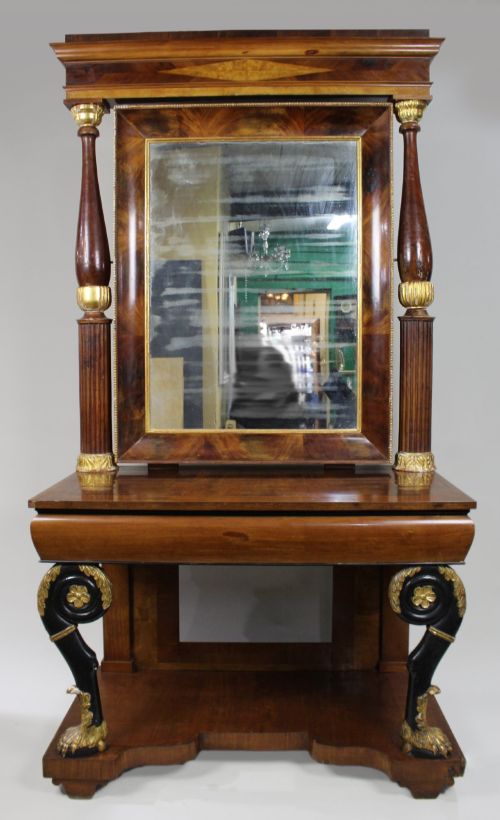
Makers and regional styles range from French giltwood and Rococo revival pieces to Irish mahogany works and Biedermeier designs. Buyers encounter both standalone tables and comprehensive console table and mirror sets.
Materials and Construction
Construction relies heavily on dense hardwoods such as mahogany, rosewood, and walnut, frequently paired with applied parcel-gilt and gesso details. Tables incorporate heavy figured marble tops, notably white carrara, resting upon carved wooden bases.
Reflecting surfaces utilise mirror glass framed in elaborate giltwood, carved wood, or painted trumeau styles. Craftsmanship involves hand-carving, marquetry inlay, and traditional gilding techniques across diverse European traditions.
Listings span multiple materials including marble, giltwood, mahogany, rosewood, and mirror glass across the nineteenth and twentieth centuries.
Assessing Quality
The standard of a pier table and mirror rests on the depth of hand-carving in the giltwood or timber, and the crispness of applied gesso details. Higher quality examples display substantial figured marble tops paired with original mirror glass that retains authentic foxing and silvering.
Proportion and stylistic cohesion between the table base and the hanging mirror dictate the visual success of the set. Pieces executed by named makers or distinct regional workshops command greater interest through superior joinery and material selection.
The Pier Table and Mirror Glossary
- Pier Table
- A low table designed specifically to stand against the wall space between two windows. It often supports a matching mirror above.
- Trumeau
- A decorative wall panel containing a painted scene or mirror glass, frequently integrated into period interior schemes. It sits above console tables in French decorative arts.
- Giltwood
- Timber carved and coated with gold leaf or thin gold paint. This finish defines many Rococo and Regency mirror frames.
- Parcel-Gilt
- Woodwork partially gilded to highlight specific carved details against a dark polished wood ground. Mahogany and walnut pieces frequently utilise this technique.
- Gesso
- A plaster-like mixture applied to wood surfaces as a base for gilding or painting. It allows craftsmen to carve intricate relief ornamentation.
Pier Table and Mirror: Frequently Asked Questions
Where do you place a pier table and mirror?
These pieces traditionally occupy the wall space between two windows, known as the pier, to maximise natural light reflection.
They also function effectively in entrance halls and reception rooms where a console base provides display space beneath a tall wall mirror.
Are the table and mirror usually sold together?
Many examples survive as matched sets designed by the same maker or workshop to complement each other in proportion and finish.
Some listings offer console tables and pier mirrors that were paired during a later period to recreate the traditional architectural arrangement.
What woods were used for these tables?
Cabinetmakers utilised dense timbers such as mahogany, rosewood, and walnut, often selecting highly figured grains for the table surfaces.
Parcel-gilt highlights and painted finishes frequently appear alongside these dark woods to create contrast.
How do I identify the period of a piece?
Stylistic indicators such as Regency curves, Victorian Rococo carving, or French Empire motifs point toward specific nineteenth-century eras.
Construction methods, joinery details, and the characteristics of the mirror glass help confirm the date of manufacture.