

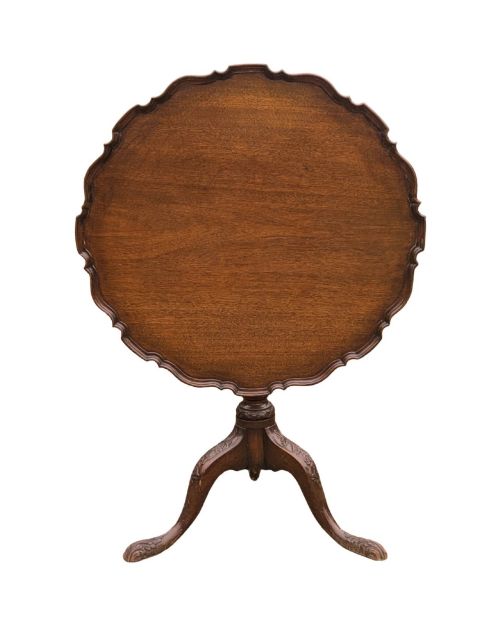
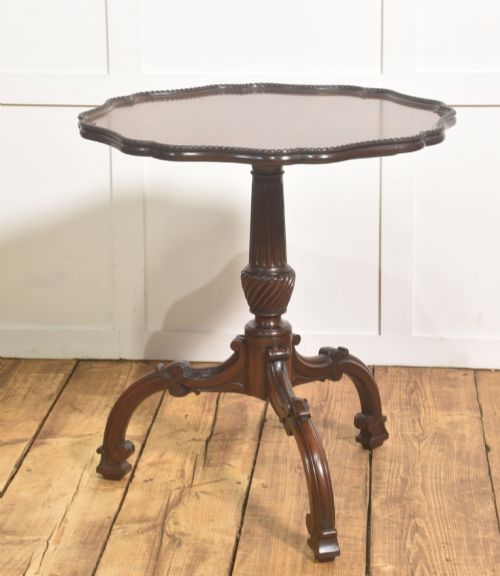
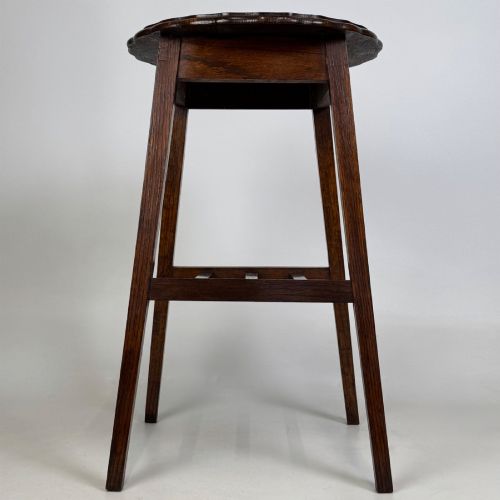
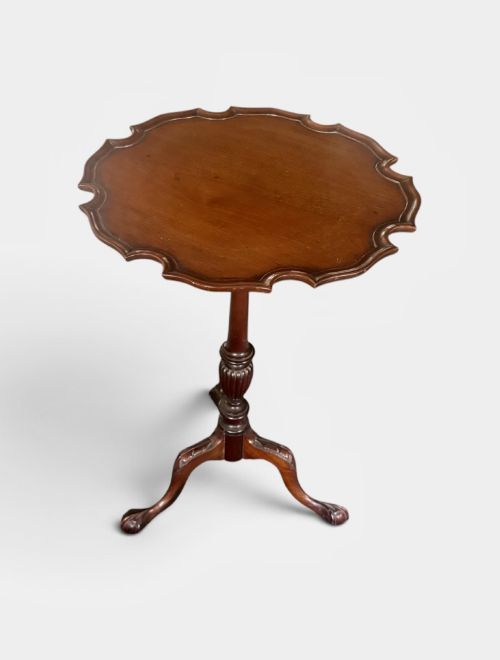


Piecrust Pedestal Table
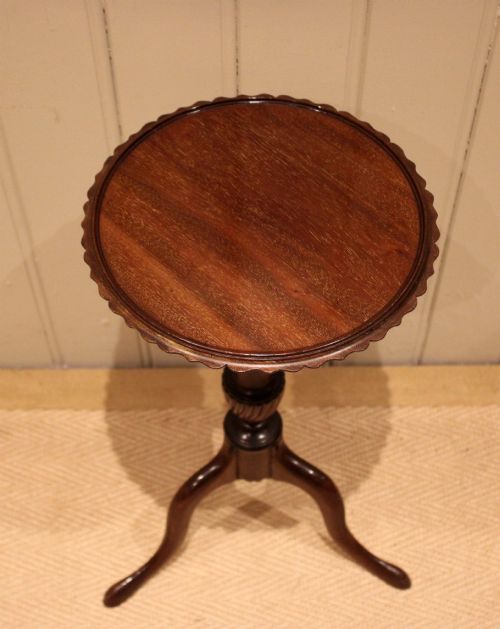
A piecrust pedestal table brings a raised scalloped edge and a sturdy central column together for practical display.
Piecrust Pedestal Table
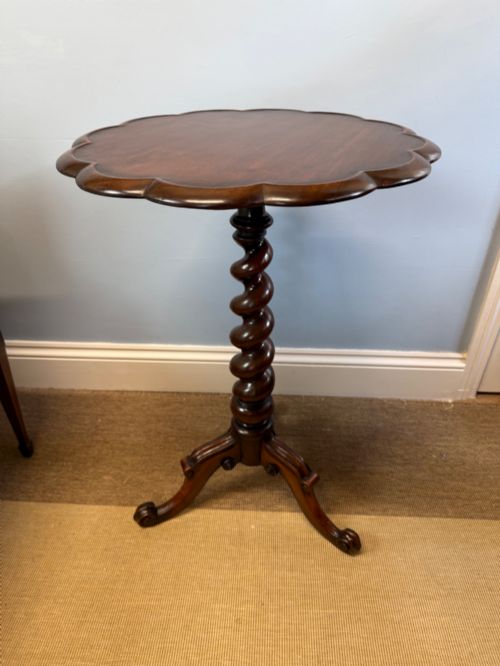
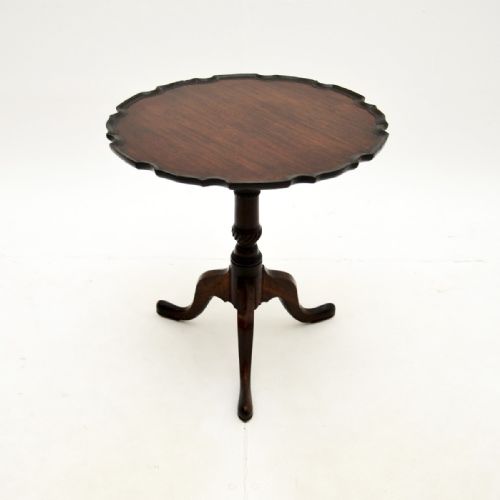
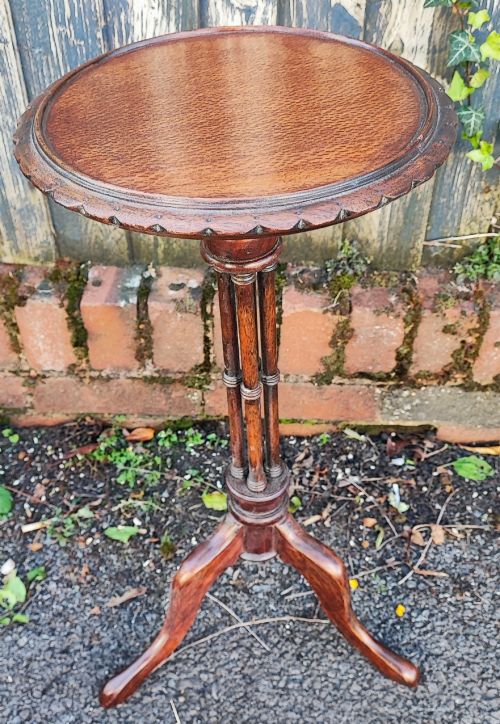
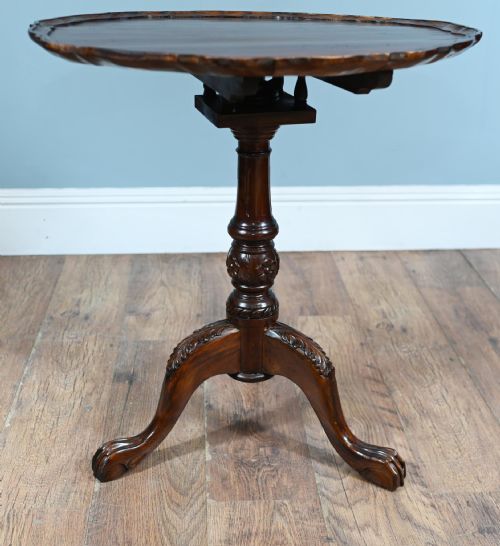
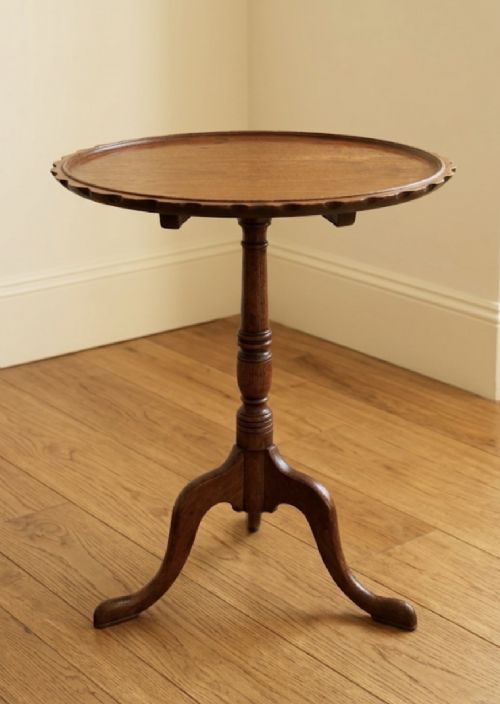
A piecrust pedestal table stands on a central column supported by a tripod base, offering a compact footprint for living spaces.
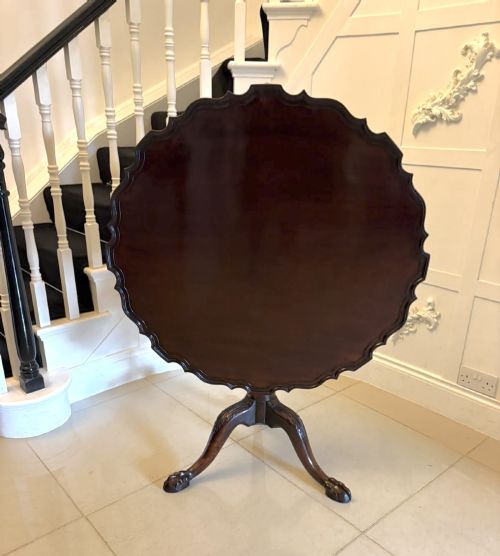
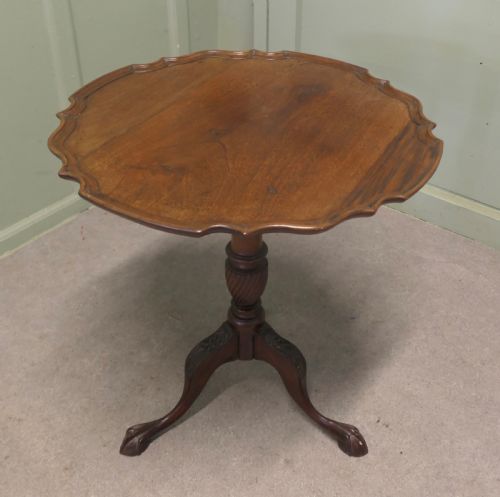
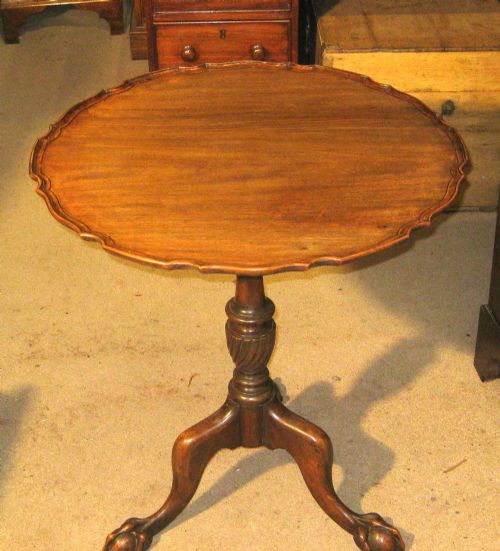
The defining feature is the raised, carved rim around the top, which resembles pastry crimping and prevents items from sliding off.
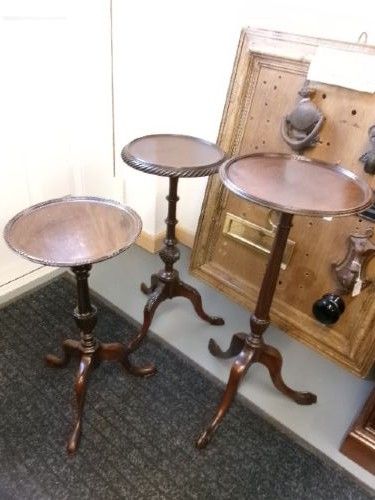
These pieces function as wine tables, lamp stands, occasional tables, and tilt-top dining centre tables.
Materials and construction
Mahogany is the primary timber used across these pieces, frequently chosen for its strength and rich grain.
Walnut, burr walnut, flame mahogany veneer, figured walnut, and oak also appear, alongside brass hardware and satinwood details.
Construction techniques include tilt-top mechanisms, birdcage supports, and solid timber carved rims.
Piecrust Pedestal Table Retail Price Guide 2026
Typical asking prices for piecrust pedestal table among the pieces listed under this phrase on Sellingantiques today, from the lower quarter to the upper quarter. They describe what is for sale here now, not the wider market.
Mahogany dominates these listings, appearing alongside walnut, burr walnut, oak, and satinwood across eighteenth-century and Edwardian pieces.
Judging quality in a piecrust pedestal table
Quality rests in the crispness of the carved rim and the stability of the central pedestal and tripod legs.
Timbers with deep natural patina and well-figured grain distinguish finer examples from standard production pieces.
The smoothness of the tilt-top action and the integrity of the joinery indicate skilled cabinetmaking.
The Piecrust Pedestal Table Glossary
- Piecrust rim
- A raised, decoratively carved edge resembling pastry crimping. This moulding is typically shaped from solid timber rather than attached separately.
- Tripod base
- A support structure featuring three legs radiating from a central column. This design ensures stability on uneven floors.
- Tilt-top mechanism
- A hinge system allowing the table top to pivot into a vertical position. This enabled easy storage against a wall when not in use.
- Birdcage
- A timber framework beneath the table top that permits both rotation and tilting. It connects the surface to the central pedestal.
- Patina
- The surface sheen developed through age, handling, and polishing. A rich original patina indicates decades of careful maintenance.
Piecrust Pedestal Table: Frequently Asked Questions
What was a piecrust pedestal table used for?
These tables served multiple domestic functions in period homes, frequently acting as wine tables, tea tables, or lamp stands.
Their tilt-top design allowed them to be folded down and pushed against a wall when floor space was needed for other activities.
How do I spot an eighteenth-century table?
Eighteenth-century examples often display hand-carved mahogany timbers with deep, warm patination and precise joinery.
They frequently incorporate birdcage mechanisms and authentic tripod leg configurations that differ from later revival pieces.
Are these tables sturdy enough for daily use?
The three-legged tripod base is engineered to provide stable support on level surfaces without wobbling.
While robust, the tilt-top and birdcage mechanisms require careful handling when moving the furniture around a room.
How do I care for a mahogany finish?
Mahogany surfaces benefit from occasional dusting with a soft cloth and minimal exposure to direct sunlight or extreme temperature shifts.
Applying traditional wax polish helps maintain the timber's natural moisture and preserves the historic surface sheen.