


Pet Portrait Oil Canvas
A pet portrait oil canvas captures the enduring bond between owners and animals across centuries of artistic tradition.
Pet Portrait Oil Canvas
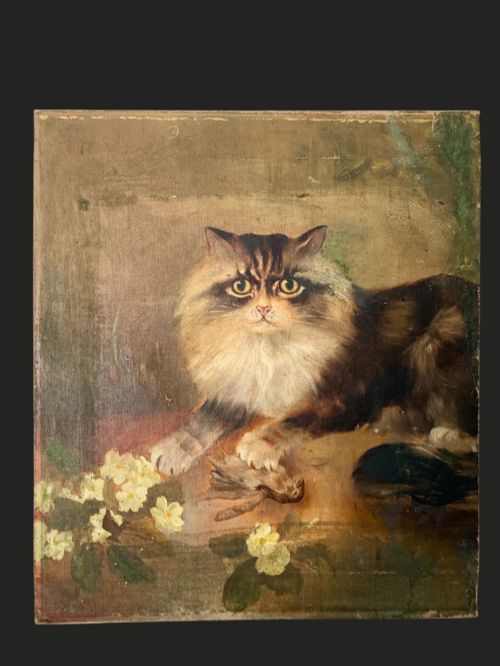
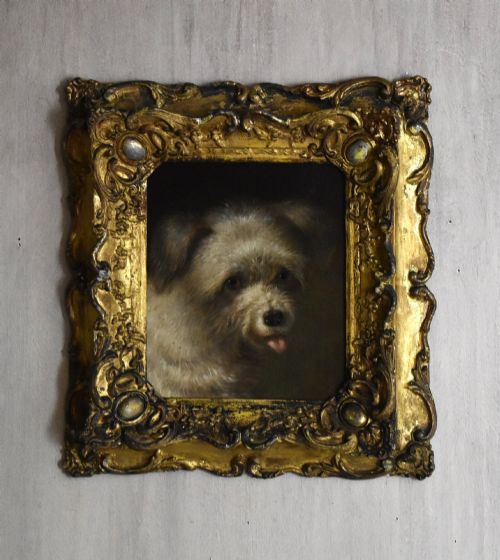
A pet portrait oil canvas depicts beloved animals, ranging from pampered lapdogs and racing greyhounds to mischievous kittens and rabbits, rendered across multiple centuries. These works reflect the personal significance owners placed on their animals, preserving individual pets through painted likenesses. The selection spans the eighteenth, nineteenth, and early twentieth centuries, capturing domestic companions in varied settings.
The pieces on this page lean heavily into nineteenth-century British and Victorian traditions, alongside earlier seventeenth-century aristocratic portraiture incorporating pet animals. Subjects appear alone, in groups, or alongside their owners, demonstrating the social role of pets in historical households. Stylistic approaches range from provincial naive works to refined academic realism.
Materials and technique
Artists painted these works primarily using oil paint applied to woven canvas supports. Canvases were typically stretched over wooden frames, occasionally complemented by decorative gesso and giltwood frames that provided structural support and visual presence.
The technique relies on the slow-drying properties of oil paint to build depth through layered glazes and opaque brushwork. This medium allowed painters to capture the texture of animal fur, the sheen of eyes, and the atmospheric details of interiors and garden courtyards.
Listings span periods from the seventeenth century through the interwar era, featuring oil on canvas supported by wooden and giltwood frames.
Distinctions in execution
Quality in these works rests upon the anatomical accuracy and psychological expression achieved by the artist. Stronger examples convey the distinct personality and physical posture of the animal with vitality, whereas weaker pieces result in stiff or generic representations.
The handling of surrounding elements, such as fabric textures, interior furnishings, or landscape backgrounds, further separates accomplished academic works from provincial or naive school productions. Frame craftsmanship also contributes to the overall integrity of the surviving piece.
Martin Theodore Ward·William Barraud·Agnes Augusta Talboys·Christian Lindner·John Henry Dell·M.E.Hankinson·Valentine Thomas Garland·Florence Mabel Hollams·Philip Eustace Stretton·Francisco Jose Domingo y Marques·Samuel John Carter·A. Betts·Frank Owen Salisbury·Jules Le Roy·Sir Godfrey Kneller·Peter Lely·Mary Beale·Robert Surtees Snr
The Pet Portrait Oil Canvas Glossary
- Oil on canvas
- A painting technique using pigments bound in a drying oil applied to a woven fabric support. This combination offers flexibility and longevity.
- Naive school
- Art produced by painters without formal academic training, characterised by flattened perspective and direct charm. These works often display a unique observational honesty.
- Giltwood
- Wood that has been coated with a thin layer of gold leaf. This finish frequently decorates the frames housing antique paintings.
- Gesso
- A paint mixture consisting of a neutral binder mixed with chalk, gypsum, or pigment. It served as a smooth ground applied to wooden frames before gilding.
- Genre painting
- Pictorial representation of scenes from everyday life involving ordinary people and their domestic animals. These subjects capture social history without grand narrative pretension.
Pet Portrait Oil Canvas: Frequently Asked Questions
What animals appear in these paintings?
The subjects include dogs such as spaniels, terriers, greyhounds, and St Bernards, alongside cats, kittens, rabbits, and birds. Animals often appear alongside human owners or within domestic interiors.
These depictions reflect the historical importance of specific breeds and working animals within households across different centuries.
How do I date a pet portrait?
Dating relies on costume details of any human subjects, the style of the frame, and the canvas preparation methods. Artist signatures and documented exhibition histories also provide precise chronological markers.
Stylistic shifts between seventeenth-century aristocratic portraiture and Victorian realism help narrow the period of creation.
Where should I hang an oil painting?
These works require placement away from direct sunlight and excessive moisture fluctuations to protect the canvas and oil pigments. Stable indoor environments preserve both the painted surface and the wooden stretcher bars.
Pairing the canvas with appropriate wall space allows the giltwood frame to complement surrounding interior lighting.
What distinguishes naive school works?
Naive paintings show simplified perspective and direct brushwork produced outside formal academic traditions. They offer an unvarnished view of historical pets and domestic life.
Collectors value these pieces for their charming character and straightforward observational qualities.