
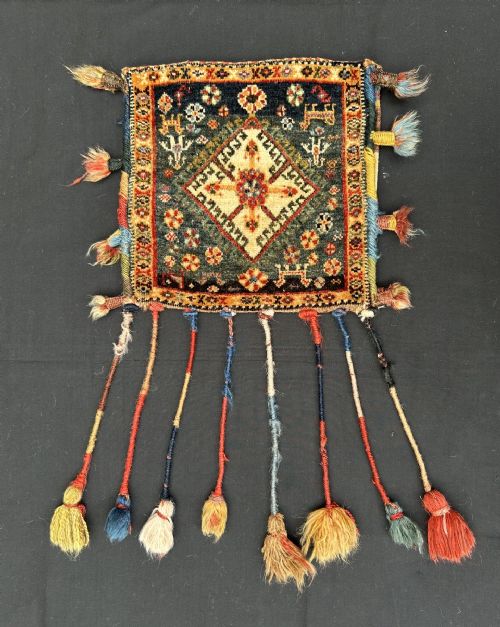
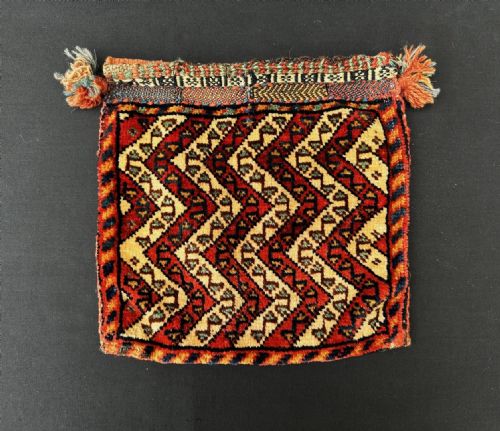
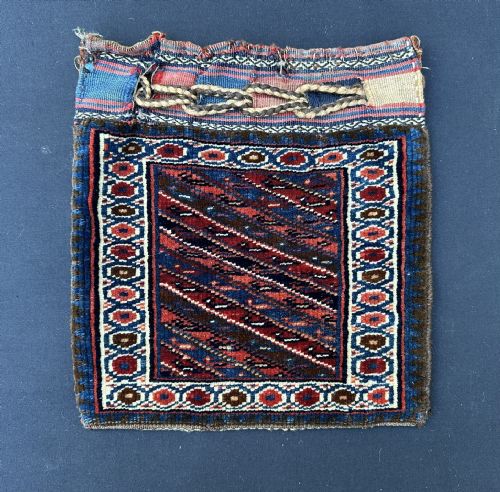


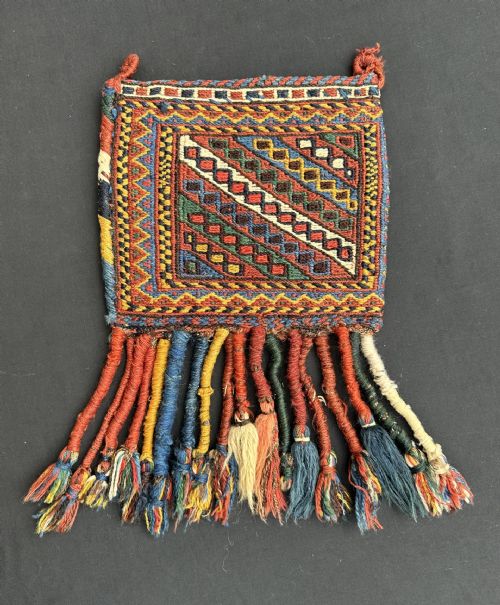
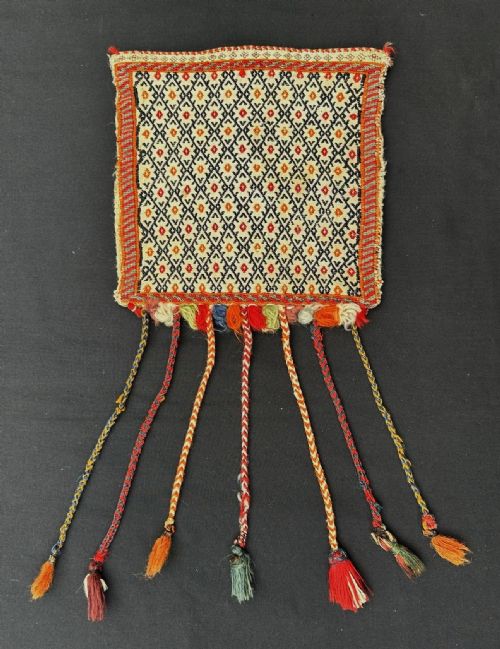
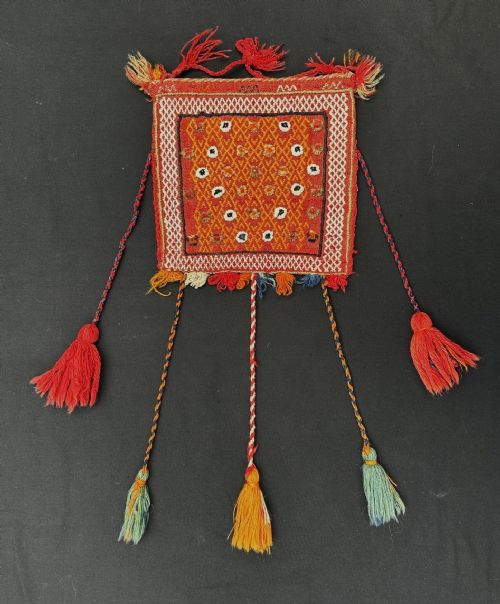


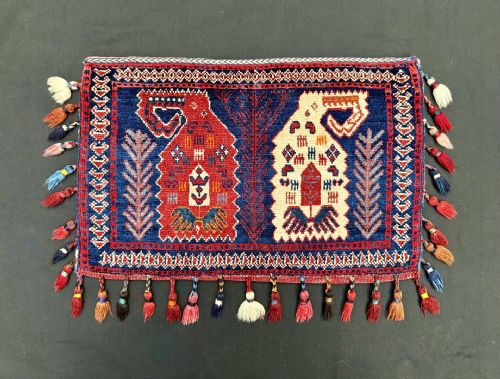
Persian Tribal Vanity Pouch
A persian tribal vanity pouch is a nomadic woven textile piece prized for intricate wool knotting and traditional regional patterns.
Persian Tribal Vanity Pouch
A persian tribal vanity pouch is a small woven storage bag created by nomadic groups across Persia, including the Qashqa'i Confederacy and Afshar Nomads. These textiles served practical purposes in camp life while displaying the distinctive design vocabulary of specific tribes.
Most examples found here date from the late nineteenth century to the early twentieth century, spanning periods such as 1860, 1880, 1900, 1910, and 1920. The forms appear as tribal bags, storage pouches, and double-sided vanity bags originating from regions like Fars, Kerman, and Khorassan.
Tribal weaving groups including the Baluch and Kuhi Afshars produced these pouches using traditional methods passed through generations. Each piece reflects the specific visual motifs and cultural markers of its maker's sub-tribe or confederacy.
Materials and construction
These pouches rely on natural wool and cotton foundations, utilising hand-spun materials that give the textiles their characteristic weight and handle. Natural dyes provide the historic palette seen across the pieces, derived from local plant and mineral sources.
Makers occasionally incorporated cowrie shells into the construction of certain vanity bags as decorative elements. The structural weaving combines sturdy flatweave or pile techniques designed to withstand nomadic use.
The listings span five distinct production periods between 1860 and 1920, utilising wool, cotton, natural dyes, and cowrie shells.
Assessing quality in tribal vanity pouches
Quality rests upon the tightness of the weave and the clarity of the tribal patterns executed by the weaver. Finer knot density and precise geometric or figurative drawing separate standard utility pieces from exceptional tribal examples.
The stability of the natural dyes and the preservation of the original wool pile determine the condition level of each pouch. Intact edge finishes and securely attached decorative elements like cowrie shells contribute significantly to the overall integrity of the textile.
The Persian Tribal Vanity Pouch Glossary
- Vanity pouch
- A small portable bag used by nomadic peoples for personal items and small valuables. These textiles often feature specialised compartments or double-sided construction.
- Tribal bag
- A functional woven container produced by nomadic or village weavers for household storage and transport. They display regional motifs specific to the crafting group.
- Natural dyes
- Colourants obtained from plants, insects, and minerals rather than synthetic compounds. They create the harmonising patination seen on nineteenth-century Persian textiles.
- Cowrie shells
- Marine gastropod shells sewn onto tribal textiles for ornamentation or cultural protection. Their presence adds tactile texture to the bag surface.
Persian Tribal Vanity Pouch: Frequently Asked Questions
What are persian tribal vanity pouches?
These are small woven bags made by nomadic and tribal groups in Persia for personal storage.
They reflect the traditional patterns and textile techniques of specific regional sub-tribes.
How were vanity pouches used?
Nomadic weavers utilised these pouches to hold small personal items, grooming tools, or valuables during travel.
Their portable size made them practical accessories for camp life and daily movement.
How do I live with them?
Display these textiles flat on walls, mount them in shallow frames, or place them on stable surfaces away from direct sunlight.
Gentle vacuuming through mesh helps remove dust without disturbing the delicate wool pile.
How do I tell periods apart?
Dating relies on observing the shifts in natural dye palettes, wool texture, and regional weaving structures across decades.
Nineteenth-century examples typically display softer, saturated vegetable dyes compared to later pieces.