
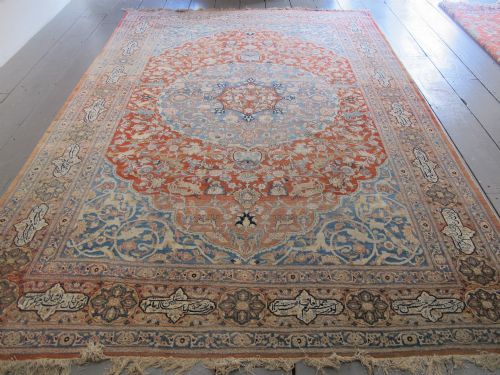


Persian Tabriz Carpet
A persian tabriz carpet brings structured floral elegance and enduring woven artistry from North-West Persia into a room.
Persian Tabriz Carpet
A persian tabriz carpet is a woven floor covering originating from the historic weaving centre of Tabriz in North-West Persia. These pieces appear in various dimensions, from intimate village rugs to substantial room-size and palace-size formats designed for major reception spaces.
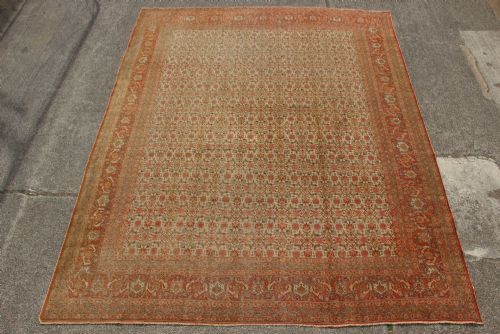
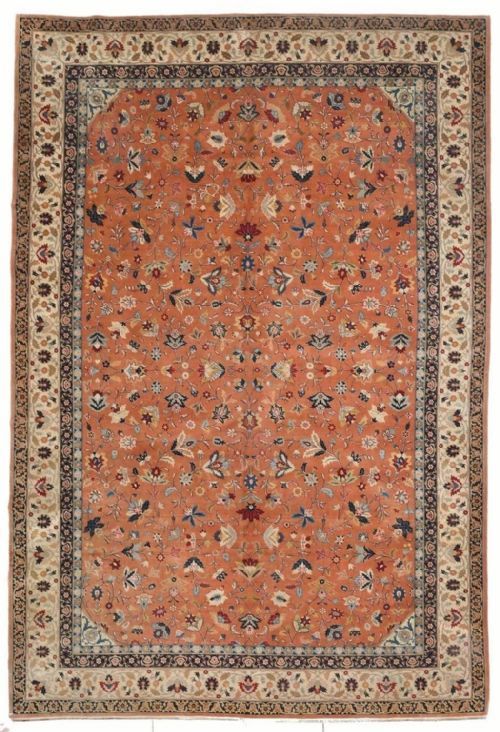
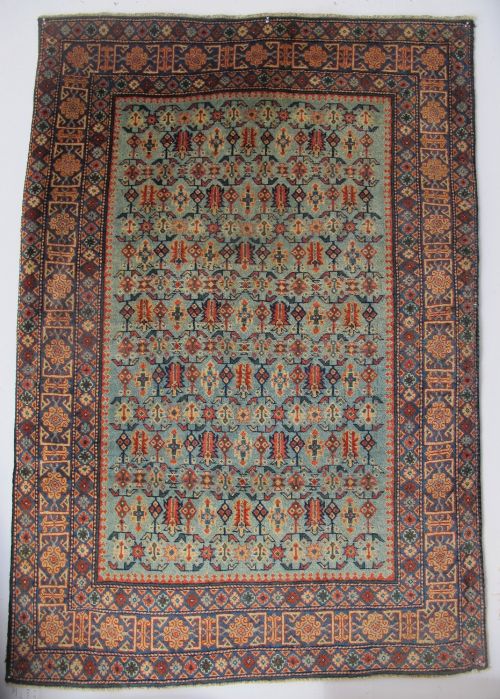
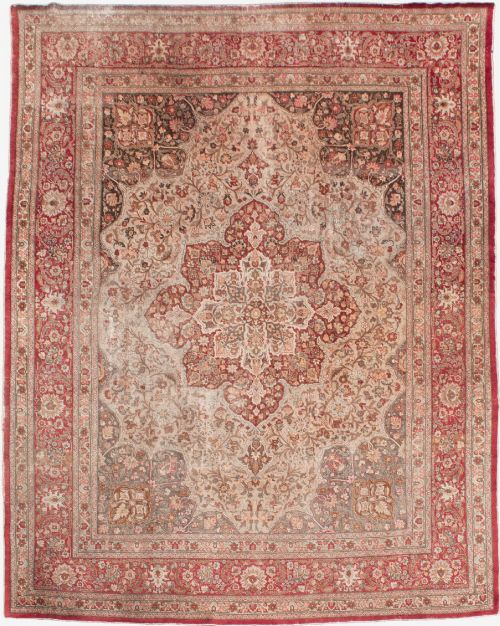
The selections encountered here predominantly span the late nineteenth century and the early decades of the twentieth century, including examples from the Qajar period. Buyers meet both grand, finely detailed city carpets and smaller village or country house rugs bearing traditional floral, hunting, and all-over Herati patterns.
Makers and workshops of note from this tradition, such as Haji Jalili and Benlian, produced distinct regional styles that collectors actively seek. The corpus includes standard wool constructions alongside finer silk and part-silk variations.
How they were made
Weavers constructed these carpets using wool, cotton, and occasionally silk foundations and pile, knotted by hand to create dense and durable surfaces. Cotton generally provided the sturdy warp and weft threads for city and village weaving alike, while wool formed the primary pile.
Master workshops employed natural and early synthetic dyes to achieve specific palettes, ranging from soft pastel tones and ivory grounds to deeper classic hues. Fine examples incorporated intricate pictorial or curvilinear motifs executed with high knot densities.
Woven menagerie scenes of galloping horses and wild game watch quietly from the pile of antique hunting carpets.
What varies in quality
The fineness of the weave and the complexity of the design govern the distinction between standard room-size furnishings and master-produced works. Pieces associated with renowned workshops or specific designers exhibit superior precision in their curvilinear execution and floral detailing.
Material choice also defines the tier of a piece, with pure silk or part-silk constructions and finely spun wool differentiating high-end examples from robust country house carpets. The subtlety of the colour palette and the preservation of the original pile further distinguish premier specimens.
Haji Jalili·Benlian
The Persian Tabriz Carpet Glossary
- Herati
- A repeating geometric floral pattern featuring a central rosette enclosed by a diamond lattice and flanked by curved leaves. This traditional motif appears frequently across Persian weaving.
- Warp
- The vertical threads stretched lengthwise on the loom that form the structural foundation of the carpet. Fringe typically extends directly from these parallel cords.
- Weft
- The horizontal threads passed alternately over and under the warp threads to secure the rows of knots. They bind the structure together across the width of the piece.
- Pile
- The upright cut ends of the knotted yarn that form the soft upper surface of the carpet. Pile density largely determines the clarity of the woven design.
- Qajar Period
- An era in Persian history lasting from the late eighteenth to the early twentieth century. Carpets from this time often display refined floral compositions and soft pastel colourways.
Persian Tabriz Carpet: Frequently Asked Questions
How do I style a large room-size carpet?
Place the carpet centrally beneath primary seating arrangements, allowing sufficient exposed floor space around the border to frame the room.
Subtle pastel palettes and ivory grounds work well with both traditional and contemporary interior schemes without overwhelming surrounding furnishings.
Are these carpets suitable for heavy foot traffic?
Sturdily constructed wool pile examples with cotton foundations handle regular domestic use in living areas and hallways.
Finer silk or part-silk pieces benefit from placement in lower-traffic rooms to protect the delicate fibre structure over time.
How can I identify a Haji Jalili piece?
Haji Jalili carpets are recognised by their distinctive soft pastel colour palettes, often featuring muted golds, corals, and ivory grounds.
They typically display finely spaced floral or architectural motifs that set them apart from standard commercial production.
What is the difference between city and village rugs?
City carpets usually feature highly refined curvilinear designs executed in workshops with exceptionally high knot densities.
Village rugs from the surrounding Tabriz region tend to display slightly more rustic interpretations of classic motifs and sturdy, practical constructions.