



Persian Shiraz Carpet
A persian shiraz carpet brings the rich palette and geometric motifs of South West Persia into a modern interior.
Persian Shiraz Carpet
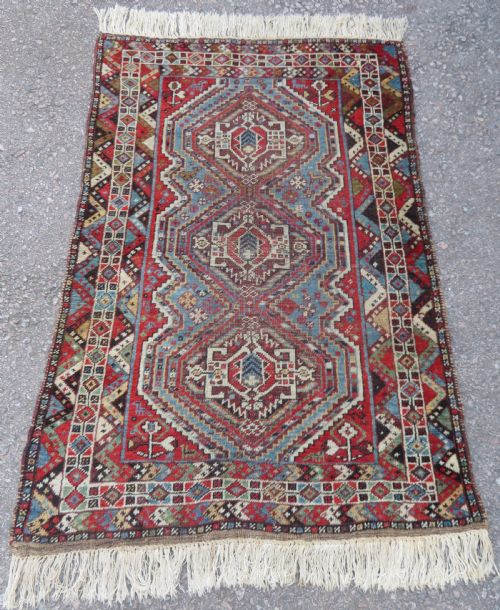
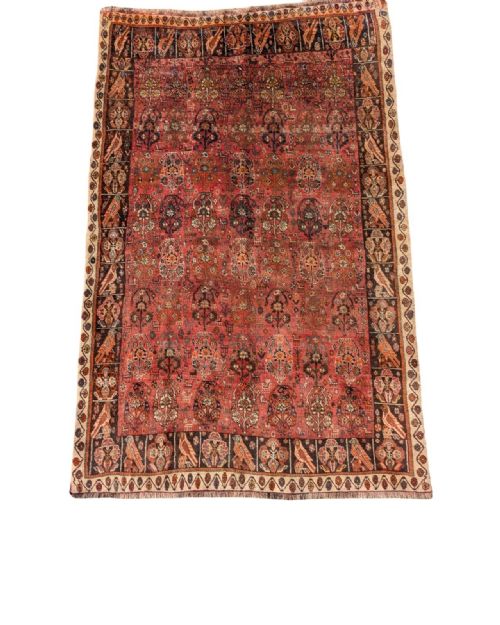
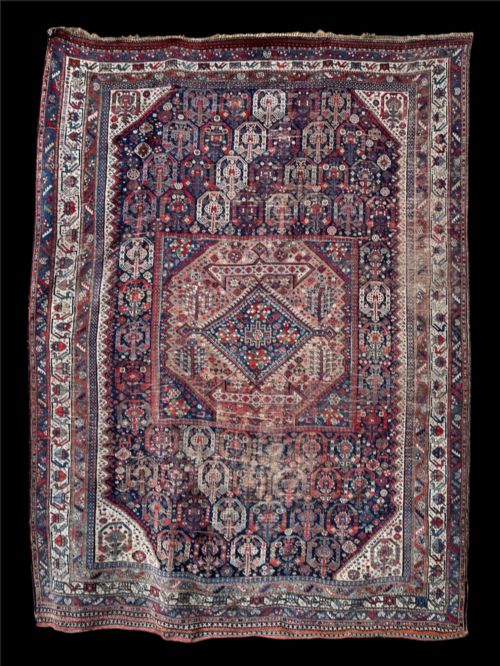
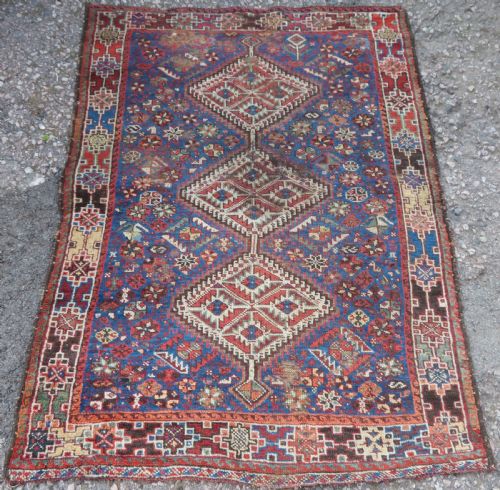
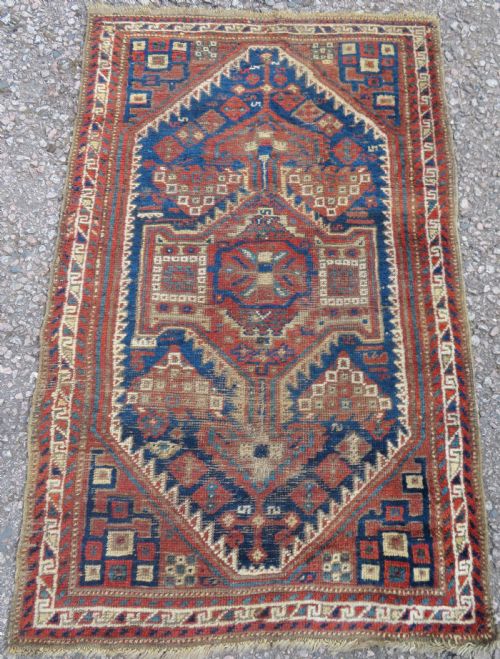
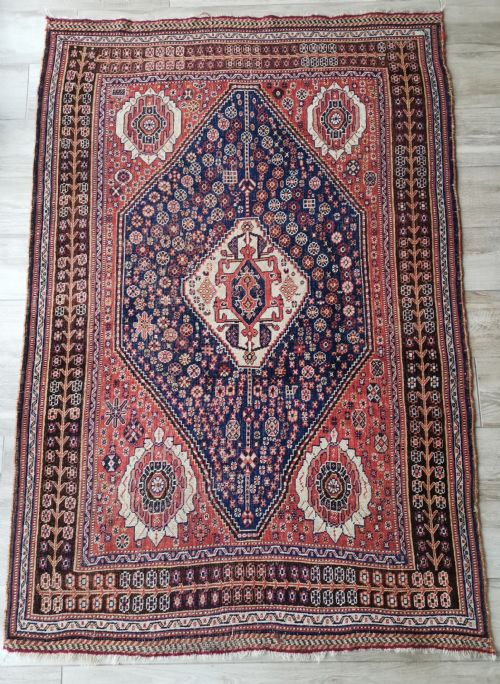
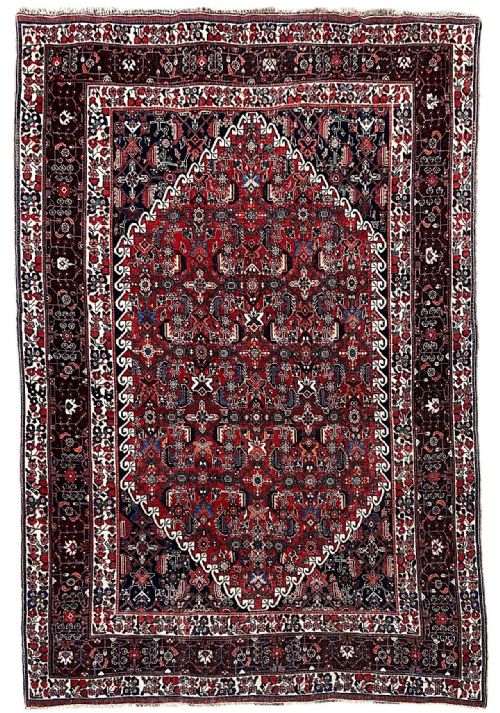
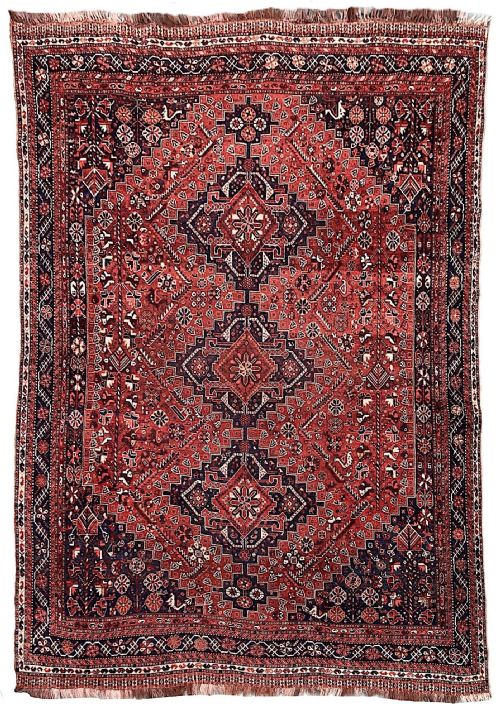
A Persian Shiraz carpet represents traditional nomadic and village craftsmanship originating from the South West region of Persia. These floor coverings frequently overlap with the output of tribes such as the Qashqai and Khamseh, sharing similar regional motifs and structures.
The pieces available span from the late nineteenth century through to the early decades of the twentieth century, encompassing dates such as 1880, 1900, 1910, 1920, and 1930. They manifest primarily as rugs, area rugs, and larger carpets displaying tribal designs.
Buyers will encounter formats ranging from compact village rugs measuring under two metres to substantial main carpets exceeding three metres in length. Common design elements include single, double, or triple centre medallions, alongside geometric field patterns and occasional animal motifs like peacocks.
Materials and Construction
These floor coverings are constructed primarily from wool pile woven onto cotton foundations, reflecting the traditional material resources of South West Persia. The employment of natural dyes is characteristic of the period, yielding deep saturated hues that age gracefully over decades.
Hand-weaving techniques executed by tribal and village artisans ensure structural durability, with variations in knot density depending on whether the piece originates from a nomadic camp or a settled village workshop.
The inventory spans multiple decades of South West Persian production, featuring specific production years from 1880 through to 1930.
Evaluating the Weavings
Quality in these South West Persian textiles is determined by the fineness of the knotting and the complexity of the design layout. Superior examples exhibit tightly packed foundations and well-balanced geometric compositions.
The vibrancy and condition of the natural dye palette also dictate standing, with evenly preserved pile depth and clear secondary colours elevating a piece above heavier worn examples.
The Persian Shiraz Carpet Glossary
- Medallion
- A central ornamental motif positioned in the middle of the carpet field. Shiraz and Qashqai designs frequently utilise single, double, or triple medallion formats.
- Khamseh
- A confederation of five distinct tribes in South West Persia producing distinct tribal rugs. Their work often shares regional characteristics with Qashqai and Shiraz weaving.
- Qashqai
- A prominent nomadic tribal group of South West Persia renowned for fine wool pile rugs. Their output forms a major category within regional antique carpet production.
- Natural Dyes
- Colourants derived from plant, insect, and mineral sources utilised before synthetic aniline dyes became widespread. These materials produce the nuanced tonal variations seen in older Persian carpets.
- Pile
- The vertical or diagonal loops of wool that form the usable surface of the carpet. Full piled pieces retain their original thick wool coverage.
Persian Shiraz Carpet: Frequently Asked Questions
How do I care for an antique rug?
Protect the wool pile by placing the textile in a low-traffic area or utilising a breathable rug underlay. Regular gentle vacuuming without a beater bar prevents dust accumulation within the foundation.
Keep the piece away from direct, prolonged sunlight to protect the natural dyes from fading. Professional textile cleaners experienced in antique Persian carpets should handle any washing requirements.
What is a Kashkuli?
A Kashkuli refers to a finer subclass of Qashqai tribal rug or carpet. These pieces typically display superior knot density and more refined detailing compared to standard nomadic work.
They represent exceptional execution within South West Persian weaving traditions. Collectors prize them for their delicate execution and intricate geometric fields.
How do I date an older carpet?
Dating relies on assessing the structural materials, the chemistry of the natural dyes, and the stylistic evolution of the motifs. Nineteenth-century examples often display greater wear and softer wool patination.
Early twentieth-century pieces from the 1910s to 1930s frequently retain fuller pile heights while maintaining traditional hand-woven integrity. Comparing knot structures and design layouts helps narrow down the period of manufacture.