





Persian Sarab Carpet
A Persian Sarab carpet brings enduring village craftsmanship and striking geometry to floors through durable wool and camel hair construction.
Persian Sarab Carpet
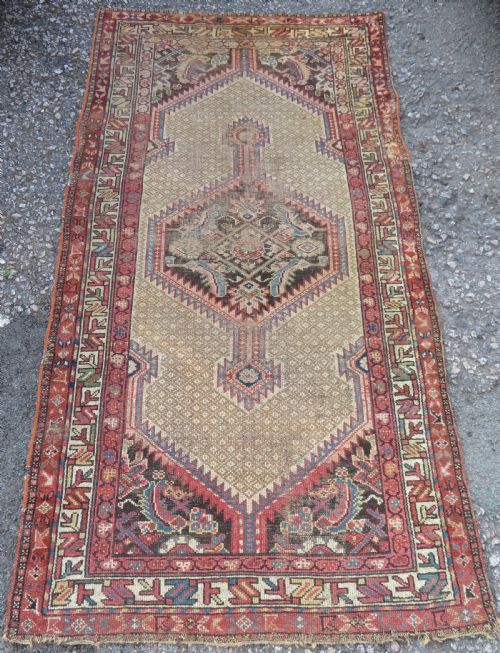
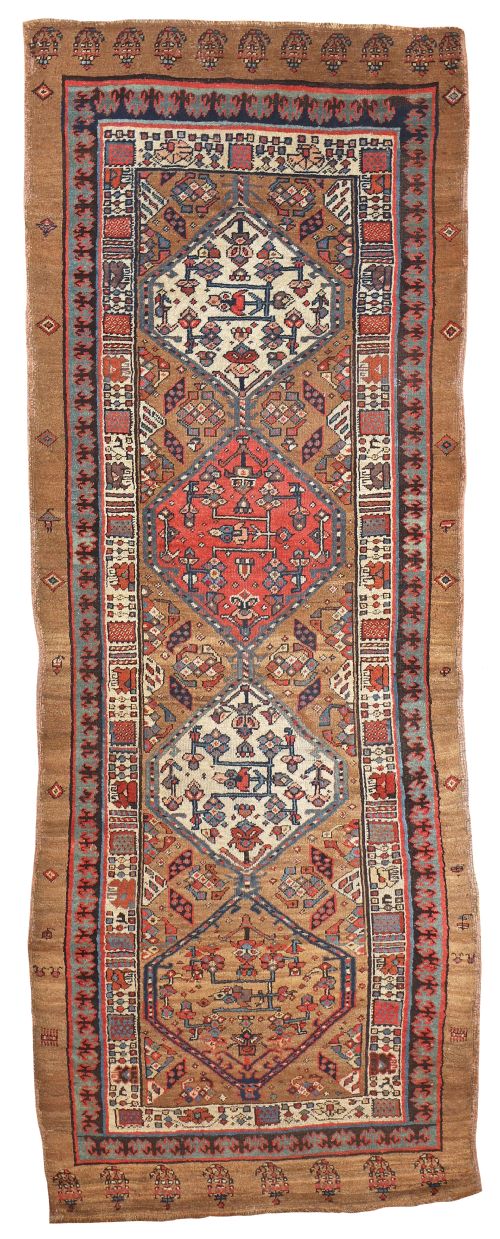
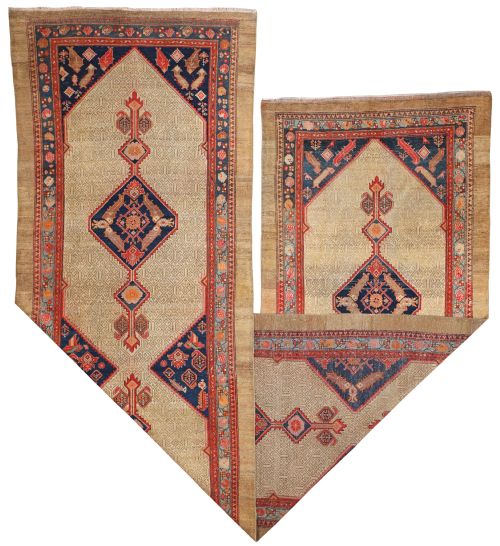
A Persian Sarab carpet represents the distinct weaving tradition of north-west Persia, taking form primarily as elongated hallway runners and smaller rugs. These pieces showcase traditional designs rooted in village and tribal craftsmanship rather than formal court workshops.
Buyers encountering this search phrase find formats spanning from compact country house rugs to narrow village runners exceeding three metres in length. The items recorded date from the late nineteenth century through to the early decades of the twentieth century, specifically appearing across the 1870, 1880, 1900, 1910 and 1920 periods.
Materials and Construction
The foundation relies on sturdy cotton for the warp and weft threads, providing structural stability for heavy footfall in hallways and country homes. Wool forms the thick pile necessary to withstand daily use while maintaining texture.
Weavers frequently incorporated natural camel hair into the pile alongside standard wool, lending distinctive earthy tones and varied durability to the finished piece. This traditional material choice distinguishes rural Persian weaving from urban workshop production.
Persian Sarab Carpet Retail Price Guide 2026
Typical asking prices for persian sarab carpet among the pieces listed under this phrase on Sellingantiques today, from the lower quarter to the upper quarter. They describe what is for sale here now, not the wider market.
Listings span production dates from 1870 to 1920, utilising wool, cotton and camel hair within traditional Persian tribal and village styles.
Judging Quality and Condition
Quality rests in the crispness of the geometric motifs and the structural integrity of the foundation threads. Finer examples retain an even pile across the entire surface without excessive thinning.
Wear patterns tell the history of the object, distinguishing genuine age from superficial modification. Pieces showing natural surface ageing retain their character far better than those with compromised structural foundations.
The Persian Sarab Carpet Glossary
- Runner
- A long, narrow carpet format specifically designed for hallways, corridors, and staircases. These pieces measure significantly longer than they are wide.
- Warp
- The vertical threads stretched tightly on the loom that form the structural skeleton of the carpet. The knotted pile is tied directly around these parallel foundation strands.
- Weft
- The horizontal threads passed alternately over and under the warp threads to lock the rows of knots in place. This technique creates the firm grid structure of the textile.
- Pile
- The upright surface of yarn formed by individual knots tied onto the warp threads. This soft upper layer defines the tactile feel and visual depth of the textile.
Persian Sarab Carpet: Frequently Asked Questions
Where were these carpets made?
These textiles originate from the north-west region of Persia, specifically associated with rural village workshops and tribal groups. The makers utilised local materials characteristic of the area.
The production methods reflect traditional cottage industries rather than large urban manufactories, giving each example distinct local characteristics.
How do I care for a runner?
Regular gentle vacuuming without a rotating brush bar prevents dirt from settling deep into the wool pile. Professional cleaning suited for antique textiles preserves the integrity of the natural fibres.
Positioning a suitable underlay beneath the runner prevents slipping and reduces friction between the floor and the cotton foundation.
What materials are used?
The structural foundation relies on cotton threads for both warp and weft, ensuring stability along the length of the runner. Wool forms the primary surface pile for comfort and durability.
Undyed camel hair frequently appears within the wool mix, contributing natural brown and tan shades directly from the animal coat.
How old are these carpets?
The pieces available on this page date from the late nineteenth century through to the 1920s. This spans specific recorded production years including 1870, 1880, 1900, 1910 and 1920.
Dating relies on stylistic indicators, structural construction methods, and materials consistent with late Qajar period village weaving.