






Persian Rug Cushion
A persian rug cushion brings the dense wool and geometric patterns of nomadic tribal weaving directly into modern seating.
Persian Rug Cushion
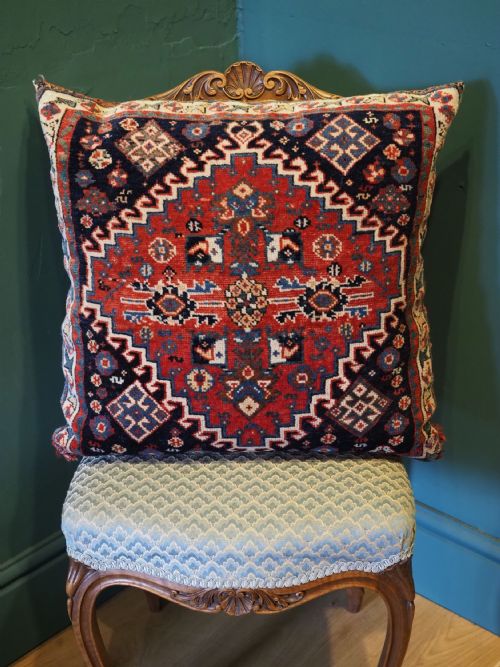
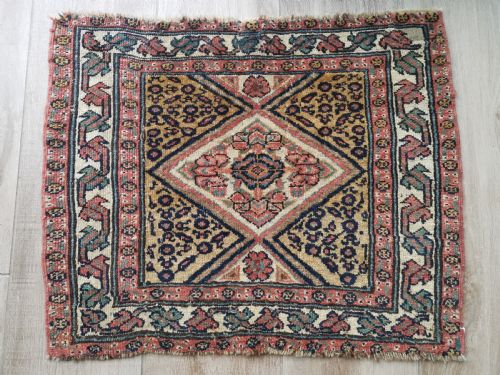
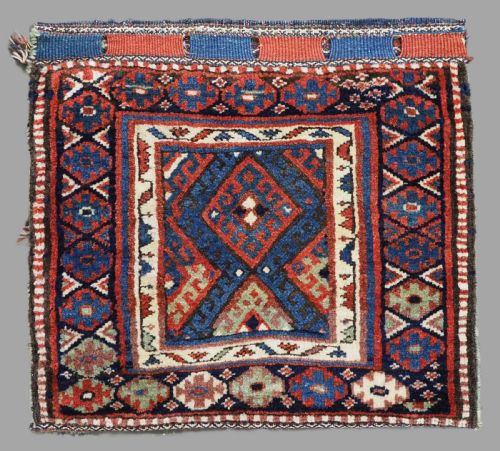
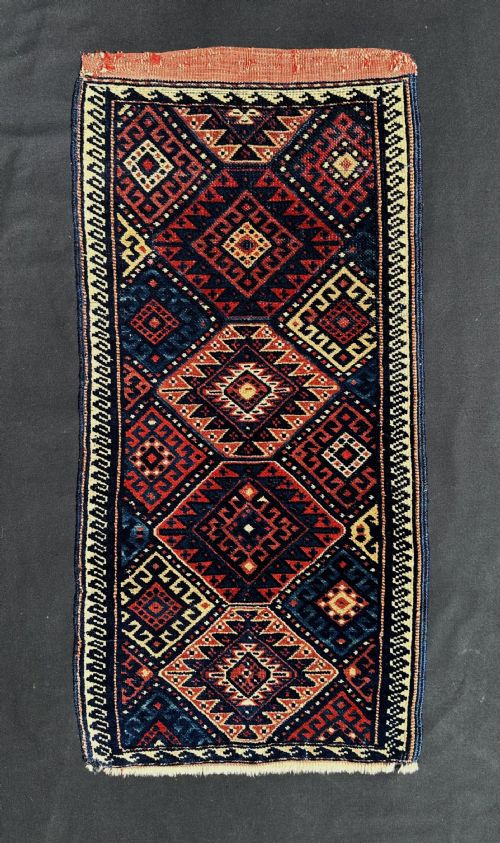
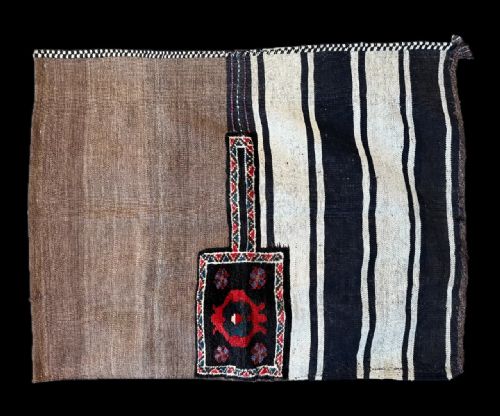
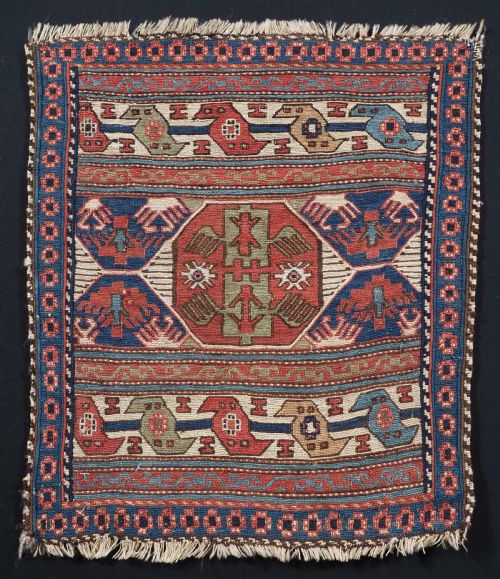
When searching for a persian rug cushion, buyers examine functional items repurposed from historical textiles such as saddlebags, wheat sacks, and storage pouches. The selection on this page consists predominantly of nineteenth and early twentieth-century bag faces and fragments originating from tribal confederations including the Qashqai, Baluch, Shahsavan, and Kurdish groups. These textiles served practical purposes during nomadic migrations before being converted into cushions and pillows.
The regional origins span distinct parts of Persia, from the Fars province in the south-west to Khorassan in the north-east and the western valleys of the Chahar Mahal. Pieces often retain elements of their original utilitarian construction, such as plain weave wool backs, goat hair selvedges, or complete bag structures adapted for interior use. Each item reflects the specific weaving vocabulary of the nomadic tribe that produced it.
How they were made
The construction relies heavily on hand-spun wool and sturdy cotton foundations, combined with goat hair for durable edges and structural support. Artisans employed traditional pile knotting and flatweave techniques like soumak work to build dense, hard-wearing surfaces suitable for daily transport and storage.
Colour comes from natural and vegetable dyes applied to wool fibres, producing rich tones that age with distinct character. The spinning and dyeing methods reflect domestic production within tribal communities, where local plants and minerals dictated the available palette.
Persian Rug Cushion Retail Price Guide 2026
Typical asking prices for persian rug cushion among the pieces listed under this phrase on Sellingantiques today, from the lower quarter to the upper quarter. They describe what is for sale here now, not the wider market.
What varies in quality
Quality rests upon the fineness of the knotting or the tightness of the flatweave, alongside the clarity and complexity of the tribal design motifs. Tightly packed wool and well-preserved structural integrity indicate superior execution by the original weavers.
The vibrancy and depth of the natural dyes also distinguish finer examples, as does the retention of original plain weave backs and goat hair borders. Pieces displaying well-balanced proportions and sharply defined regional patterns occupy the upper tier of the range.
The Persian Rug Cushion Glossary
- Bagface
- The decorated front panel of a nomadic storage bag or saddlebag, which is frequently separated and converted into a cushion.
- Soumak
- A supplementary weft-wrapping technique that creates a durable, slightly raised pattern resembling embroidery on the surface of the textile.
- Boteh
- A recurring almond-shaped or paisley motif representing a floral spray or cypress tree, commonly found in tribal weaving.
- Khorjin
- The Persian term for a double-sided saddlebag used by nomadic tribes for carrying possessions during migrations.
- Pushti
- A small rug or mat, often used as a cushion or seat cover in traditional Persian interiors.
Persian Rug Cushion: Frequently Asked Questions
How were these bags originally used?
Nomadic tribes utilised these woven containers for transporting and storing household goods, grains, and personal belongings during seasonal migrations. They were constructed as saddlebags, vanity cases, or wheat sacks loaded onto pack animals.
Over time, surviving sections or complete bags with sturdy wool construction are adapted into soft furnishings while retaining their original tribal character.
What is a bag face?
A bag face is the decorative front panel of a functional nomadic storage pouch or saddlebag. Because these panels received less wear than the backs or sides, they often survived in better condition.
Craftspeople later converted these decorative panels into cushions and pillows for contemporary interiors.
How do I care for a wool cushion?
Wool textiles require gentle maintenance, such as regular light vacuuming without a beater bar to remove surface dust. Keeping the cushion out of direct sunlight prevents natural dyes from fading.
Professional textile cleaning is recommended for deeper maintenance to preserve the hand-spun fibres and structural integrity.
How can I tell different tribal styles apart?
Tribal styles are distinguished by specific regional motifs, colour palettes, and weaving structures. For instance, Shahsavan pieces frequently feature soumak work with distinct bird or dragon designs, while Baluch pieces often display deep, dark tones and geometric repeat patterns.
Familiarity with the wool quality and regional dyeing habits helps identify the producing group.