




Persian Kilim Runner
A persian kilim runner brings flatwoven tribal texture and narrow linear geometry straight into a hallway or narrow space.
Persian Kilim Runner
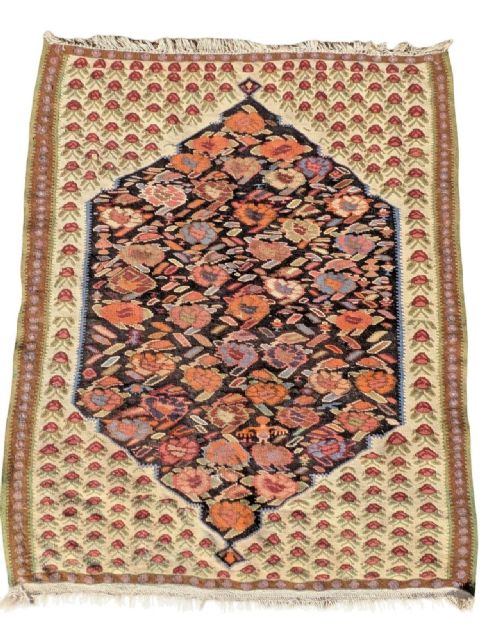
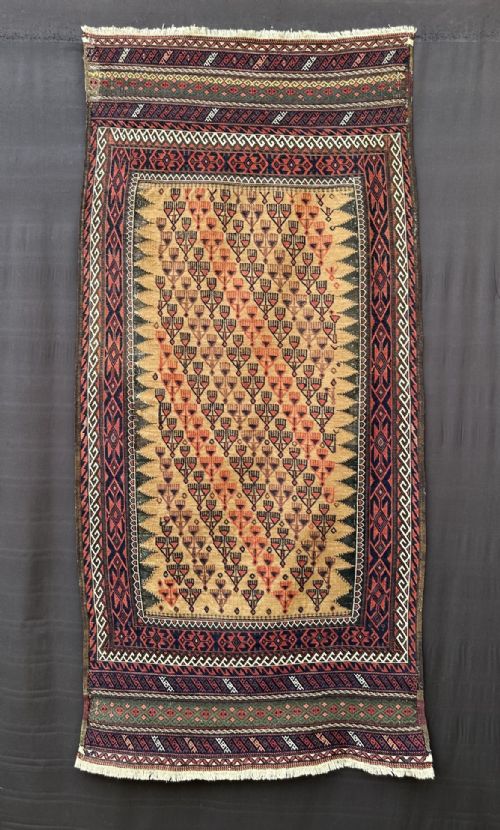
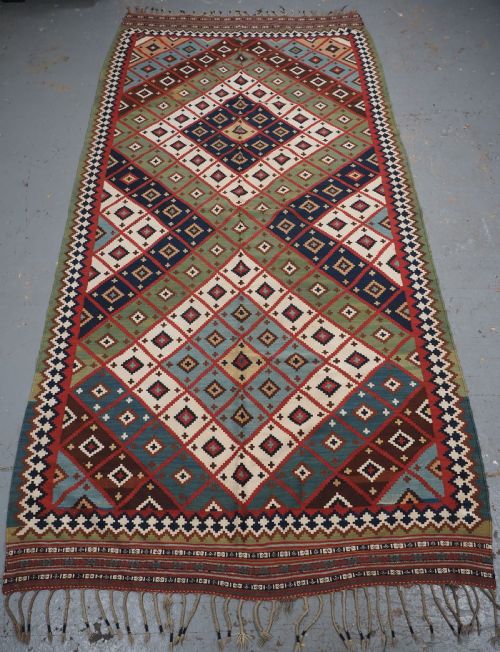
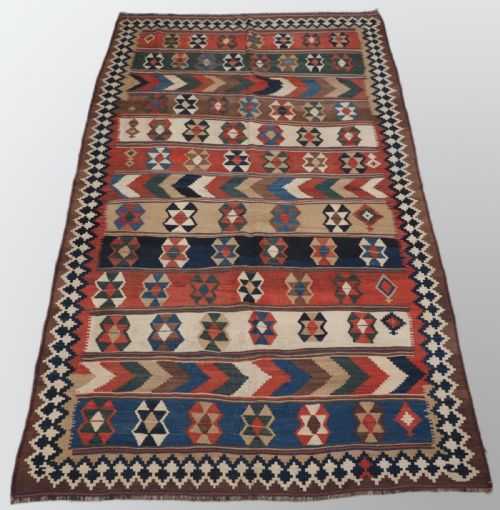
When you search for a persian kilim runner, you are looking at flatwoven textile floor coverings created by various tribal groups across Persia and neighbouring regions. These pieces lack a pile, relying instead on tightly beaten weft threads wrapped around warp foundations to form crisp geometric patterns.
The versions you are most likely to meet on this page span from the late nineteenth century through to the 1930s. They emerge from tribal traditions such as the Qashqai, Senneh, Bidjar, and Baluch, taking the form of narrow formats suited to corridors and passages.
How they were made
Weavers constructed these runners primarily using hand-spun wool and cotton, occasionally incorporating camel hair for natural tone and durability. The flatweave technique involves interlocking or slitting wefts to create sharp colour transitions without the bulk of knotted carpets.
Colour comes from natural dyes derived from local plants and minerals, yielding soft, harmonious hues that age gracefully over decades of use.
Persian Kilim Runner Retail Price Guide 2026
Typical asking prices for persian kilim runner among the pieces listed under this phrase on Sellingantiques today, from the lower quarter to the upper quarter. They describe what is for sale here now, not the wider market.
Some antique bread spreads doubled as makeshift picnic blankets when tribal families packed up their looms and moved across the plateau.
What varies in quality
Quality in these flatweaves rests upon the tightness of the weave and the precision of the geometric layout. Tighter packing of the weft threads creates a firmer, more resilient fabric that withstands heavy foot traffic in a hallway.
The sophistication of the tribal design and the depth of the natural dye palette also dictate the standing of a piece. Finer examples display intricate compartmental structures or scarce medallion arrangements executed with exceptional control.
The Persian Kilim Runner Glossary
- Kilim
- A flatwoven textile produced without a pile by tightly interweaving warp and weft strands. This method results in a lightweight, reversible rug with flat surfaces.
- Sofreh
- A type of tribal spread or cloth traditionally used for dining or food preparation. These flatweaves often share structural and decorative traits with runners.
- Warp
- The stationary vertical threads stretched across a loom that form the structural foundation of the textile. Weft threads are woven horizontally through them.
- Weft
- The horizontal threads passed through the warp to build the pattern and colour blocks. In flatweaves, these completely cover the vertical foundation.
- Soumak
- A brocade-like flatweaving technique where decorative weft threads are wrapped around warp threads for added texture. This method leaves floating threads on the reverse side.
Persian Kilim Runner: Frequently Asked Questions
Where should I place a runner?
These long, narrow flatweaves suit hallways, corridors, and narrow kitchens where traditional piled carpets might prove too thick or heavy for doors.
Their sturdy flat construction handles daily foot traffic while adding traditional tribal geometry to transitional spaces.
How do I clean a flatweave?
Gentle regular vacuuming without a rotating brush roll removes surface grit and dust from the tight weave.
Professional specialist cleaning is recommended for deeper maintenance to protect natural dyes and wool fibres.
Do I need an underlay?
A breathable rug underlay prevents slipping on smooth wooden or tiled floors and protects the flat textile from premature friction wear.
It also adds a slight cushion underfoot, enhancing the comfort of the narrow flatweave in high-traffic corridors.
How do I date these textiles?
Dating relies on assessing structural traits, wool quality, and the specific chemical composition of the natural dyes used by different tribal groups.
Earlier nineteenth-century pieces often display organic dye variations and finer hand-spun wool compared to later twentieth-century productions.