




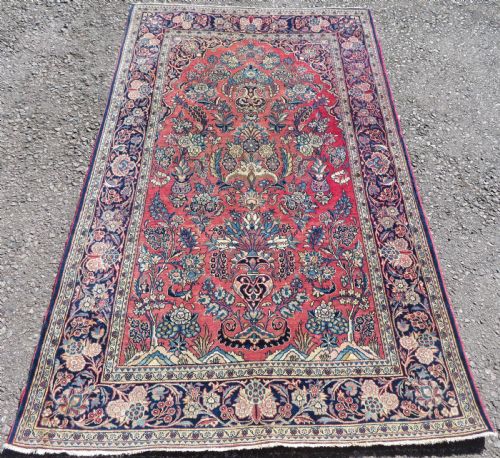


Persian Kashan Area Rug
A persian kashan area rug brings centuries of central persian weaving tradition into a room, offering intricate floral motifs and durable construction.
Persian Kashan Area Rug
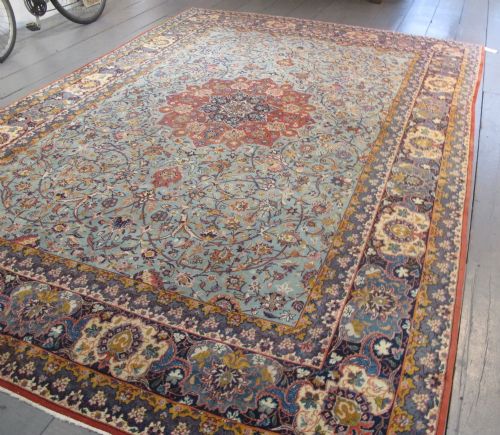
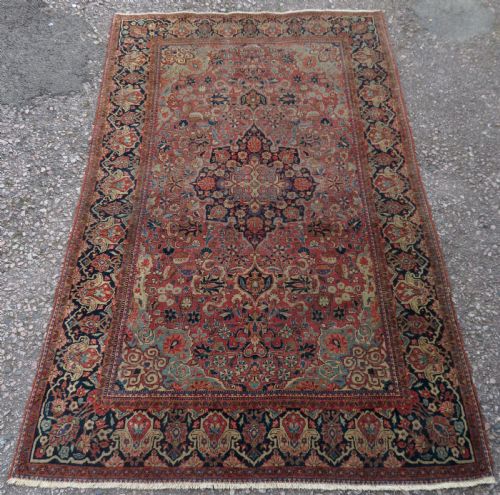
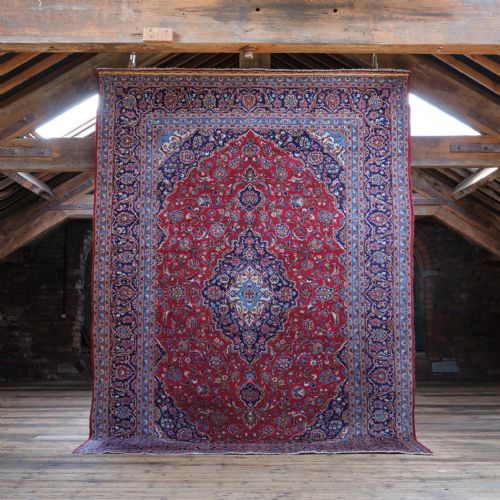
A persian kashan area rug is a traditional floor covering originating from the city of Kashan in central Persia, known for detailed craftsmanship and balanced floral compositions. These pieces appear in formats ranging from small prayer mats to large palace-sized carpets woven across the nineteenth and twentieth centuries.
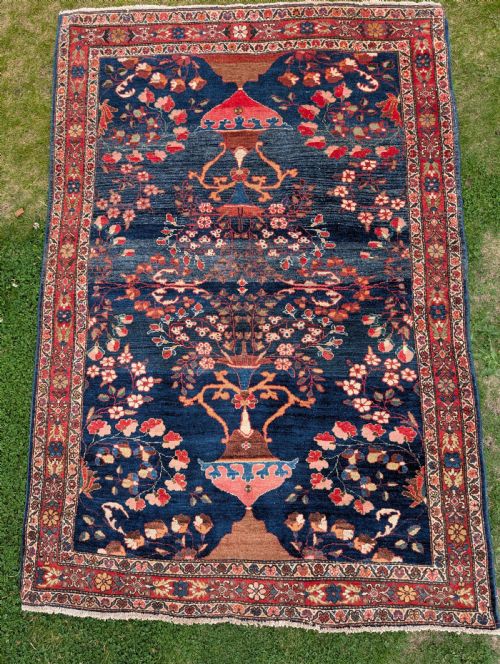
The selections available here include standard room-size area rugs alongside specialised formats such as prayer rugs with floral vase designs and pictorial pieces depicting historical figures like Ahmad Shah Qajar. Most examples date from the Edwardian era through the nineteen-forties, representing established weaving traditions from north-west central Persia and related Indo-Persian workshops.
Materials and Construction Techniques
The construction relies fundamentally on hand-knotted techniques executed on sturdy cotton foundations, providing the structural stability necessary for large carpets and room-size rugs. Master weavers utilised fine wool, high-grade kork or kurk wool, and occasional applications of pure silk to articulate intricate medallion and floral vase patterns.
Specialised workshops incorporated fine materials such as part-silk piles and specialised wool varieties to achieve superior tactile softness and visual depth. These natural fibres respond well to traditional dyeing methods, yielding distinct red grounds, rose pink tones, and intricate multicoloured central motifs.
Persian Kashan Area Rug Retail Price Guide 2026
Typical asking prices for persian kashan area rug among the pieces listed under this phrase on Sellingantiques today, from the lower quarter to the upper quarter. They describe what is for sale here now, not the wider market.
Listings feature periods spanning the nineteenth century, the Edwardian era, and the nineteen-tens through the nineteen-forties.
Distinctions in Quality
Quality in these textiles rests upon knot density, the purity of the wool utilised in the pile, and the precision of the central design execution. Finer examples incorporate kork wool or silk components that elevate both the handle of the textile and the definition of the woven motifs.
The distinction between standard room-sized pieces and masterworks by notable workshops involves the complexity of the floral and pictorial details, such as elaborate vase designs or portrait depictions. Superior execution results in crisper outlines and a harmonious balance of colour across the entire field.
The Persian Kashan Area Rug Glossary
- Kashan
- A historic city in central Persia renowned for producing high-grade knotted carpets and rugs with sophisticated floral designs.
- Kork wool
- A high-quality wool harvested from the neck and shoulders of sheep, prized for its exceptional softness and fine texture.
- Prayer rug
- A specialised format featuring a niche or mihrab design traditionally used for personal devotional practices.
- Hand-knotted
- A traditional method where individual strands of yarn are tied manually to the warp threads of the foundation to form the pile.
- Pictorial rug
- A decorative textile designed to depict specific human figures, historical events, or narrative scenes rather than abstract geometric patterns.
Persian Kashan Area Rug: Frequently Asked Questions
How do I identify a genuine kashan rug?
Authentic examples display traditional central persian floral motifs, symmetrical knotting on cotton foundations, and characteristic colour palettes centred around reds and blues.
Closer inspection of the reverse reveals the density of the hand-knotted pile and the consistency of the weave typical of central persian workshops.
What is kork wool in these rugs?
Kork wool refers to the exceptionally soft and fine fleece gathered from the neck of mountain sheep, utilised in superior grades of textile.
This material allows for a denser knot count, resulting in a softer handle and greater definition within intricate floral and vase patterns.
Where were these rugs made?
Production centres historically in and around the city of Kashan in north-west central Persia, alongside related regional workshops.
Master weavers in these specific locations established distinct stylistic traditions that influenced both domestic Persian output and Indo-Persian variations.
How should I care for an antique rug?
Protect the wool and silk fibres by avoiding direct sunlight and using breathable underlays beneath the rug to prevent unnecessary sliding.
Gentle vacuuming without a rotating brush roll helps maintain the pile while preserving the delicate hand-knotted foundation over decades of use.