






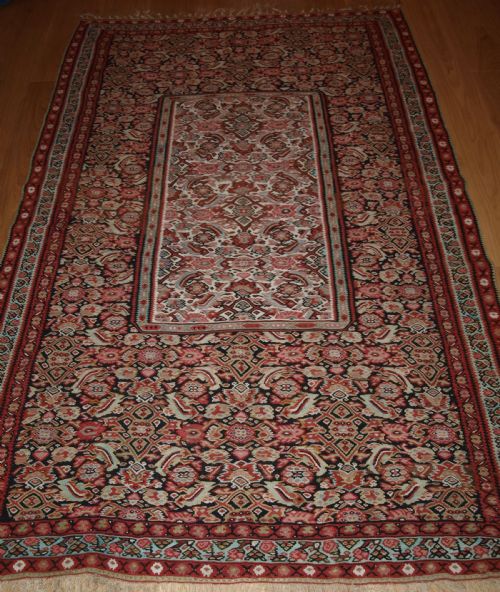


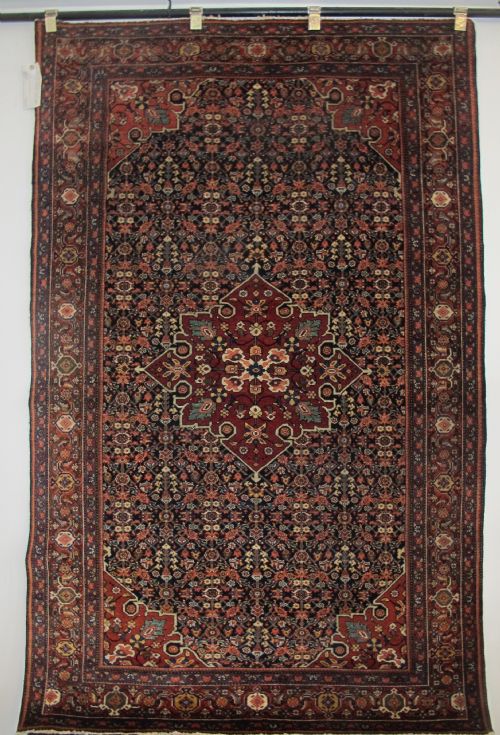
Persian Herati Pattern Carpet
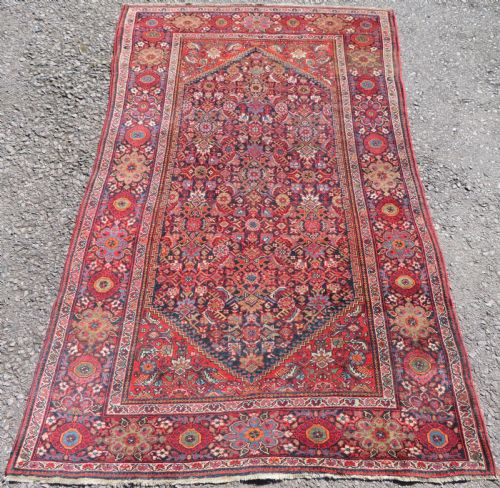
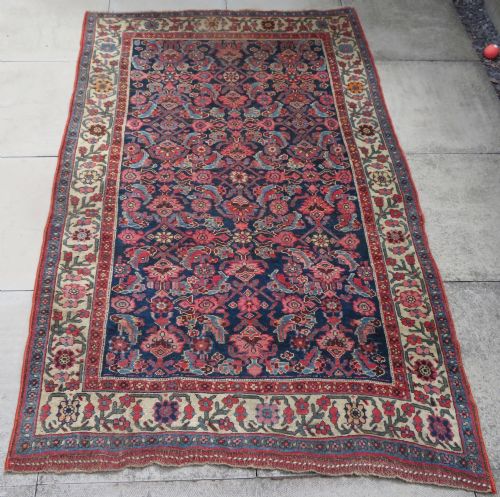
These persian herati pattern carpet pieces are woven floor coverings featuring a classic repeating motif of a floral rosette flanked by leaves.
Persian Herati Pattern Carpet
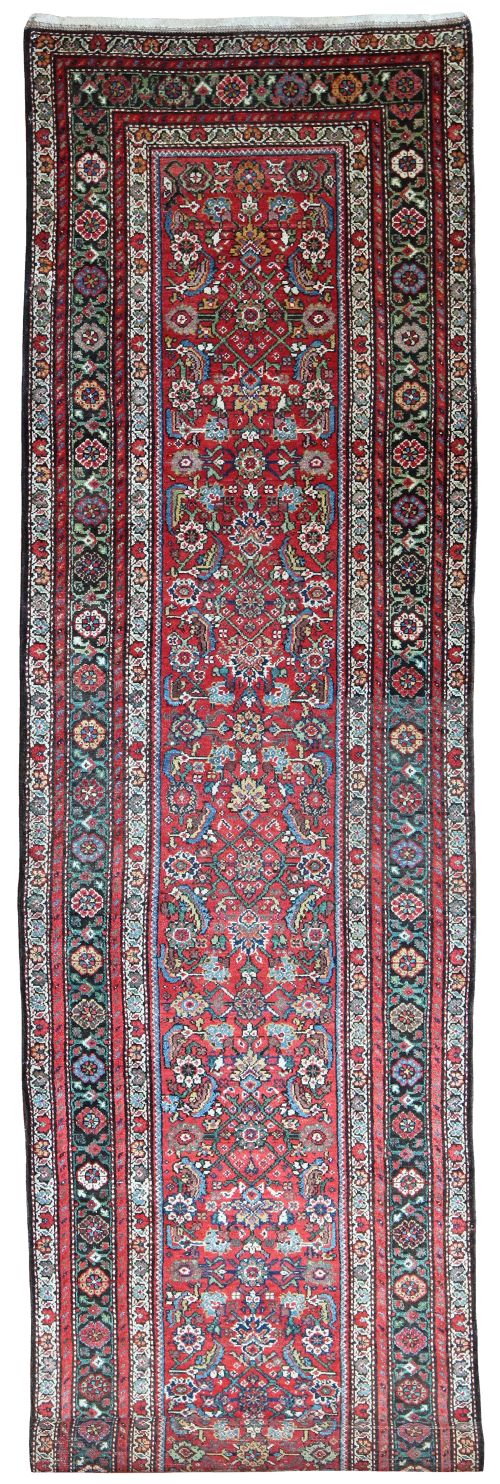
A persian herati pattern carpet brings together woven floor coverings originating from nineteenth- and early-twentieth-century Persia. These textiles include room-sized carpets, long gallery formats known as kellehs, and smaller floor rugs.
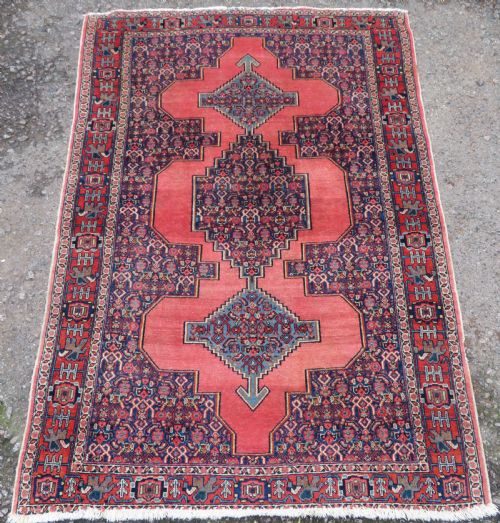
The dominant version met in these listings is the village or tribal rug from regions such as Fereghan, Malayer, Senneh, and Bidjar. These pieces display the characteristic fish-and-rosette Herati motif woven across the field in repeating overall layouts.
How they were made
These carpets are constructed primarily using wool pile knotted onto sturdy cotton foundations, providing both structural resilience and a soft surface underfoot. Weavers utilised hand-spun natural yarns dyed with traditional botanical and mineral colours.
The intricate Herati pattern is executed with precise knotting techniques that allow for delicate geometric and floral articulation across the textile.
Persian Herati Pattern Carpet Retail Price Guide 2026
Typical asking prices for persian herati pattern carpet among the pieces listed under this phrase on Sellingantiques today, from the lower quarter to the upper quarter. They describe what is for sale here now, not the wider market.
Weavers often embedded small intentional irregularities in the Herati lattice to ward off the evil eye.
What varies in quality
The distinction between tiers rests upon the fineness of the weave and the crispness of the drawing in the Herati lattice. Tighter knotting allows for sharper definition in the small floral motifs and scrolling leaves that populate the field.
Colour saturation and the complexity of the secondary borders also divide standard village production from finer workshop and city pieces. Harmonious dye combinations and balanced proportions elevate the visual rhythm of the overall design.
The Persian Herati Pattern Carpet Glossary
- Herati
- A repeating textile motif composed of a central flower enclosed within a diamond lattice, flanked by curved serrated leaves resembling fish. This design forms the visual foundation of the entire grouping.
- Kelleh
- A long, narrow rectangular carpet format traditionally used in Persian domestic interiors as a runner or hallway covering. These pieces provide extended panels for continuous pattern repeats.
- Pile
- The upright yarn surface of the carpet formed by individual knots tied to the warp and weft threads. The density and clipping of this wool surface dictate the texture.
- Warp
- The longitudinal threads stretched tightly on the loom that carry the structural weight of the carpet. Cotton is the standard material used for these foundational strands.
- Kilim
- A flat-woven textile produced without a pile, utilising interlocking weft techniques to create geometric patterns. These pieces offer a lighter alternative to knotted carpets.
Persian Herati Pattern Carpet: Frequently Asked Questions
What is the Herati pattern?
The Herati pattern is a traditional repeating Persian textile design featuring a central rosette enclosed by a diamond lattice and paired with curved leaves. It is widely recognised as one of the enduring motifs in oriental carpet weaving.
The layout creates an all-over texture that can cover the entire field of a carpet without requiring a central medallion. This balanced symmetry made the design popular across numerous weaving regions and village workshops.
How were these carpets used?
These textiles served practical functions as insulated floor coverings within Persian homes, tents, and public buildings. Large formats anchored main rooms, while runner formats lined hallways and gallery spaces.
Nomadic and village communities also utilised smaller rugs for seating, bedding, and wall hangings. Their durable wool construction protected inhabitants from cold stone and earthen floors.
How do I date a Persian carpet?
Dating relies on examining structural materials, palette characteristics, and the style of the drawing. Nineteenth-century examples often display saturated natural dyes and softer hand-spun wool textures.
Later pieces from the early twentieth century may incorporate different synthetic or refined mordant colours alongside tighter, more uniform knotting. Comparing border structures and regional weaving traits helps narrow down the period of origin.
How should I care for a wool rug?
Wool carpets require gentle, regular vacuuming without rotating brush bars to protect the fragile pile. Keeping the textile away from direct, prolonged sunlight preserves the natural dyed colours.
Professional specialist cleaning is recommended for deep maintenance to avoid damaging the cotton foundation or wool fibres. Using a breathable underlay also prevents slipping and reduces friction against hard flooring.