


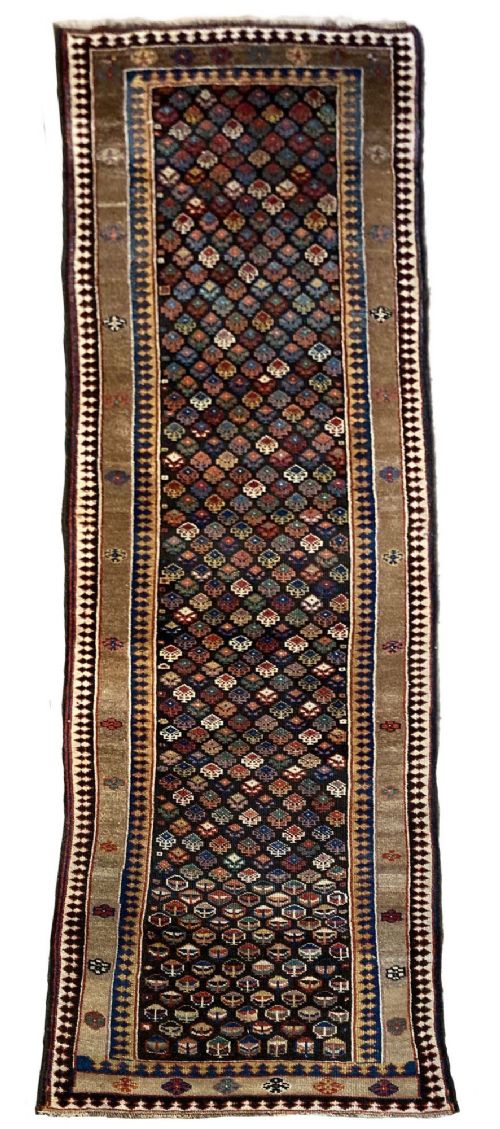


Persian Hall Rug
A persian hall rug delivers linear warmth to domestic corridors through centuries of tribal and village weaving traditions.
Persian Hall Rug
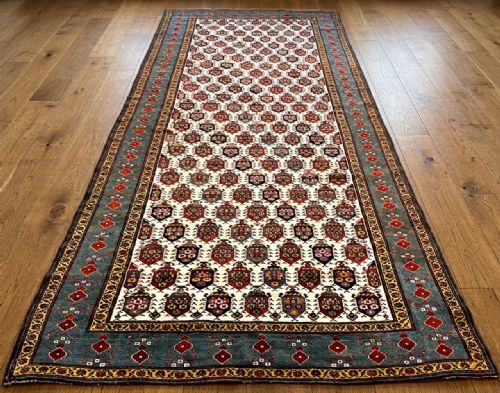
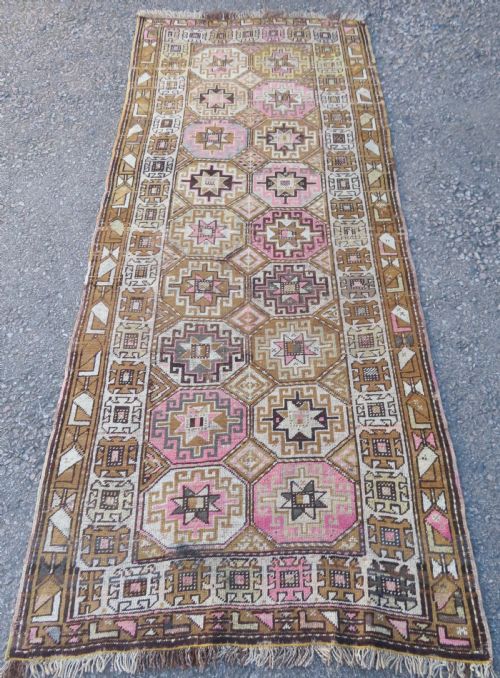
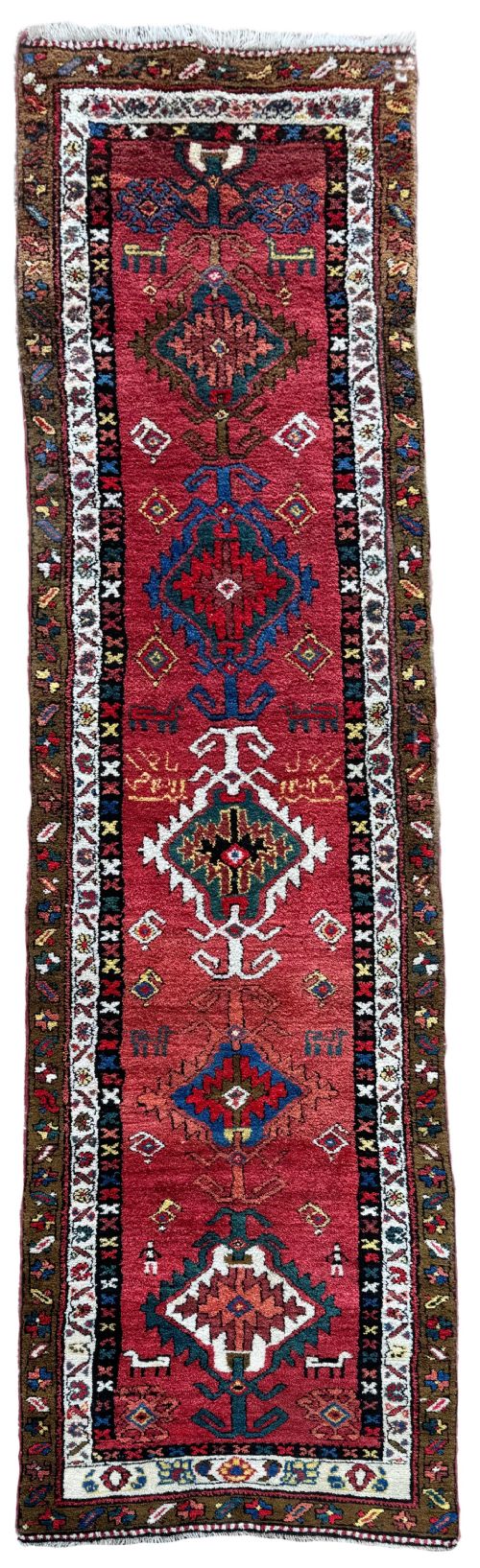
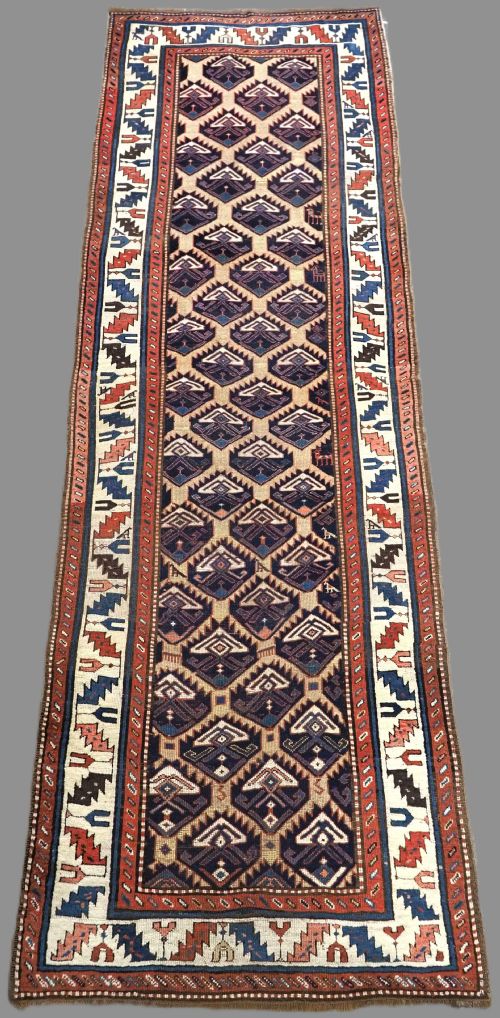
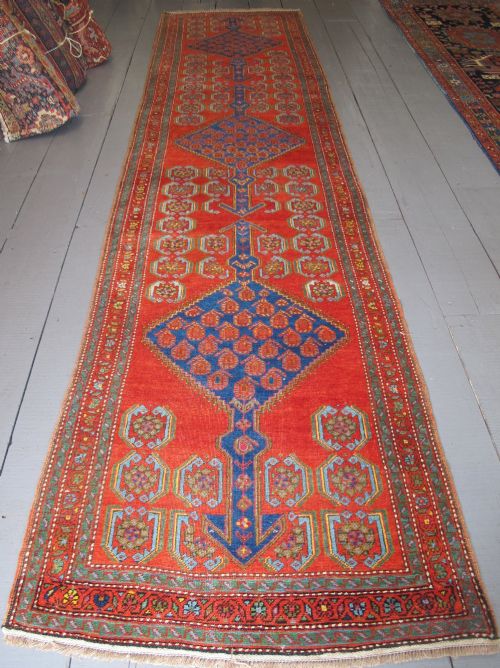
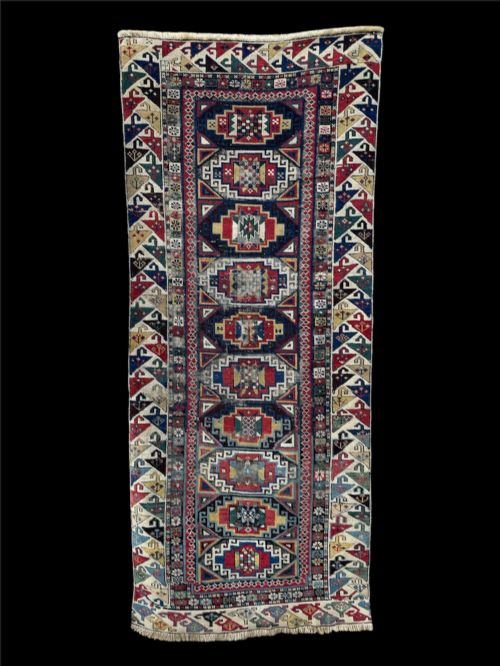
A persian hall rug encompasses long, narrow floor coverings designed specifically for corridors, landings, and extended hallways. The selection here spans the nineteenth and twentieth centuries, featuring village and tribal formats from regions such as Heriz, Kurdish areas, Hamadan, and Sarouk.
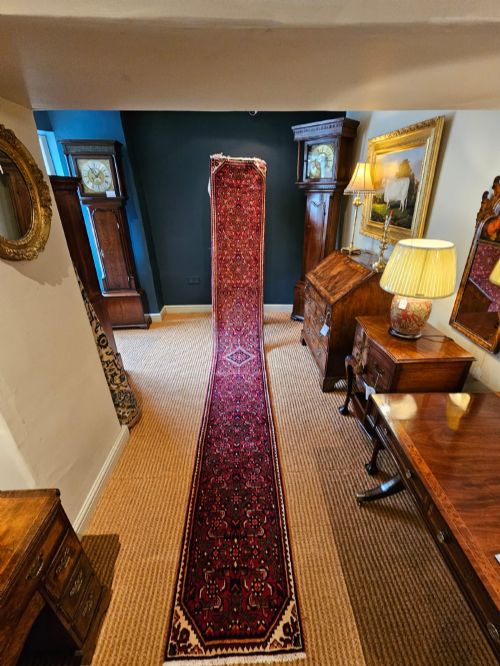
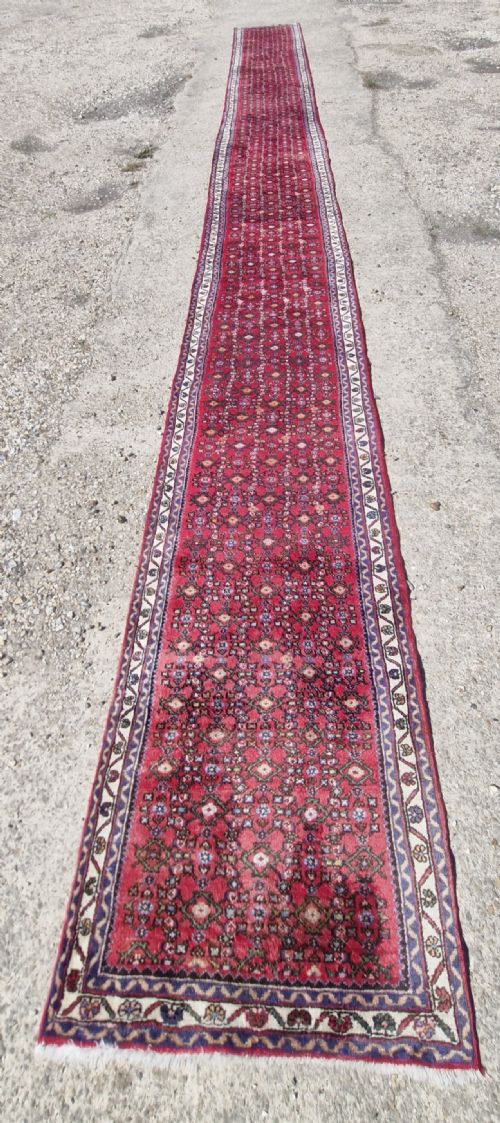
Buyers encounter formats varying from compact lengths under three metres to expansive runners stretching past seven or ten metres. These elongated compositions employ geometric medallions, repeated lattice motifs, and central panels suited to linear interior spaces.
How they were made
Weavers constructed these runners using hand-spun wool and cotton foundations, utilising natural dyes to achieve deep navy blues, reds, and earthy tones. Camel hair also appears in the pile composition of specific tribal examples.
The making involves traditional hand-knotting techniques passed down through communities such as the Kurdish, Bakhtiari, and Qashqai tribes, resulting in durable pile surfaces built to withstand heavy foot traffic.
Persian Hall Rug Retail Price Guide 2026
Typical asking prices for persian hall rug among the pieces listed under this phrase on Sellingantiques today, from the lower quarter to the upper quarter. They describe what is for sale here now, not the wider market.
Some nineteenth-century runners stretch to extraordinary lengths past ten metres, designed for grand corridors and stately landings.
What varies in quality
Quality rests upon knot density, the clarity of natural dye colours, and the structural integrity of the wool foundation. Finer village and tribal weaving displays tighter pile construction and crisper execution of geometric or lattice designs.
Proportion and scale also dictate distinction, particularly in exceptionally long narrow pieces that maintain structural straightness over extended lengths. Condition varies from distressed tribal textiles showing age to dense, intact pile surfaces.
The Persian Hall Rug Glossary
- Runner
- A long, narrow carpet format specifically proportioned for hallways, corridors, and staircases. These pieces measure significantly longer than they are wide.
- Natural Dyes
- Colouring agents derived from plant, insect, and mineral sources rather than synthetic chemistry. They produce rich, variable tones that develop depth with age.
- Tribal Rug
- A textile woven by nomadic or semi-nomadic groups using memory designs rather than cartoon patterns. These pieces typically exhibit bold geometric motifs and expressive local character.
- Pile
- The upright yarn surface of a rug formed by knotted loops of wool or camel hair. The density and height of this surface determine the tactile weight and durability of the piece.
- Foundation
- The underlying structural grid of warp and weft threads that supports the knotted pile. Cotton and wool serve as the primary materials for this hidden framework.
Persian Hall Rug: Frequently Asked Questions
Where do persian hall rugs work best?
These elongated floor coverings suit narrow architectural spaces such as corridors, entrance halls, and extended landings. Their linear proportions anchor long walkways while adding textile warmth to timber or stone floors.
Placing a runner in a high-traffic hallway requires consideration of door clearances and underlay placement to secure the wool foundation against movement.
How are different tribal designs told apart?
Distinguishing regional origins involves examining the specific geometric vocabulary, knotting structure, and palette choices. Kurdish and Bakhtiari weaving often displays robust tribal motifs, whereas Heriz and Sarouk pieces feature structured geometric medallions and formal floral interpretations.
Material variations, such as the use of camel hair or specific wool textures, offer further clues to the village or tribal origin of a runner.
What materials make up these runners?
Traditional construction relies primarily on hand-spun wool for the surface pile, supported by cotton foundations in many village pieces. Certain tribal examples incorporate camel hair within the pile to introduce natural tonal variations.
Natural dyes provide the foundational palette, utilising organic sources that yield rich blues, reds, and neutrals across nineteenth and twentieth-century examples.
How should an antique runner be maintained?
Routine care involves gentle suction vacuuming without a beater bar across the grain of the wool pile. Professional cleaning suited to antique textiles preserves the natural dyes and structural integrity of the foundation.
Using a quality underlay prevents slipping and cushions the wool pile against friction from foot traffic in busy hallways.