

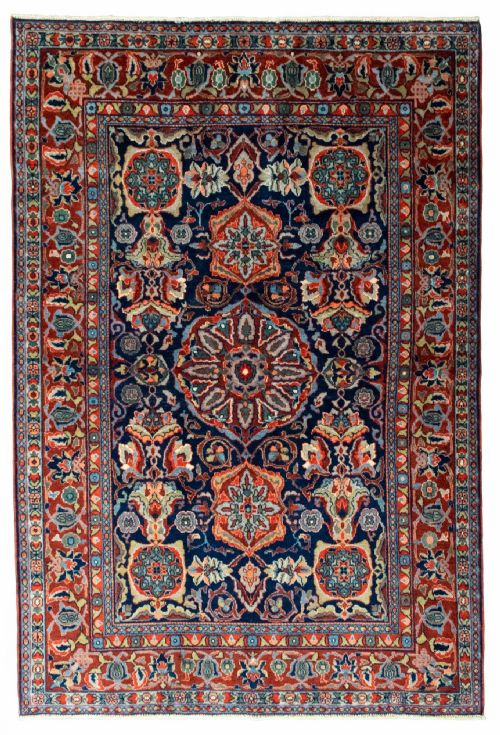


Persian Floral Central Medallion Rug
A persian floral central medallion rug brings centuries of woven artistry into a room, anchoring the floor with a striking focal point.
Persian Floral Central Medallion Rug
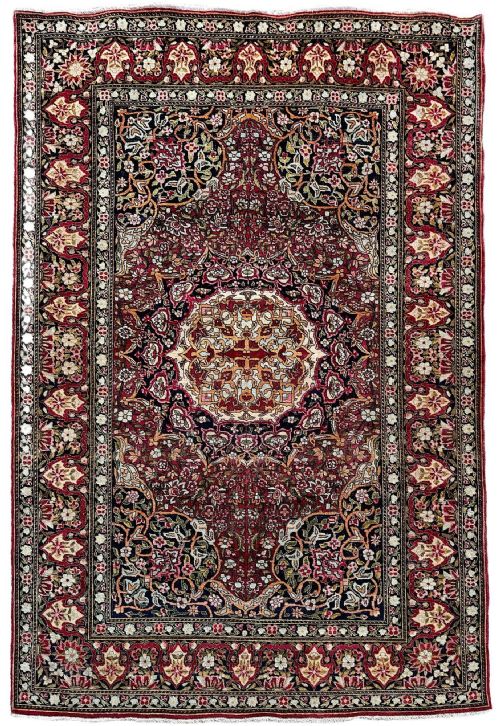
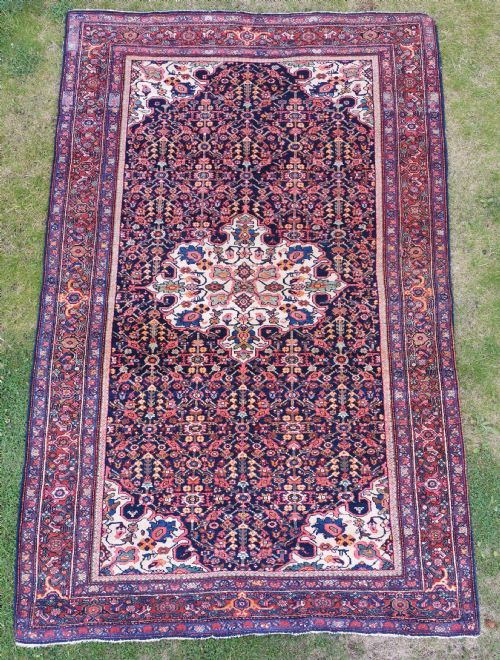
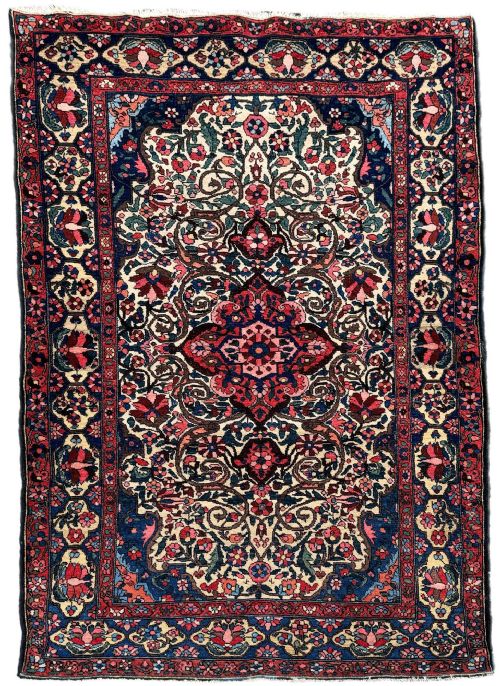
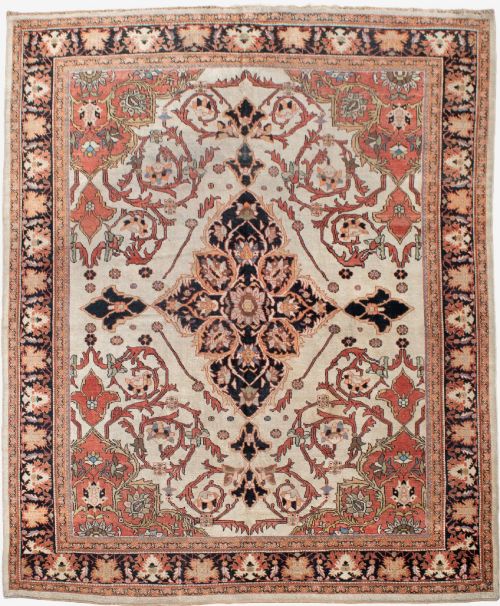
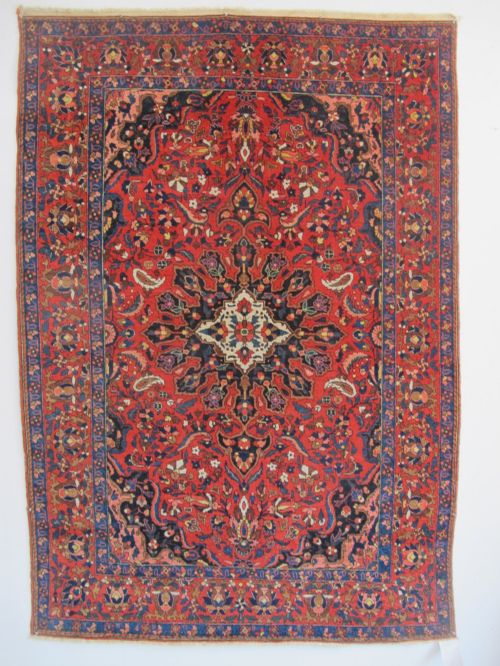
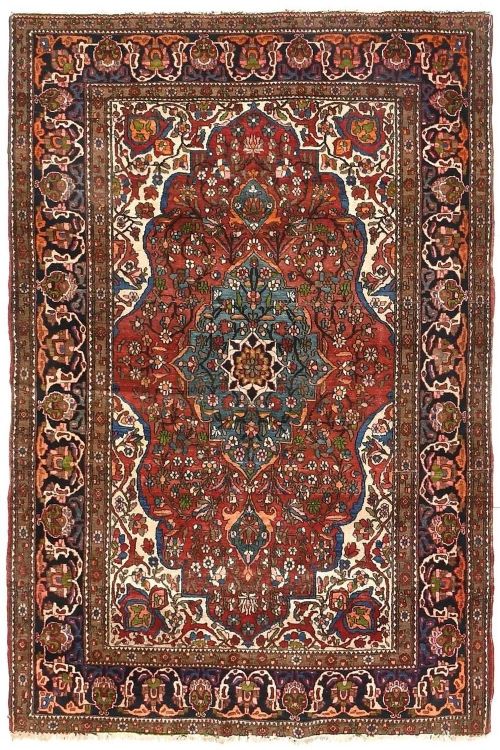
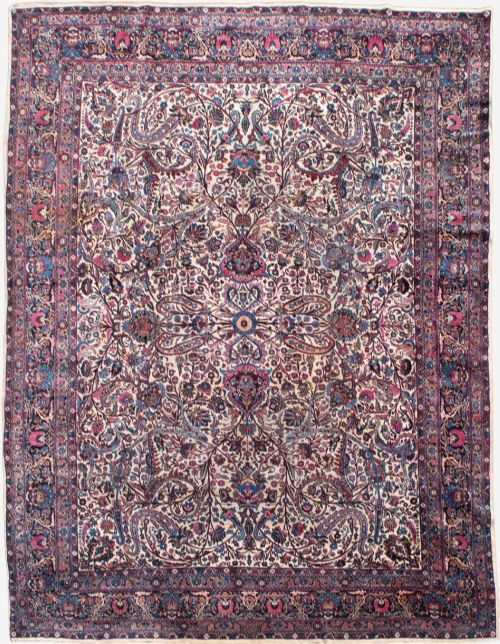
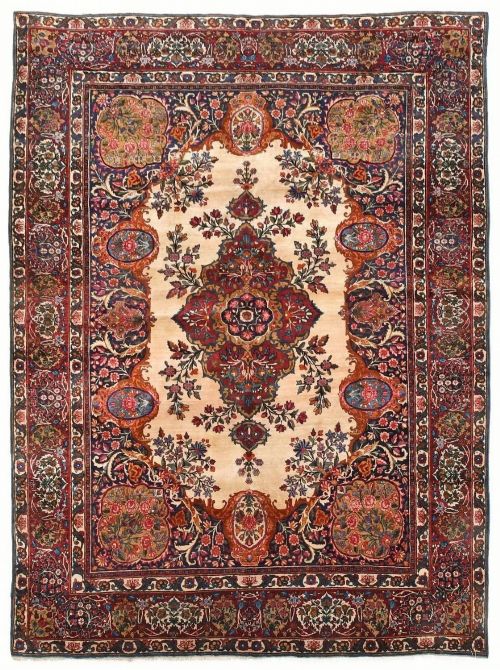
A persian floral central medallion rug presents a distinct arrangement where a prominent motif commands the middle of the field, surrounded by elaborate botanical patterns. These floor coverings emerge from various regional workshops and villages across Persia, spanning the late nineteenth century through the mid twentieth century. Buyers encounter formats ranging from compact area rugs to substantial room size carpets and elongated runners.
The selection on this page demonstrates classic weaving traditions originating from recognised centres such as Isfahan, Kirman, Kashan, and Sarouk. Pieces often display traditional Persian styling alongside specific regional structures like Bakhtiar, Ziegler, and Kurdish Senneh. Each origin brings its own distinct interpretation of the central medallion format, varying from intricate floral fields to bold village geometries.
Materials and construction
Makers constructed these floor coverings using durable cotton foundations for the warp and weft, providing structural stability to the heavy textile. The pile utilises wool, occasionally incorporating kork or kurk wool for a softer handle, while select examples integrate silk highlights to illuminate specific design elements.
Weavers knotted the fibres by hand onto the vertical looms, employing fine wool and cotton yarns dyed with traditional mineral and vegetable colourants. This meticulous method results in dense pile structures capable of withstanding generations of daily use while retaining intricate botanical details.
Current selections span nineteenth century examples up to pieces dated 1940, utilising wool, cotton, and silk.
Factors of distinction
Quality in these textiles depends heavily on the density of the knotting and the precision with which the central medallion and surrounding floral motifs are rendered. Finer knot counts allow for crisper outlines in the curvilinear designs and greater longevity in the wool pile.
The choice of materials also dictates the grade of the piece, with select items utilising superior kurk wool or delicate silk highlights that catch the light. Furthermore, the harmony and depth of the natural colour palette elevate certain examples above standard commercial weaving.
Isfahan·Kirman·Kashan·Sarouk
The Persian Floral Central Medallion Rug Glossary
- Medallion
- The central ornamental motif dominating the field of the rug. It serves as the primary focal point from which the surrounding floral patterns radiate.
- Pile
- The upright yarn loops or cut ends that form the soft surface of the carpet. This layer protects the structural foundation beneath.
- Warp
- The stationary vertical threads stretched tightly on the loom before weaving begins. The knots are tied around these parallel foundations.
- Weft
- The horizontal threads passed alternately over and under the warp strands. This process secures the rows of knots in place.
- Runner
- A long and narrow format of carpet designed specifically for hallways and corridors. These pieces guide movement through domestic spaces.
Persian Floral Central Medallion Rug: Frequently Asked Questions
How do I clean a antique carpet?
Regular gentle vacuuming without a beater bar removes surface dust and prevents grit from settling into the wool pile.
Professional specialist cleaning remains essential for addressing deeper soil and maintaining the integrity of the natural dyes.
Where should I place a room size carpet?
These large floor coverings anchor principal living areas, dining rooms, or bedrooms, providing warmth and acoustic dampening.
Positioning furniture either entirely on the carpet or with just the front legs resting upon it helps define the seating arrangement.
How do I identify regional styles?
Examining the specific floral motifs, border arrangements, and structural density points towards particular weaving origins.
Town workshops typically display refined curvilinear drawing, whereas village pieces often exhibit bolder, more geometric interpretations.
Are these runners suitable for hallways?
Elongated formats fit narrow corridors and staircases, adding texture and colour to transitional spaces in the home.
Using a quality underlay beneath the runner prevents slipping and protects the cotton foundation from premature wear.