


Persian Design Carpet
These persian design carpet examples span tribal village works to grand city pieces, offering rich historic motifs to anchor a room.
Persian Design Carpet
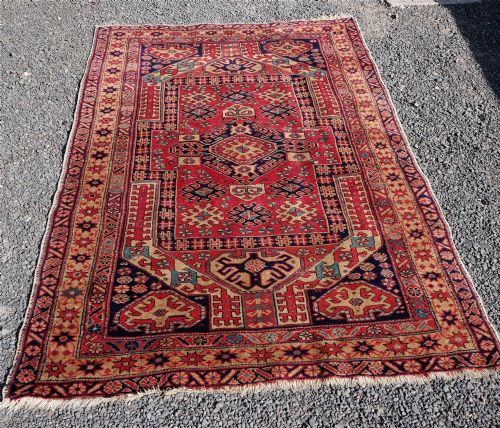
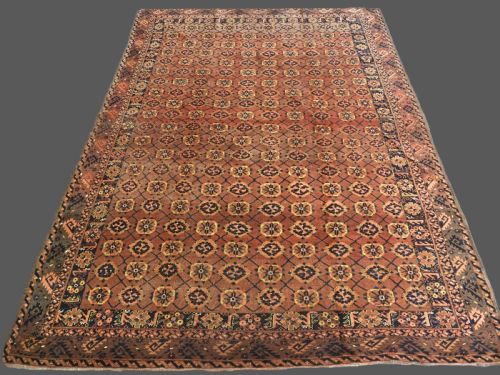
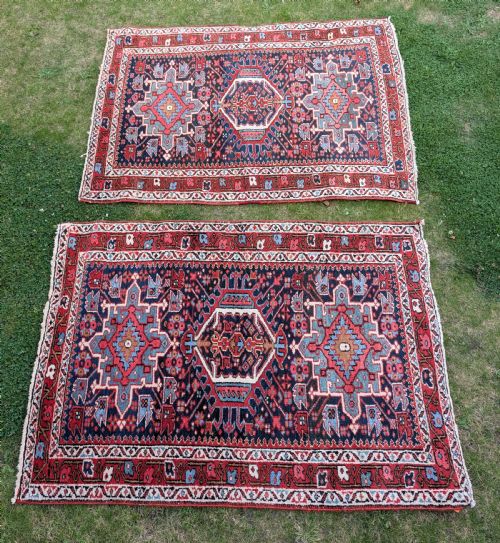
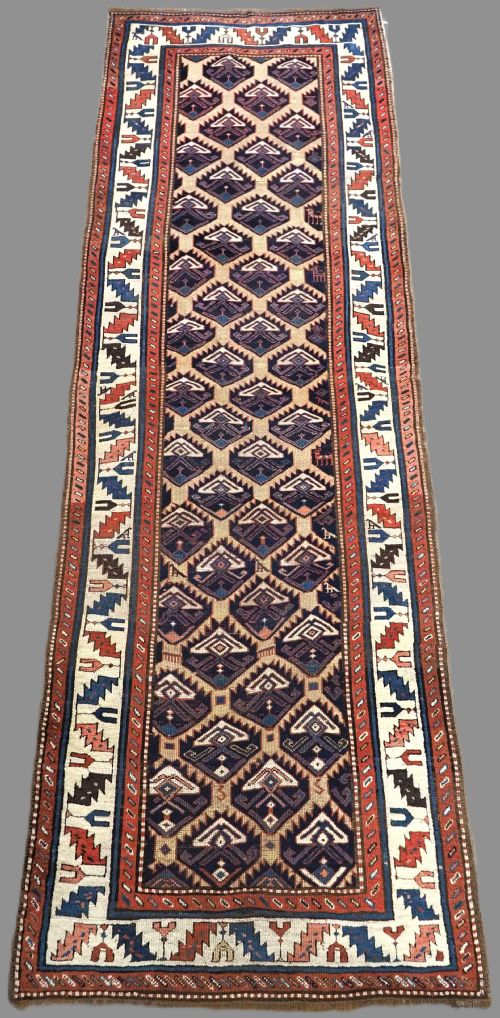
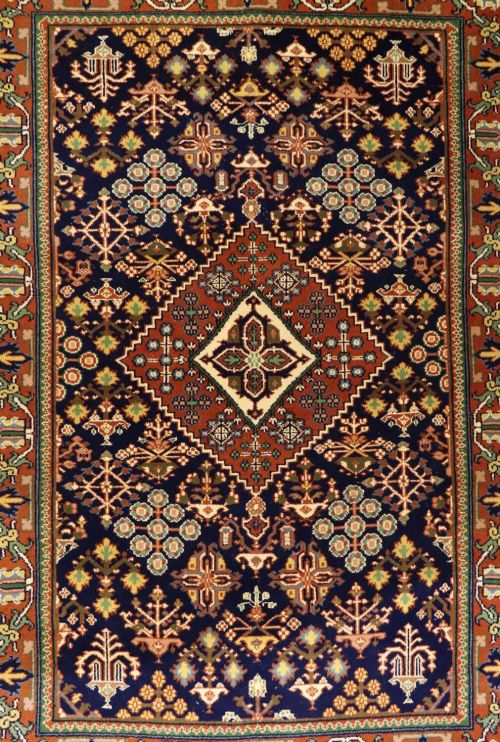
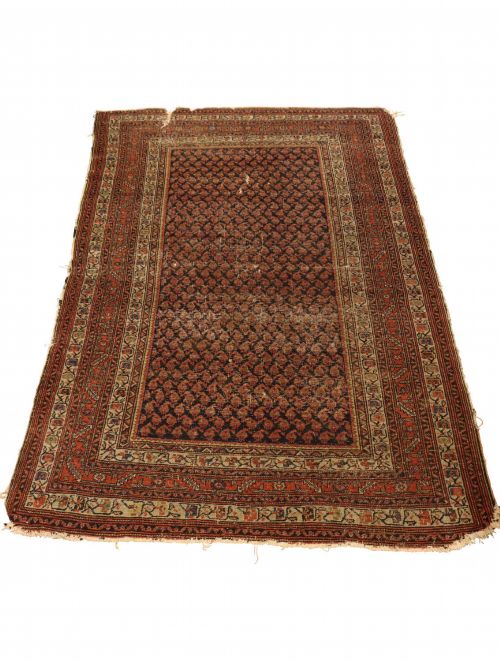
A persian design carpet encompasses hand-knotted floor coverings produced across Iran, the Caucasus, and surrounding regions from the late nineteenth century through to the mid-twentieth century. Buyers encounter everything from coarse tribal runners to finely detailed city carpets featuring traditional medallions, geometric repeats, and floral sprays.
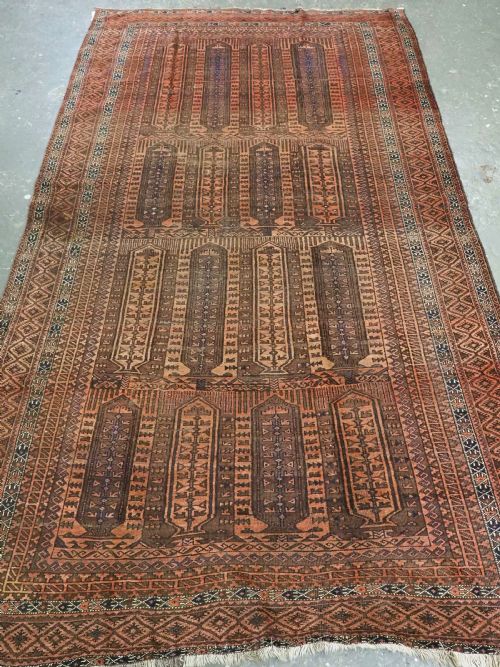
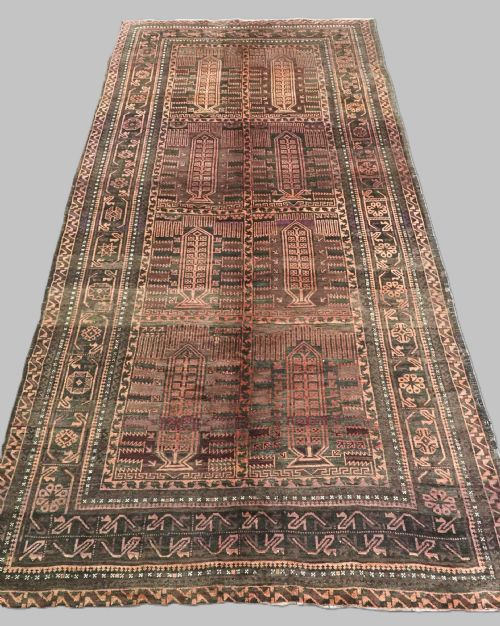
The selection ranges from large Heriz and Mahal room-size carpets down to smaller Baluch, Afshar, and Khamseh tribal rugs. Regional weaving traditions dictate whether a piece displays bold geometric lattice work, repeating shrub motifs, or intricate vase patterns.
How they were made
Weavers utilised hand-spun wool, cotton foundations, and occasionally camel hair, goat hair, or silk highlights to construct these textiles. Natural dyes provided the palette, yielding deep madder reds, soft indigos, and warm yellows that mellow gracefully over decades of use.
Nomadic and village workshops worked on portable vertical or horizontal looms, tying symmetrical or asymmetrical knots by hand. City manufactories in places like Tabriz, Kashan, and Qum employed master weavers to execute complex cartographic and garden designs with high knot densities.
Some Baluch weavers slipped a deliberate asymmetry into their pencil box patterns to ward off the evil eye.
What varies in quality
Quality rests upon the fineness of the knotting, the stability of the foundation, and the clarity of the chosen design. Tighter foundations and evenly beaten-down rows of knots produce a denser, more durable textile that maintains its structural integrity over generations.
The depth and brilliance of the dye work distinguish superior pieces from ordinary ones. Variations in wool quality, from lustrous highland fleece to coarser tribal variants, directly influence the handle, drape, and visual richness of the finished surface.
Rashid Farrokhi
The Persian Design Carpet Glossary
- Boteh
- A stylised almond or paisley motif representing a bush, seed, or flame, frequently repeated across tribal and city fields.
- Herati
- A classic repeating pattern composed of a central floral rosette enclosed by a diamond lattice and flanked by curved leaves.
- Gul
- An octagonal medallion or floral emblem used as a primary repeating motif in Turkmen and related tribal carpets.
- Medallion
- A large central ornamental design anchored in the middle of the carpet field, often mirrored in the corner spandrels.
- Kalam Donneh
- A specific pencil box or repeating block design commonly found in nineteenth-century Baluch and Timuri rugs.
Persian Design Carpet: Frequently Asked Questions
How do I identify a tribal carpet?
Tribal pieces generally display coarser wool, asymmetric geometric patterns, and improvised motifs rooted in nomadic traditions rather than formal city cartoons.
They often feature rich earth tones, camel hair grounds, and smaller dimensions suited to utilitarian camp or village use.
What is a Heriz carpet?
Heriz carpets originate from the Iranian province of Azerbaijan and are known for their bold, durable construction and distinctive geometric medallion layouts.
They frequently utilise robust wool and strong primary colours designed to withstand heavy domestic traffic in large reception rooms.
Are these carpets made with natural dyes?
Many pieces from the late nineteenth and early twentieth centuries rely on natural dye sources like madder root, indigo, and walnut shells for their colour.
These vegetable dyes produce subtle abrash variations, where the tone shifts organically across the surface as dye batches change during weaving.
How should I care for an antique rug?
Protect the wool fibres by vacuuming gently without a rotating beater bar and keeping the textile out of direct, harsh sunlight.
Professional specialist cleaning is recommended every few years to remove embedded grit without damaging the natural lanolin in the fleece.