

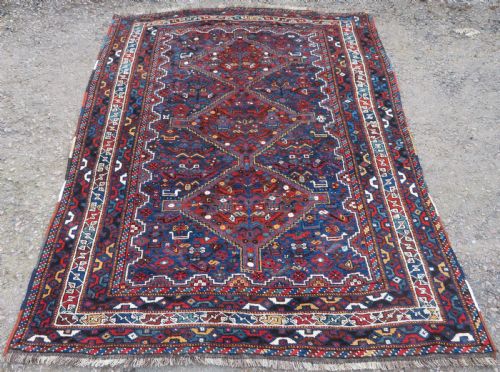


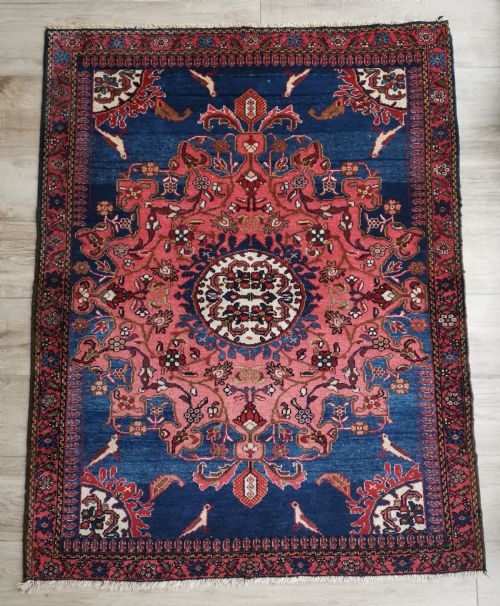


Persian Bird Carpet
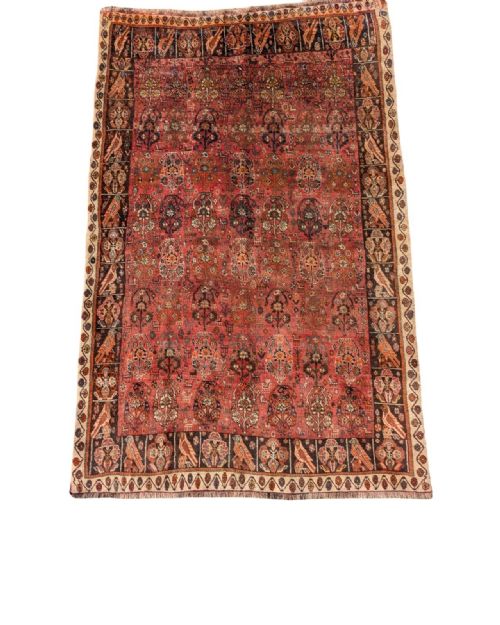
A Persian bird carpet brings traditional imagery of percking chickens, animals and natural motifs into living spaces through woven tribal artistry.
Persian Bird Carpet
When you search for a persian bird carpet, you encounter hand-knotted textiles originating from various regions and tribes across Persia, dating from the late nineteenth century into the early twentieth century. These textiles include room-sized carpets, smaller rugs, village runners, and specific forms such as bag faces.
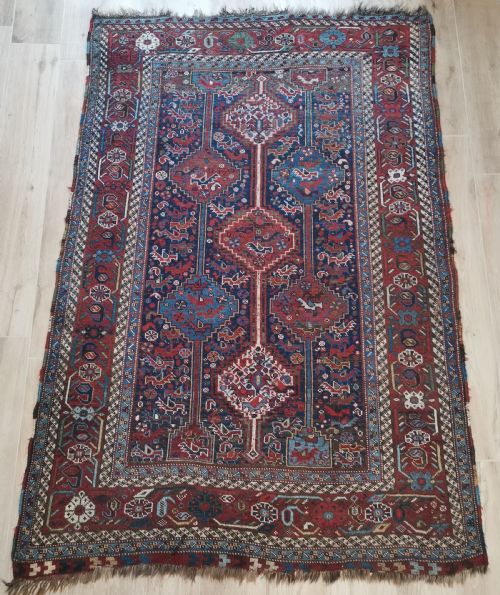
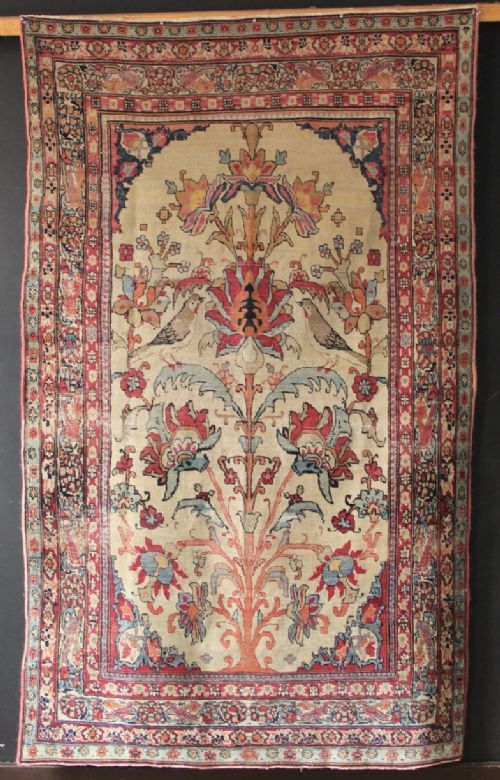
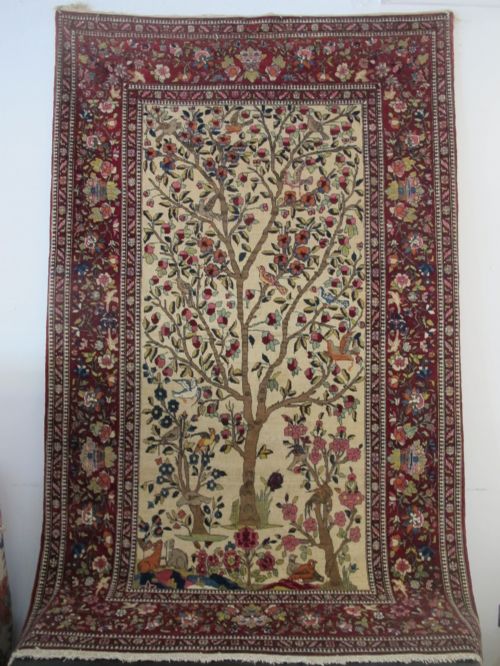
The designs frequently incorporate stylized avian motifs, pecking chickens, and tree-perched birds alongside traditional geometric patterns and floral arrangements. Pieces associated with Khamseh, Tafresh, Kirman, and Kurdish weavers appear regularly among the selections on this page.
How they were made
Weavers utilised natural dyes and vegetable colours to dye hand-spun wool, cotton foundation threads, and sometimes goat hair or silk. These materials provide the foundation for flatweaves like Soumak and intricate pile knots.
Techniques varied between nomadic groups creating portable tribal rugs and urban workshops producing finely detailed city carpets, yielding distinct textures and structural densities across different regions.
Listings span from the eighteen-seventies through the nineteen-thirties, incorporating wool, cotton, silk, and natural dyes across tribal and village formats.
What varies in quality
The nuance of knot density, the clarity of drawn avian motifs, and the depth of natural dye palettes distinguish finer examples from simpler village work. Sophistication in drawing and the handling of secondary border details elevate certain carpets above standard production.
Material selection also plays a part, as finely spun wool and careful preparation of vegetable dyes yield superior handle and resonance over time compared to more utilitarian domestic weaves.
The Persian Bird Carpet Glossary
- Soumak
- A flatweave technique involving wrapping weft threads around warp threads to create a textured, durable face without a pile.
- Boteh
- An ancient Persian motif resembling a almond, teardrop, or bent palm leaf, frequently integrated alongside bird designs.
- Main carpet
- A large floor-covering format woven for primary domestic use rather than as a runner or smaller scatter rug.
- Natural dyes
- Colourants derived from plants, insects, and minerals, prized for their ability to age gracefully and develop rich patinas.
Persian Bird Carpet: Frequently Asked Questions
What is a persian bird carpet?
A persian bird carpet is a hand-knotted textile featuring woven representations of birds, chickens, or perching animals within its field design.
These pictorial elements are often combined with tribal geometry, floral sprays, or tree of life motifs.
How do I identify a Khamseh bird rug?
Khamseh rugs from south-west Persia frequently display repeating motifs of pecking chickens or birds alongside deep indigo and madder red palettes.
Nomadic weaving traits and characteristic wool handling help differentiate them from urban workshop productions.
Where were these carpets made?
Production spans various tribal confederations, villages, and urban centres across Persia, including regions like Kirman, Isfahan, Tafresh, and Kurdistan.
Each area imparted distinct structural traits and local design traditions onto the woven pieces.
How should I care for an antique rug?
Antique wool and cotton textiles benefit from regular gentle vacuuming without rotating brushes and professional cleaning when necessary.
Keeping them out of direct sunlight helps protect the natural dyes from fading over the years.