



Perpetual Desk Calendar
A perpetual desk calendar organises the passing days without ever needing replacement, combining mechanical utility with period materials.
Perpetual Desk Calendar
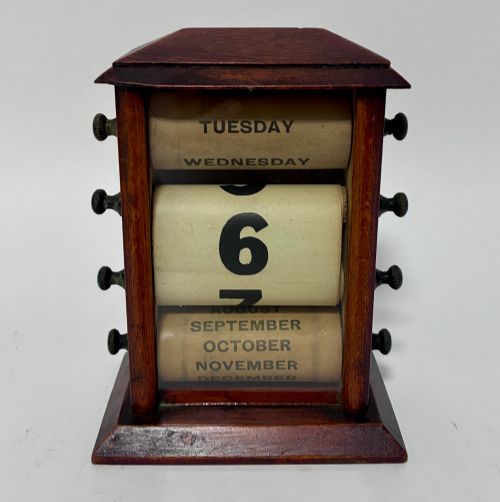
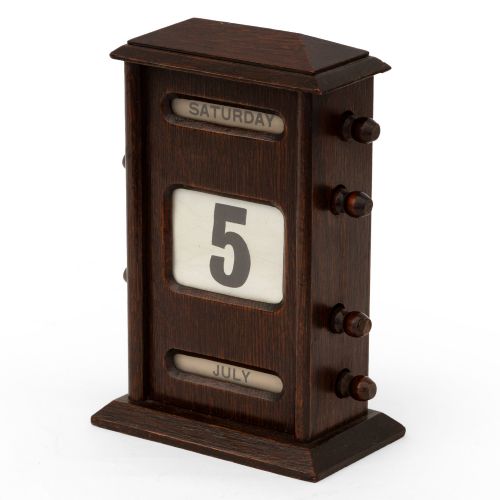
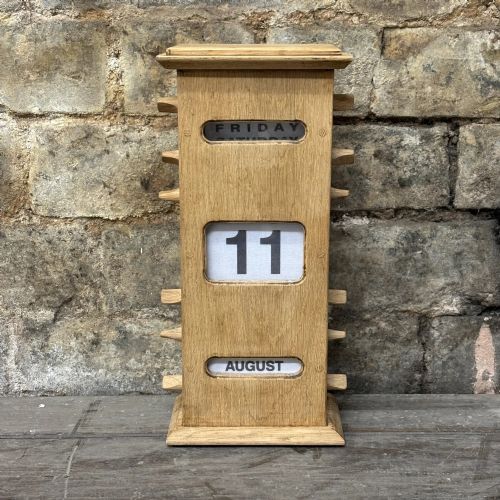
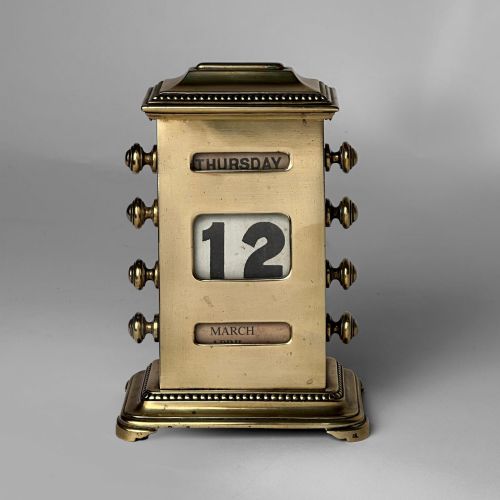
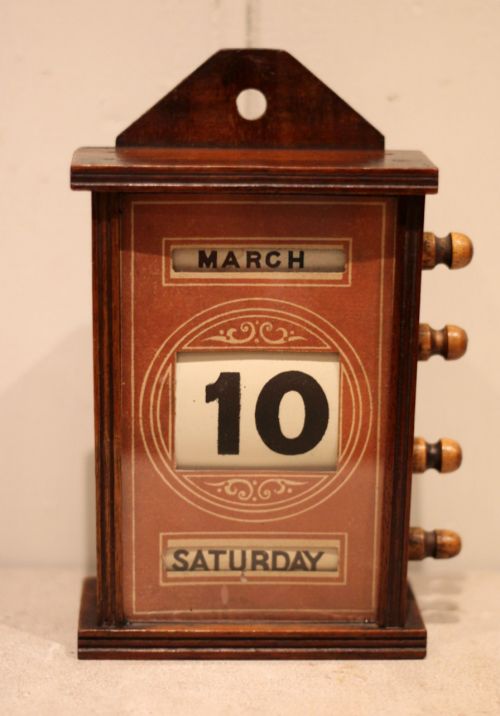
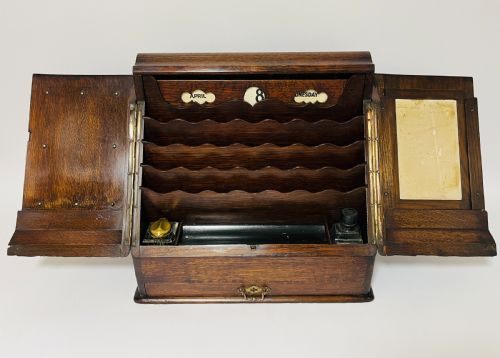
A perpetual desk calendar serves as a permanent fixture for tracking days and months, appearing frequently in robust timbers such as oak and mahogany from the Victorian and Edwardian eras. These pieces often take the form of simple desk stands or integrate into larger stationery cabinets designed for the office.
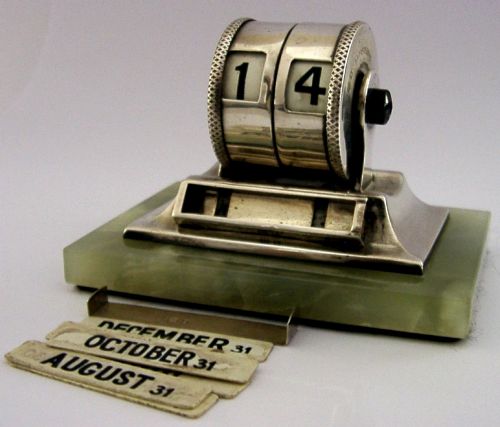
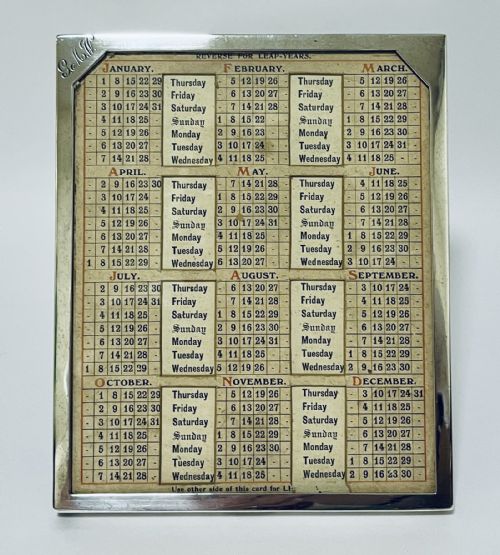
Beyond standard wooden frames, examples emerge in cast brass, silver, and slate, sometimes combined with Mantel clocks or inkstands. The selection spans straightforward utilitarian designs from the late nineteenth century alongside geometric Art Deco models from the 1920s and 1930s.
Materials and Construction
Carpenters constructed the wooden bodies using oak, walnut, and mahogany, frequently utilising figured grains for visual depth on writing desks. Metal components involve cast brass, silver, and silver plating, paired with paper cards, glass panels, and early plastics like Bakelite.
Maker methods combined cabinet making with mechanical assembly, integrating rotating drums, sliding indicators, and paper card sequences. More elaborate desk accessories incorporate enamel detailing, tortoiseshell, and carved stone elements such as green onyx and Belgian slate.
Some calendars required an act of steady patience to rotate stiff paper drums without tearing the dates of a bygone Tuesday.
Design and Execution
Quality rests upon the weight of the materials and the precision of the mechanical action, distinguishing heavy cast brass and solid figured timbers from lighter constructions. Superior examples display crisp lettering on the calendar cards and integrated decorative motifs such as Egyptian Revival styling.
The integration of secondary functions dictates distinction, separating simple date indicators from complex pieces that combine working clock movements, inkstands, and stationery compartments into a unified desk accessory.
William Tonks of Birmingham·The Wilmot Manufacturing Co·Asprey London·Brocot
The Perpetual Desk Calendar Glossary
- Perpetual calendar
- A timekeeping or date-tracking device designed to display the day, date, and month correctly across years without manual resetting for shorter months. Most antique versions rely on manual daily or weekly adjustments using knobs, cards, or rollers.
- Stationery cabinet
- A desk furniture piece containing pigeonholes, small drawers, and fitted compartments for writing paper and envelopes. Many incorporate perpetual calendars into their doors or superstructure.
- Inkstand
- A desk accessory holding one or two inkwells, pen trays, and sometimes a perpetual calendar or blotter within a unified base.
- Boulle
- A form of marquetry using brass and tortoiseshell inlaid in contrasting patterns, seen on select luxury desk pieces.
- Engine turned
- A decorative mechanical engraving technique producing precise geometric patterns on silver and metal surfaces.
Perpetual Desk Calendar: Frequently Asked Questions
How do perpetual desk calendars work?
These pieces use rotating rollers, sliding panels, or interchangeable cards to display the days, dates, and months. Users adjust the indicators manually each day or month to maintain the correct alignment.
Most mechanical elements rely on simple friction fits or small thumbscrews located at the sides or top of the frame. The internal components consist of paper strips, card sequences, or metal bands printed with the necessary calendar combinations.
What woods were commonly used?
Oak appears most frequently in various finishes including dark, golden, and figured grains. Mahogany and walnut also form the structural bodies of many late nineteenth and early twentieth century examples.
Cabinet makers selected these hardwoods for durability and their capacity to accept polish. They match the prevailing furniture styles of the Victorian and Edwardian periods.
How do I date a calendar?
Dating relies on stylistic clues such as wood selection, hardware design, and manufacturing marks. Victorian and Edwardian pieces tend to feature solid oak frames and brass fittings, while 1930s versions often display Art Deco geometric lines or Bakelite components.
Maker stamps and hallmarks on silver or bronze elements provide more precise chronological markers. Patent dates printed on the calendar cards offer a baseline for the earliest possible year of manufacture.
Where were they placed?
Owners kept these accessories on partner desks, library tables, and writing cabinets in domestic studies or commercial offices. Larger versions stood on mantelpieces or mounted directly onto walls.
They functioned as central coordination points for correspondence in homes and businesses before the widespread adoption of wall planners. Their placement reflected the importance of written communication during the nineteenth and early twentieth centuries.