

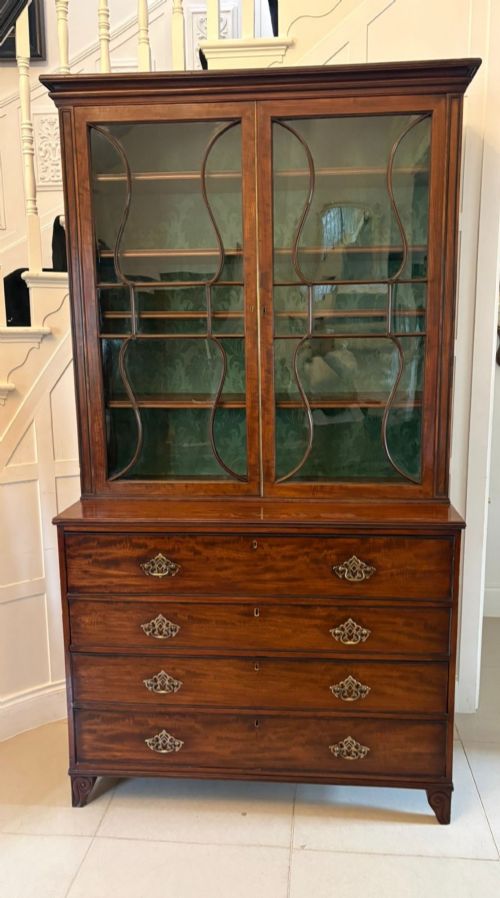
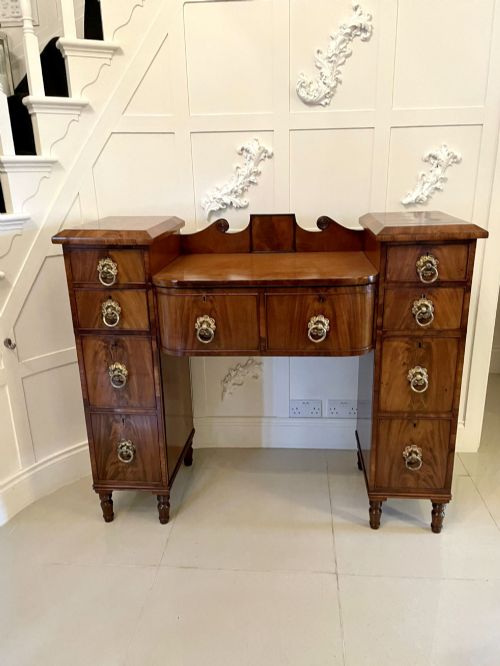
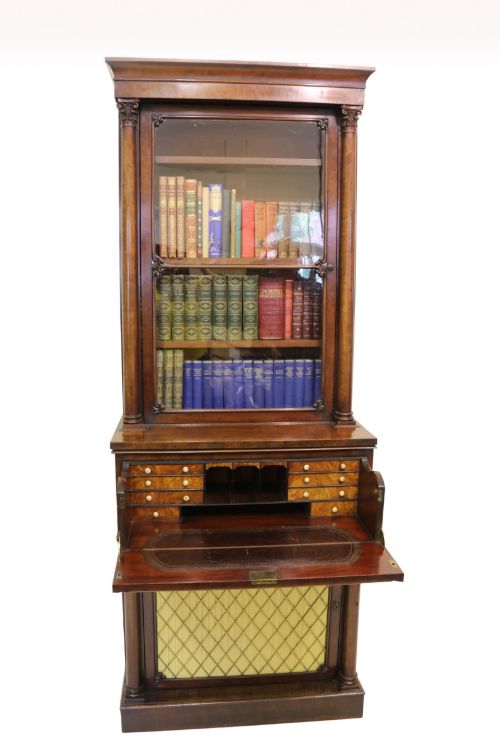
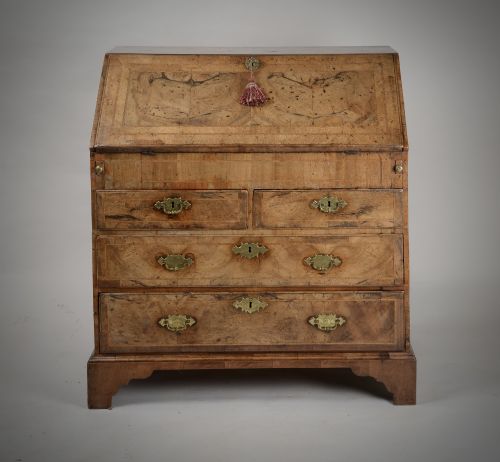
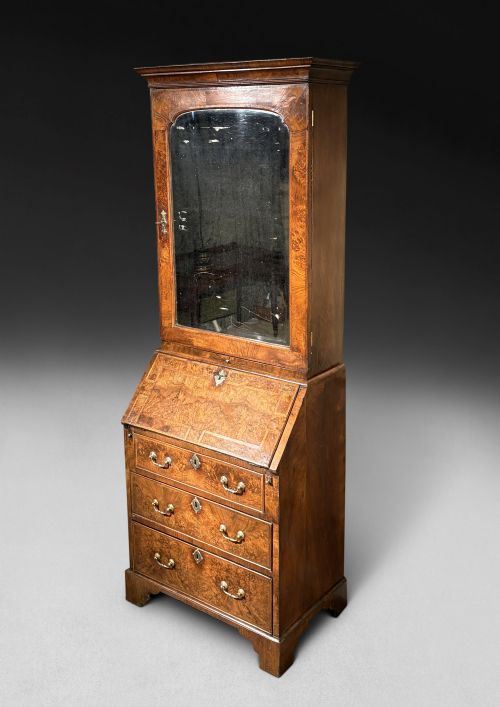


Period Writing Cabinet
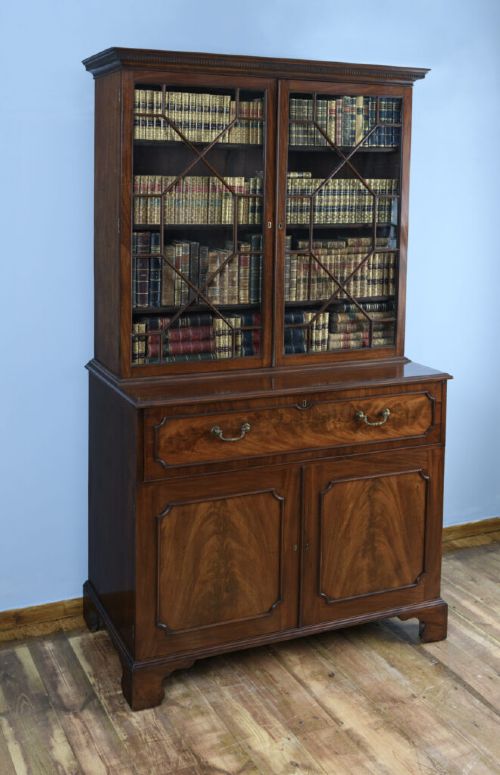
A period writing cabinet brings together fine cabinetmaking and private correspondence, offering fitted drawers and a drop flap or sliding surface for letters.
Period Writing Cabinet
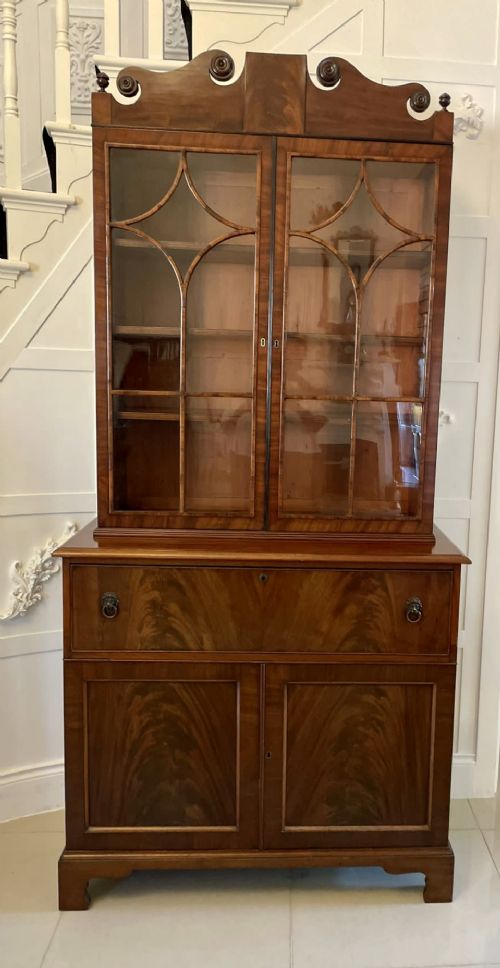
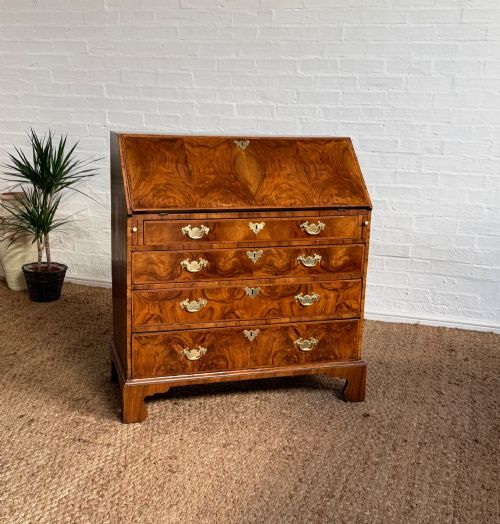
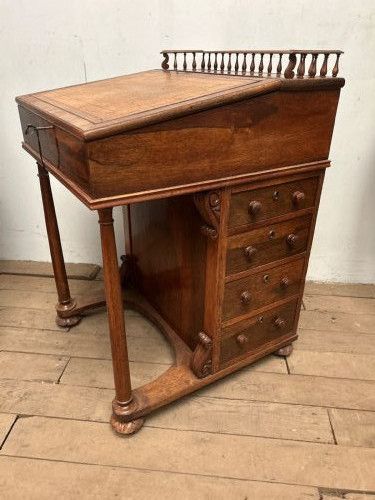
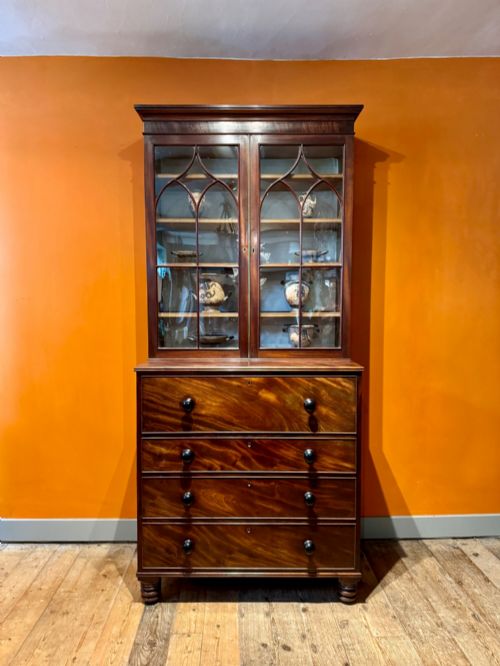
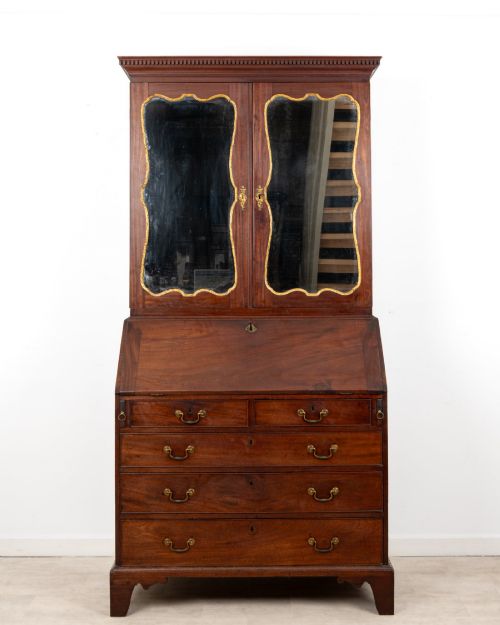
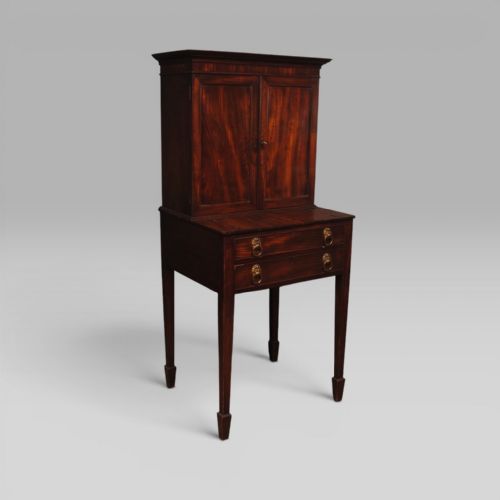
A period writing cabinet encompasses a range of forms designed for correspondence and storage, from tall bureau bookcases and secretaire chests to compact davenports and bonheur du jours. These pieces span the 17th, 18th, and 19th centuries, appearing alongside Georgian, Regency, and Victorian styles.
The most common examples on this page are mahogany and walnut bureau bookcases from the Georgian period, alongside compact Regency rosewood davenports and inlaid satinwood pieces.
Makers and workshops utilised specialised forms such as the escritoire, the secretaire tallboy, and the cylinder desk to provide secure storage for papers alongside display shelving or drawer space.
How they were made
Makers constructed these cabinets using dense timbers including mahogany, walnut, burr walnut, and satinwood, frequently applying decorative veneers to visible surfaces.
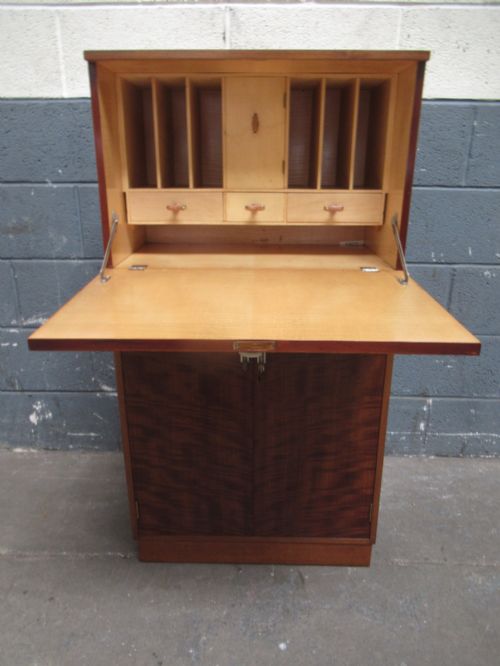
Interiors incorporated specialised writing surfaces lined in leather, accompanied by pigeonholes, secret compartments, and small drawers constructed with traditional dovetail joints.
Hardware details such as brass handles and locks, alongside glass door panels and ormolu mounts, completed the construction of these refined pieces.
Period Writing Cabinet Retail Price Guide 2026
Typical asking prices for period writing cabinet among the pieces listed under this phrase on Sellingantiques today, from the lower quarter to the upper quarter. They describe what is for sale here now, not the wider market.
Secret compartments hidden within the pigeonholes kept love letters away from prying family members.
What varies in quality
Quality rests upon the selection and matching of wood grain, particularly in figured mahogany, burr walnut, and inlaid satinwood veneers across primary surfaces.
The sophistication of the internal fitments, including secret drawers, well-turned pulls, and neatly fitted leather writing surfaces, distinguishes finer examples from simpler provincial work.
Proportion and structural integrity define the standing of a piece, separating workshops that prioritized balanced design and precise joinery from more standard production.
Gillows of Lancaster
The Period Writing Cabinet Glossary
- Bureau bookcase
- A writing cabinet featuring a fall-front desk section beneath glazed shelving or storage doors.
- Davenport
- A compact desk with a sloped sliding top, fitted drawers to the side, and a stationary compartment above.
- Escritoire
- An early term for a writing cabinet, typically featuring a drop-front flap concealing small drawers.
- Bonheur du jour
- A light ladies writing table fitted with a small cabinet or shelving unit on the upper surface.
- Secretaire drawer
- A pull-out drawer disguised to look like a standard drawer which drops down to reveal a fitted writing desk.
Period Writing Cabinet: Frequently Asked Questions
What is a secretaire drawer?
A secretaire drawer is an ingenious furniture element disguised on the outside to resemble a standard chest or sideboard drawer. When pulled open and unlatched, the front folds down to reveal a fitted desk space with pigeonholes and small drawers.
This allowed owners to write letters without needing a dedicated standalone desk in the room.
How do I date an 18th-century bureau?
Dating relies on observing changes in timber selection, handle hardware, and internal joinery methods. Walnut predominated in the early decades before mahogany became the favored wood for fine cabinetmakers.
Secondary woods inside drawers, such as oak or pine, also provide clues regarding the region and decade of manufacture.
Where were writing cabinets placed?
These cabinets sat in private libraries, bedrooms, and parlours where correspondence and household accounts were managed. Their dual function as storage and writing surface made them central to daily domestic administration.
Compact forms like davenports and bonheur du jours occupied smaller sitting rooms where space was limited.
What is burr walnut?
Burr walnut is a decorative veneer taken from the knotted growth of a walnut tree, yielding swirling patterns of grain. Cabinetmakers prized this timber for high-status pieces during the Queen Anne and Victorian periods.
It was often applied to the main fall-front or door panels to create dramatic visual contrast against plainer surrounds.