
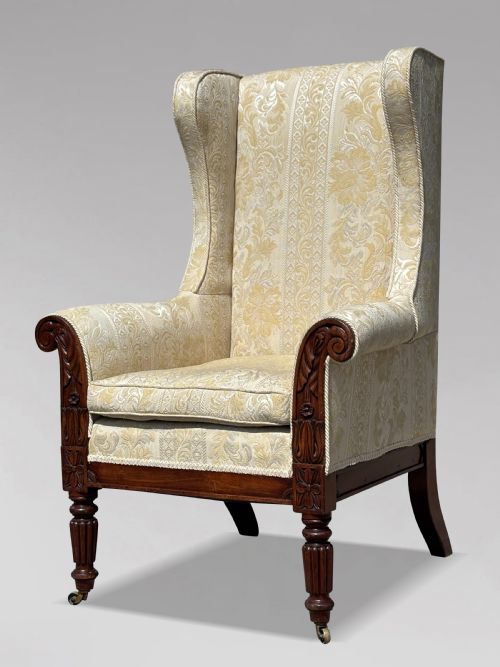


Period Wing Armchair
A period wing armchair draws the eye with its sheltering sides and high back, offering warmth and comfort by the hearth.
Period Wing Armchair
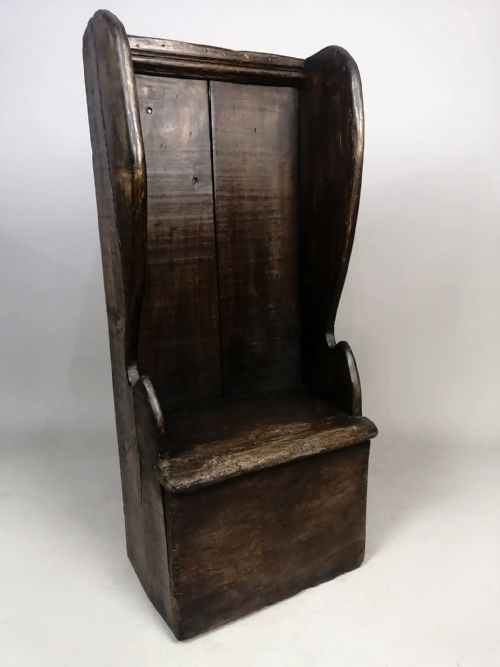
A period wing armchair is designed to shield the sitter from draughts, featuring distinctive side panels or wings attached to the armrests. The form evolves from seventeenth-century vernacular styles through the elegant curves of the eighteenth century into later Edwardian and revival interpretations.
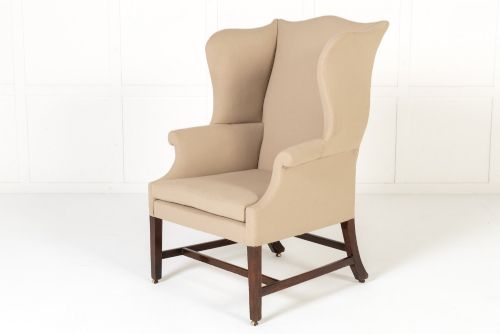
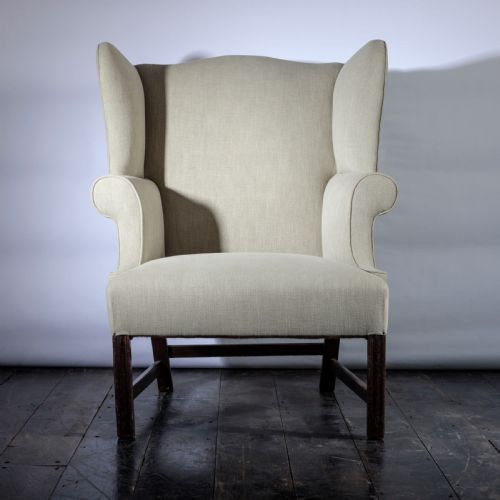
Georgian examples display substantial mahogany or walnut frames alongside barrel-backed seating designed to retain heat close to the body. Edwardian and later twentieth-century iterations bring lighter woods, bergère panels, and diverse textile coverings ranging from simple calico to rich damask.
Buyers frequently encounter George III formats, alongside vernacular lambing chairs and later revival pieces from the 1920s and 1930s. Each era brings subtle shifts in proportions, from high upright backs to deeper, more relaxed seating angles.
Materials and construction
Frames rely upon traditional timbers such as mahogany, walnut, oak, fruitwood, and beech to provide structural integrity for the high back and wings. Joinery techniques ensure the deep wooden rails support the substantial forces exerted by the upholstered elements.
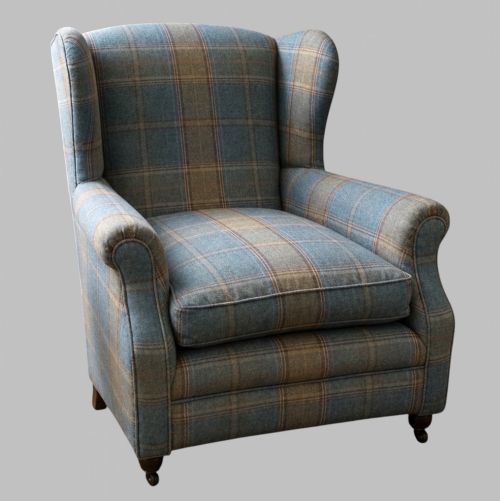
Upholstery historically layers natural stuffings beneath outer textiles like leather, velvet, linen, calico, and damask fabric, secured with brass tacks. Modern restorations frequently update these coverings with contemporary wools, plaids, and recycled cottons while retaining the traditional profile.
Listings feature periods spanning from the seventeenth century through to the 1930s, incorporating mahogany, walnut, oak, and brass elements.
Markers of quality
The integrity of the underlying timber frame and the crispness of the carved details on the legs and arm supports distinguish finer examples. Original or sympathetic wood patination alongside well-balanced proportions denotes superior workshop execution.
The quality of the upholstery execution, the choice of traditional stuffing materials, and the handling of deep buttoning or fabric matching dictate the finished presence of the armchair.
George Montague Ellwood
The Period Wing Armchair Glossary
- Wingback
- An upholstered chair featuring side panels designed to deflect cold air away from the head and shoulders. This defining characteristic evolved from earlier enclosed seating forms.
- Bergère
- An enclosed armchair with stuffed upholstery on a wooden frame, often featuring cane work panels on the sides or back. The style adds visual lightness to the heavy silhouette.
- Damask fabric
- A reversible figured cloth traditionally woven on a jacquard loom with patterns formed by contrasting warp and weft threads. It offers a formal, textured surface suited to period seating.
- Barrel back
- A seating design where the upholstered back curves continuously around to form the armrests in a single semicircular sweep. This hugs the sitter and enhances thermal retention.
Period Wing Armchair: Frequently Asked Questions
What is a period wing armchair?
A period wing armchair is a traditional seat featuring high sides designed to trap heat from a fireplace and block drafts. These chairs date across several centuries, evolving from early oak and fruitwood forms to upholstered Georgian and Edwardian designs.
They serve as both functional seating and focal points in traditional rooms, balancing comfort with architectural presence.
How do I date a wing armchair?
Dating relies on examining the timber species, leg styles, stretcher arrangements, and the underlying construction of the frame. Georgian pieces often show mahogany or walnut with cabriole or straight legs, while earlier vernacular pieces utilise oak or fruitwood.
Upholstery and covering materials are frequently later replacements, so the wooden chassis provides the most reliable guide to age.
Where should I place a wing armchair?
These armchairs suit placement beside a fireplace, reading corner, or study where their high wings provide privacy and acoustic dampening. Their generous proportions make them natural anchor pieces for a living room layout.
Ensure adequate clearance around the chair so the prominent wings and arms are not constrained by surrounding furniture.
What is the difference between George III and Edwardian styles?
George III pieces typically feature dense mahogany frames, substantial padding, and restrained proportions characteristic of the eighteenth century. Edwardian interpretations often draw inspiration from earlier eras but introduce lighter woods, altered seat heights, and different spring configurations.
Revival pieces from the early twentieth century bridge the gap by combining historical silhouettes with modern comfort standards.