



Period Watercolour Painting
These period watercolour painting works capture intimate portraits and landscapes on paper, offering buyers a direct window into historical rooms and attire.
Period Watercolour Painting
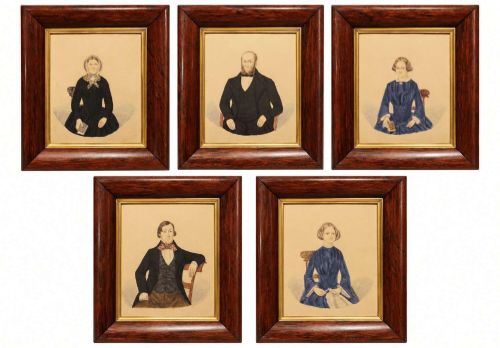
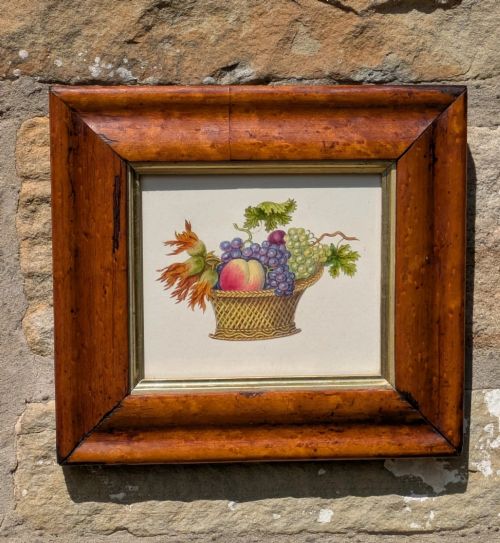
A search for period watercolour painting brings up works executed on paper, often framed behind glass in wood or giltwood surrounds. These pieces span centuries, encompassing delicate portrait miniatures alongside larger landscape and classical scenes.
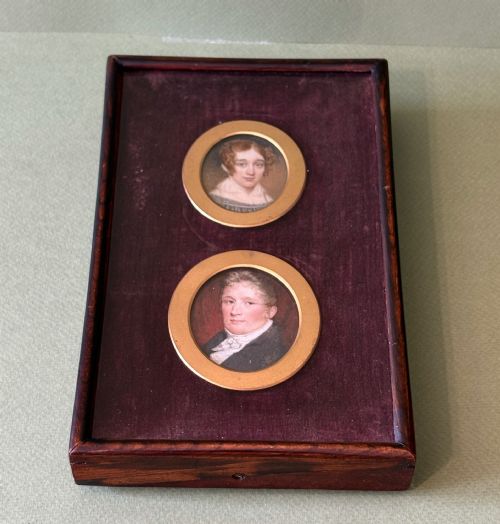
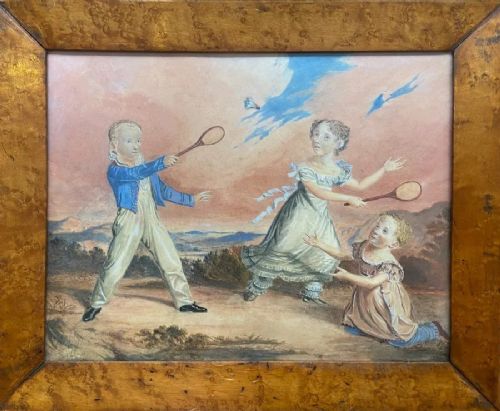
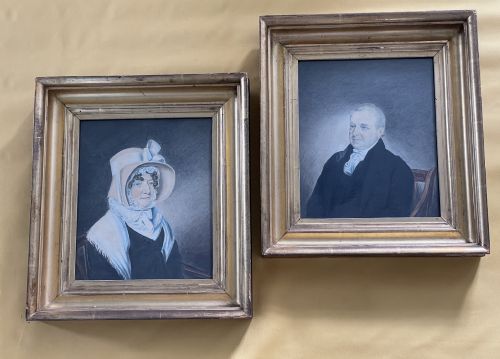
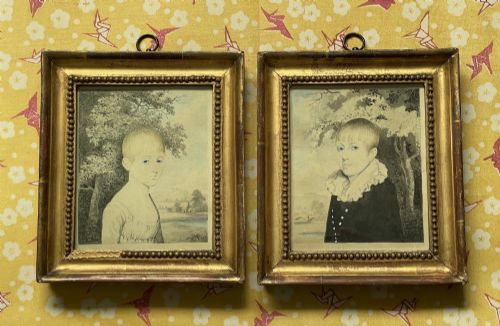
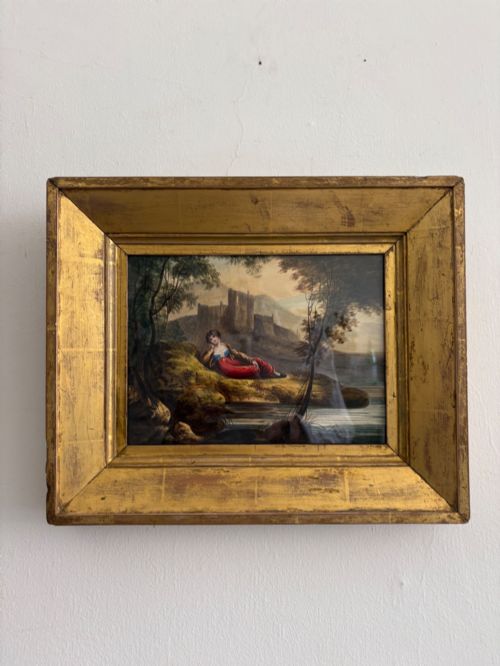
The selections available here frequently originate from the Georgian and Regency eras through to the late nineteenth and early twentieth centuries. Buyers will encounter both individual character studies and grouped sets, depicting subjects from young girls in white dresses to detailed rural vistas.
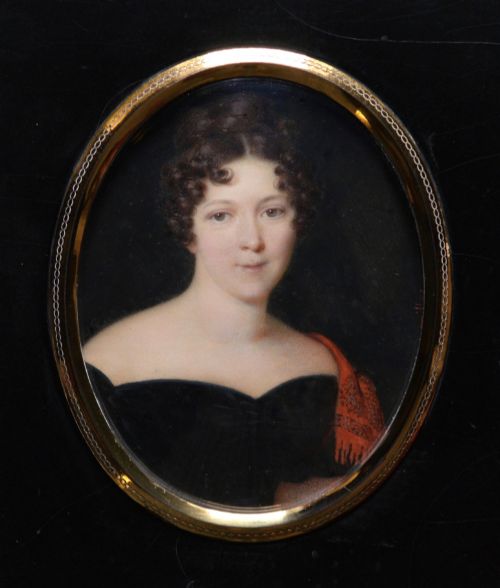
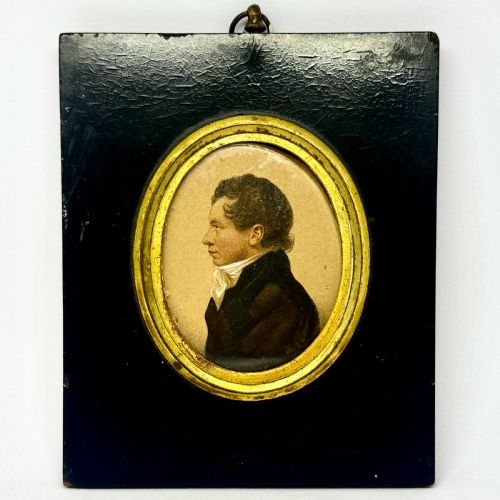
Originating from English, French, Scottish, and Japanese makers, these works reflect diverse regional traditions on paper. Portrait miniatures in ebonised frames sit alongside larger signed landscapes and gouache-enhanced compositions.
Materials and Technique
Pigments applied to paper form the foundation of these works, frequently augmented with gouache for added opacity and depth in highlights. Watercolour and pencil combinations appear regularly in portrait studies from the nineteenth century.
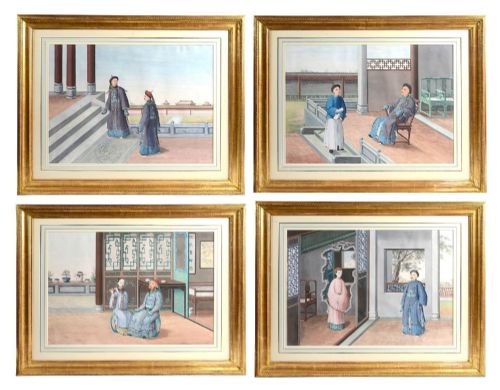
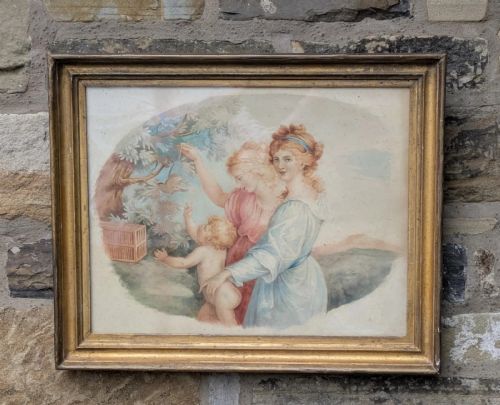
Framing materials play an essential role in presentation, utilising wood, gilded wood, and ebonised mouldings fitted with protective glass. These surrounds often date from the period of execution, safeguarding the delicate paper surfaces underneath.
Period Watercolour Painting Retail Price Guide 2026
Typical asking prices for period watercolour painting among the pieces listed under this phrase on Sellingantiques today, from the lower quarter to the upper quarter. They describe what is for sale here now, not the wider market.
An eighteenth-century frog battle on silk proves that historical artists enjoyed illustrating martial amphibians just as much as human cavalry.
Factors of Quality
The distinction between average and exceptional works lies in the precision of brushwork and the expressiveness of the subject. Masterful handling of pigment on paper yields lifelike skin tones and convincing textiles in portrait miniatures.
Original period framing significantly influences the desirability of a piece, particularly when matching giltwood or ebonised surrounds complement the age of the artwork. Intact provenance and legible signatures by documented artists elevate the standing of individual paintings.
Henry Travis·Philip Richard Morris·Gaston Cornil·Alice Anne Renshaw·John Augustus Atkinson·Robert Buchan Nisbet·Thomas Woolnoth·Edith E Caswall·Emma Kendrick·James H Hulse·B Kaufmann·Thomas Ivester Lloyd·Takashi Nakayama·Frederick Thomas Baynes·Robert Kemp
The Period Watercolour Painting Glossary
- Watercolour
- A painting method in which fine pigment is suspended in a water-soluble binder and applied to paper. This medium allows for transparent washes of colour that reveal the texture of the sheet beneath.
- Gouache
- An opaque watercolour medium containing pigment mixed with a binding agent and white filler. Artists utilise this to introduce solid highlights and dense areas of colour to works on paper.
- Portrait Miniature
- A small-scale painted likeness, frequently executed during the Georgian and Regency periods. These intimate works are often housed in protective pocket cases or small wall frames.
- Giltwood
- Wood that has been coated with a thin layer of gold leaf or gilt powder. This material is standard for ornate period frames enclosing fine art.
- Ebonised
- Wood treated with a chemical or stain to imitate costly ebony. This dark finish appears frequently on nineteenth-century frames designed to contrast with pale watercolours.
Period Watercolour Painting: Frequently Asked Questions
How should I display watercolour paintings safely?
Keep these works out of direct sunlight to prevent the pigments on paper from fading over time. Maintaining stable indoor humidity also protects both the delicate medium and the historical wooden frames.
Ensure that framing utilises conservation-grade materials behind the glass to isolate the paper from acidic backing boards. Hanging them on interior walls away from direct heat sources preserves the condition of the artwork.
What distinguishes Regency watercolours from Victorian examples?
Regency watercolours often feature restrained neoclassical compositions, delicate portrait miniatures of subjects in high-waisted attire, and soft tonal washes. The palette tends towards subtle earth tones and muted blues.
Victorian pieces frequently display a broader range of pigments, enhanced use of gouache, and more elaborate narrative or landscape details. Framing styles also shift from simple ebonised surrounds to more ornate giltwood designs.
Are portrait miniatures always painted on paper?
While many examples utilise watercolour on paper, artists also painted miniatures on ivory, vellum, and prepared card during the Georgian and Victorian eras. The listings here focus specifically on works executed on paper.
Protective glass and tight seals inside miniature frames were essential for safeguarding these delicate surfaces from dust and moisture. Examining the backing often reveals handwritten inscriptions regarding the sitter.
How can I identify the age of a period frame?
Older frames exhibit hand-carved wooden mouldings, traditional corner joins, and layered gesso preparations beneath the gilding. Iron or brass fixings at the back often show age-appropriate oxidation.
Modern replacements lack the subtle wear patterns and patination found on frames contemporary with nineteenth-century watercolours. The backing materials and paper tapes also offer clues to the history of the mounting.