



Period Watercolour Artwork
Period watercolour artwork captures the subtle hand of painters working across the eighteenth, nineteenth, and early twentieth centuries.
Period Watercolour Artwork
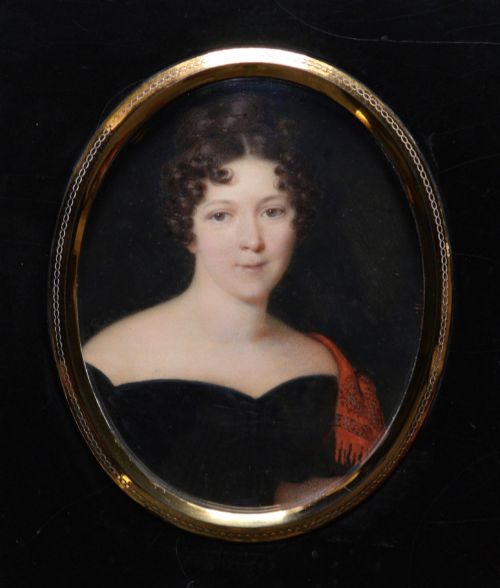
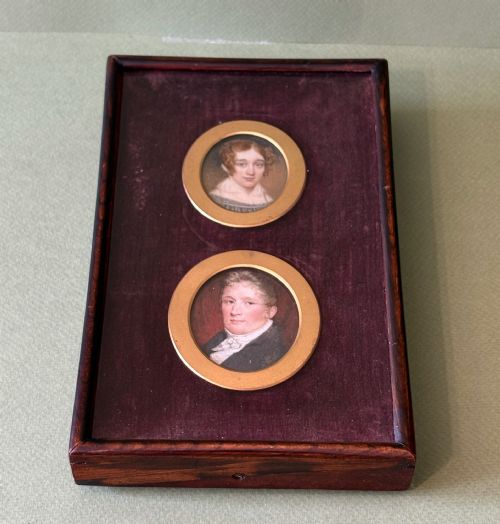
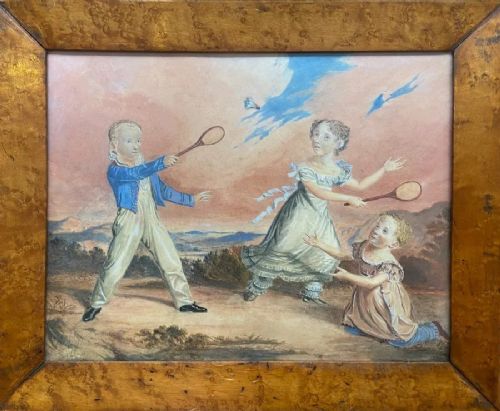
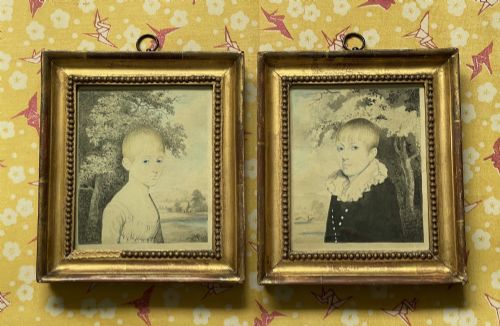
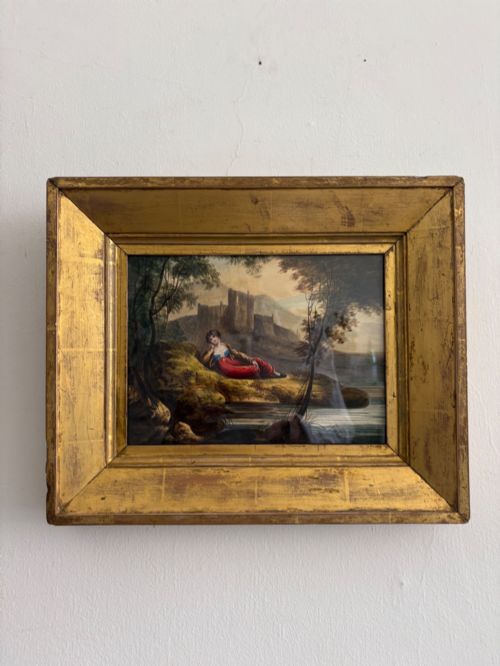
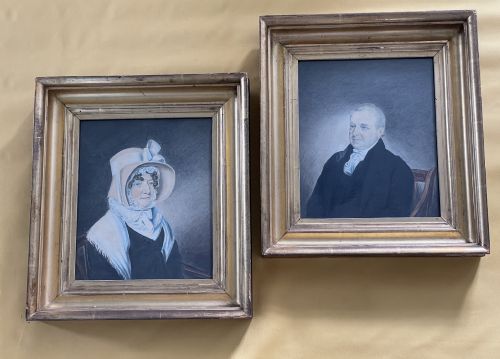
When a collector searches for period watercolour artwork, they encounter delicate paintings on paper spanning the Georgian, Regency, Victorian, and Edwardian eras. These pieces range from intimate portrait miniatures and character studies to expansive landscapes, classical scenes, and architectural views.
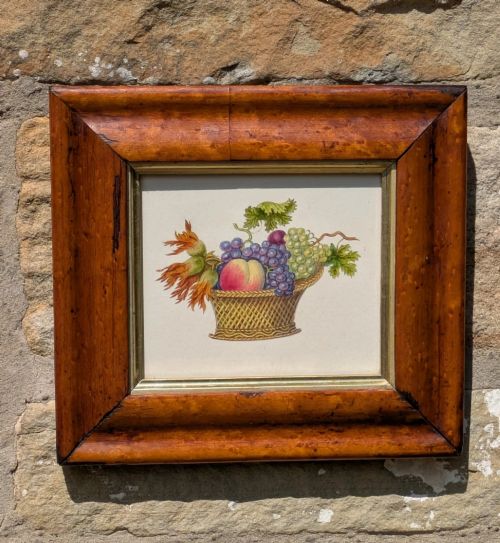
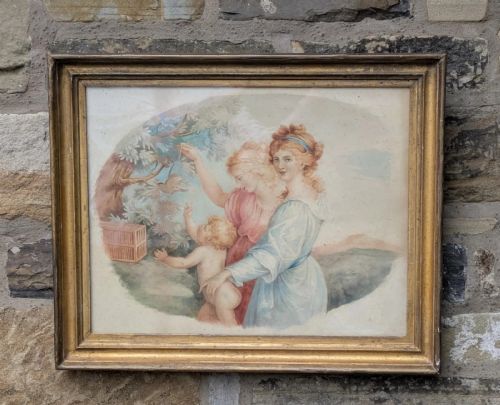
The most common examples on this page are portraits and landscapes originating from British and European hands, often housed within period timber or gilt frames. Works stretch from the late eighteenth century into the early decades of the twentieth century, reflecting shifting tastes from Neoclassical refinement to Romanticism and Pre-Raphaelite detail.
Materials and Technique
Pigments ground in water-soluble binders are applied to paper surfaces, sometimes supplemented by bodycolour or gouache for opacity and highlights. Pencil underdrawing frequently guides the composition, while pen and ink details define sharper outlines in architectural or figurative subjects.
Finished sheets are protected behind glass and secured within wooden frames finished in gilt, gilded wood, or plain timber moulding. Many of these surrounds are contemporary to the paintings themselves, preserving the original relationship between image and mount.
Listings feature works from the eighteenth through the early twentieth centuries, executed on paper and silk.
Judging Quality
Quality rests upon the sureness of the draftsmanship and the retention of pigment vibrancy across the paper surface. A master hand achieves depth and luminosity through layered washes, whereas lesser works rely on flat colour and heavy-handed outlines that obscure the natural texture of the support.
The integrity of the presentation also dictates value. Retaining the original frame, unbroken glass, and untouched backing boards ensures the artwork survives in the state intended by its maker.
Henry Travis·Philip Richard Morris·Gaston Cornil·Alice Anne Renshaw·Arthur Hopkins·John Augustus Atkinson·Robert Buchan Nisbet·Thomas Woolnoth·Edith E Caswall·James H Hulse·B Kaufmann·Takashi Nakayama·Frederick Thomas Baynes·Robert Kemp·Thomas Rowlandson
The Period Watercolour Artwork Glossary
- Gouache
- An opaque water-based medium that includes white pigment to create solid, flat areas of colour. It is frequently combined with transparent watercolour to add highlights.
- Bodycolour
- Another term for water-based paint mixed with a white base to achieve opacity. Artists use it to build up dense details that stand out against thinner washes.
- Portrait Miniature
- A small, highly detailed painting on paper, ivory, or vellum designed for intimate viewing. These pieces often capture likenesses of family members or public figures with microscopic precision.
- English School
- A designation given to works created by artists trained or working in England whose specific identities remain unrecorded. It groups stylistic similarities rather than a single master.
Period Watercolour Artwork: Frequently Asked Questions
How do I care for watercolour paintings?
Watercolours require protection from direct sunlight to prevent the pigments from fading over time. Keeping them in stable humidity environments safeguards both the fragile paper and the original frame.
Professional framing with acid-free backing materials ensures the paper does not discolour or degrade. Regular dusting of the frame and glass maintains the overall appearance.
Were these watercolours always framed?
Most works were placed behind glass soon after completion to protect the absorbent paper surface from dust and moisture. Original frames often feature carved wood and gilt finishes characteristic of their specific decade.
Replacing a damaged surround is common, but finding a piece retained in its original period frame adds significant historic interest. The backing boards sometimes reveal old labels or inscriptions from previous owners.
Can I identify the artist from unsigned works?
Unsigned pieces are frequently attributed to regional schools or broader movements based on technique, palette, and paper types. Stylistic comparisons with documented works help narrow down the likely decade of creation.
Subjects and clothing styles depicted in portraits also offer reliable clues for dating the artwork. Archivists often look to landscape landmarks or interior furnishings to confirm geographic origins.
What is the difference between watercolour and gouache?
Traditional watercolour relies on transparent washes that allow the white of the paper to reflect light through the pigment. This creates a luminous, airy quality particularly suited for skies and landscapes.
Gouache incorporates a denser, opaque binder that covers the underlying paper completely. Artists utilise it to introduce solid highlights, sharp details, and rich fabrics into their compositions.