






Period Velvet Settee
These period velvet settee examples bring historic comfort and deep-piled texture into a room, offering rich seating from the nineteenth and early twentieth centuries.
Period Velvet Settee
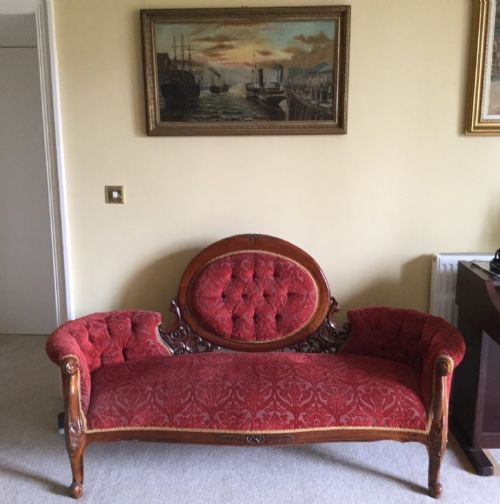
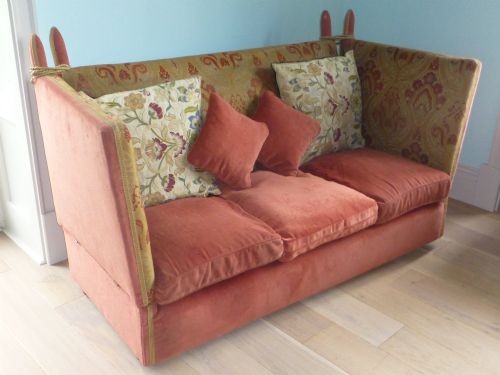
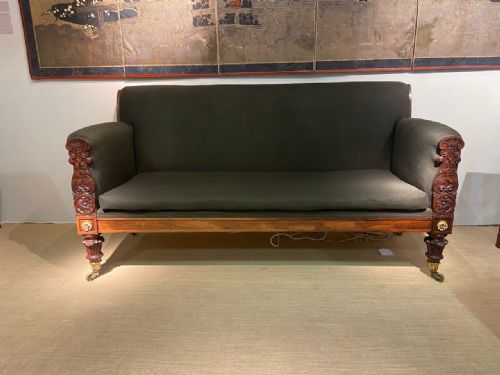
A period velvet settee covers a broad range of nineteenth and early twentieth century seating forms, from grand Regency double scroll-ended frames to Victorian Knole drop-arm designs and serpentine camel-back sofas of Georgian proportions.
Buyers will most frequently encounter nineteenth-century Victorian and Edwardian examples upholstered in deep pile brocade, tapestry fabric, cord, and rich velvet, often forming part of larger salon suites.
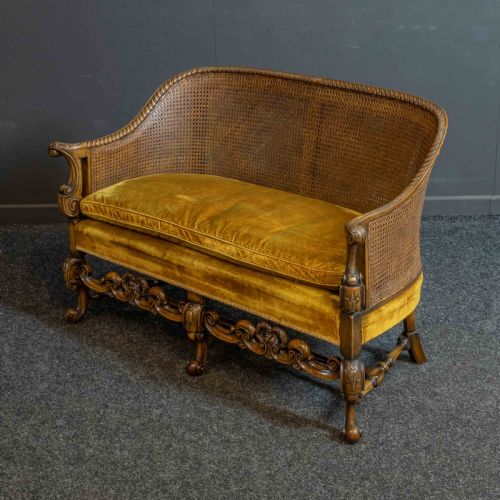
Regional and stylistic influences vary widely across the selection, encompassing French Louis XVI style giltwood, French fruitwood Directoire two-seater sofas, and William and Mary style walnut frames.
Construction and Materials
Frames are constructed from sturdy timbers including mahogany, walnut, fruitwood, and ebonised wood, providing a solid structural foundation beneath the upholstery.
Upholstery relies on traditional textiles such as velvet, brocade, tapestry fabric, and cord, often paired with sprung settee bases for resilience and comfort.
Decorative detailing incorporates carved mahogany frames, brass accents, and giltwood finishes that reflect the specific aesthetic movement or period of manufacture.
Period Velvet Settee Retail Price Guide 2026
Typical asking prices for period velvet settee among the pieces listed under this phrase on Sellingantiques today, from the lower quarter to the upper quarter. They describe what is for sale here now, not the wider market.
Listings span from the Regency era through Victorian and Aesthetic Movement pieces up to nineteen-twenty walnut styles.
Assessing Quality and Execution
Quality reveals itself in the integrity of the timber frame and the precision of the carved woodwork, distinguishing robust cabinetmaking from simpler construction.
The choice and execution of upholstery materials play a defining role, where deep pile brocade and heavy velvet sit distinctively apart from lighter standard fabrics.
Proportion and stylistic purity separate exceptional pieces from ordinary ones, particularly in how faithfully a Regency double scroll-end or a Georgian proportioned camel-back is achieved.
Howard and Sons·James Shoolbred
The Period Velvet Settee Glossary
- Knole sofa
- An early upholstered seat style featuring adjustable or drop-down arms originally designed to prevent drafts in large English houses.
- Double scroll-ended
- A sofa design where both arms curve outward in a scroll formation, typical of the Regency period.
- Giltwood
- Timber covered with a thin layer of gold leaf, frequently utilised on French Louis XVI style frames.
- Ebonised
- Wood treated with a dark finish to imitate ebony, popular during the Aesthetic Movement.
- Serpentine camel-back
- A sofa back featuring undulating curves reminiscent of a camel's hump, common in Georgian proportions.
Period Velvet Settee: Frequently Asked Questions
What is a Knole sofa?
A Knole sofa is a historic seating form characterised by hinged drop-arms that can be secured upright or lowered with cords. This design originated in the seventeenth century to keep draughts away from sitters in grand halls.
Twentieth-century and nineteenth-century interpretations of this style retain the distinctive high back and enclosed profile, making them a striking focal point in a modern drawing room.
How do I care for antique velvet?
Antique velvet requires gentle handling to preserve its deep pile and rich colour over decades of use. Avoid direct sunlight and moisture, and use a soft brush to lift the fibres rather than rubbing.
Professional textile conservation or specialist dry cleaning is recommended for deeper maintenance to protect delicate historic backing fabrics and sprung bases.
Are these settees comfortable for daily use?
Many period settees feature traditional sprung bases and generous padding that offer sturdy and supportive seating. However, nineteenth-century padding materials can feel firmer than modern foam cushions.
Re-upholstered examples often combine historical frames with modern interior support, balancing period aesthetics with contemporary comfort for everyday living rooms.
How do I date a wooden frame?
Dating a wooden frame relies on observing timber choices such as mahogany, walnut, or fruitwood alongside stylistic cues like Regency scrollwork or Victorian carving. Tool marks and joinery methods visible beneath the upholstery also indicate the period of manufacture.
Comparing the proportions of the backrest and legs against documented historical styles helps narrow down the era from the nineteenth century into the early twentieth century.