



Turned Leg Velvet Couch
A turned leg velvet couch brings tactile depth and traditional character to a room, offering a substantial seat designed for genuine repose.
Turned Leg Velvet Couch
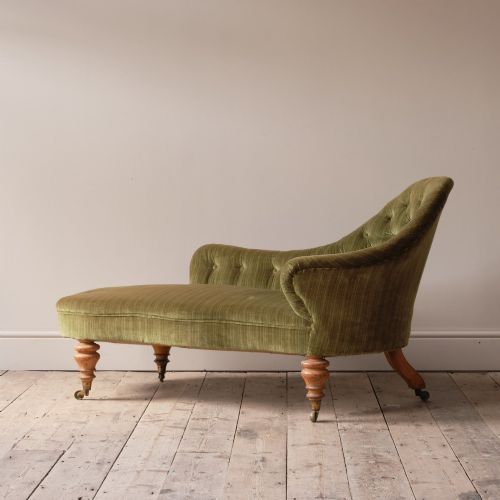
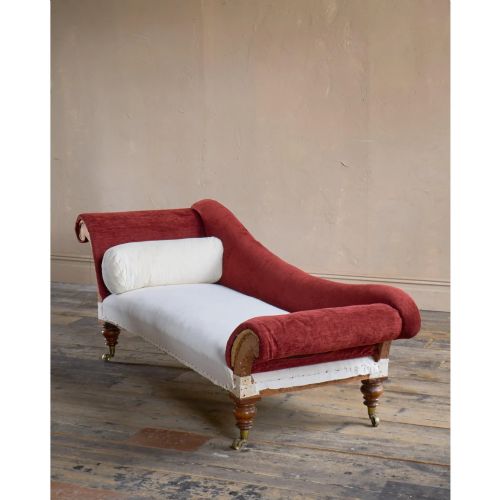
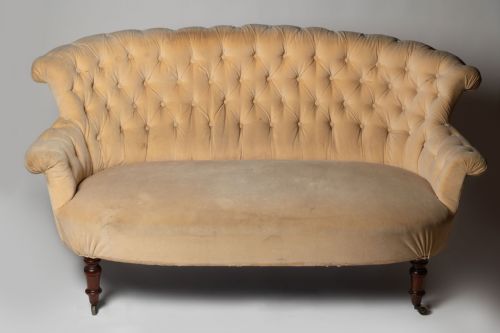
When you search for a turned leg velvet couch, you are looking at substantial nineteenth-century seating, including Chesterfields, settees, open arm sofas, and chaise longues. These pieces combine deep upholstery with exposed wooden supports, reflecting the domestic comfort of their period.
You are most likely to meet Victorian examples from the nineteenth century, alongside occasional Regency and Napoleon III pieces. These range from country house Chesterfields to buttoned chaise longues and day beds.
The forms originate primarily from English and French workshops, encompassing grand salon furniture as well as simpler country house pieces intended for relaxed daily use.
How they were made
The frames rely on robust hardwoods such as mahogany, walnut, beech, and general wood structures that provide the necessary strength for heavily sprung and upholstered bodies. These wooden elements are often shaped into turned legs, sometimes fitted with brass castors for mobility.
Upholstery techniques involve deep buttoning, calico foundations, and top layers of velvet or fabric. Makers built these seats for endurance, using supportive internal webbing and dense stuffing before applying the final textile cover.
Turned Leg Velvet Couch Retail Price Guide 2026
Typical asking prices for turned leg velvet couch among the pieces listed under this phrase on Sellingantiques today, from the lower quarter to the upper quarter. They describe what is for sale here now, not the wider market.
Day beds and chaise longues offer a historical licence to lie down in the middle of the afternoon.
What varies in quality
The distinction between ordinary and exceptional pieces lies in the crispness of the timber turning and the integrity of the frame construction. Superior examples retain their original structural rigidity without sagging or looseness in the joints.
Quality also shows in the handling of the upholstery and the choice of materials, from heavy cotton velvet to fine mahogany and walnut frames. Maker attribution, where associated with established firms, elevates the standing of a piece significantly.
Holland and Sons·Howard and Sons·Hampton and Sons
The Turned Leg Velvet Couch Glossary
- Chesterfield
- A large deep-buttoned sofa with arms and back of the same height. This form is traditionally upholstered in leather or heavy fabric.
- Calico
- A plain-woven cotton textile used as an inner lining or foundation layer beneath the final upholstery fabric. It conceals internal stuffing and provides a smooth base.
- Regency
- A style period dating from the early nineteenth century, characterised by classical restraint and the use of dark woods like mahogany.
Turned Leg Velvet Couch: Frequently Asked Questions
What is a turned leg velvet couch?
A turned leg velvet couch is a nineteenth-century seating form, such as a settee, Chesterfield, or day bed, featuring shaped wooden legs and soft textile upholstery.
These pieces range from English country house seating to French salon day beds, all designed with a focus on substantial comfort and traditional craftsmanship.
How do I identify a Regency piece?
Regency items date from the early nineteenth century and typically display classical lines, often executed in dark mahogany.
They stand apart from later Victorian items through a distinct adherence to earlier classical proportions and understated decorative details.
Where were these sofas used?
These seating forms were placed in drawing rooms, libraries, and large country house reception rooms where entertaining and relaxation took place.
Chaise longues and day beds were particularly favoured in private boudoirs or quiet corners for daytime resting.
How do I live with antique velvet?
Living with antique velvet requires gentle maintenance, avoiding direct sunlight to prevent fading and using soft brushes to preserve the pile.
These textiles develop a soft patina over time, rewarding careful placement away from intense heat sources.