


Period Vanity Mirror
A period vanity mirror brings reflective elegance and historic charm to a room, offering both practical utility and fine decorative craft.
Period Vanity Mirror
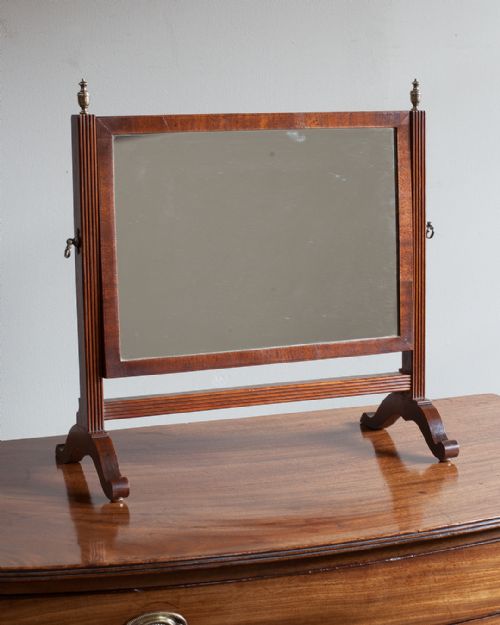
A period vanity mirror serves as a functional piece for grooming while acting as a decorative object within the home, appearing in forms such as dressing mirrors, toilet mirrors, and table mirrors. When exploring period vanity mirror options, buyers encounter designs spanning Georgian, Regency, and Victorian eras, alongside Edwardian and Art Deco examples.
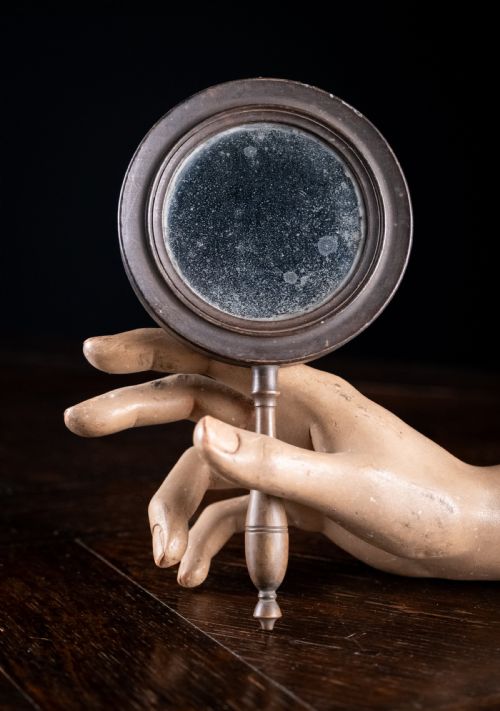
The most common formats on this page are swing mirrors and table mirrors mounted on stands or box bases, alongside handheld versions and wall-mounted pieces. These objects range from compact table pieces to larger dressing table mirrors constructed from traditional timber and metal frames.
Materials and construction
Timbers such as mahogany, walnut, rosewood, oak, and satinbirch form the primary structure for wooden frames and supportive box bases, frequently enhanced with crossbanding or decorative veneers. Metal elements utilise brass, bronze, ormolu, and gilt metal, providing adjustable mounts and structural support for pedestal designs.
Surface ornamentation relies on gilding, gesso, and ebonisation to create ornate detailing, particularly visible in neoclassical and rococo revival styles. Original glass plates provide the reflective surface, secured within frames designed for tabletop use or wall mounting.
Look closely for the occasional child's dressing table, proving that historic vanity setups were scaled down for the smallest household members.
Assessing quality and craftsmanship
The standard of a period vanity mirror rests upon the crispness of its carving, the richness of its timber grain, and the harmony of its proportions. Superior examples display refined crossbanding, well-executed gilt gesso, and balanced architectural details that reflect the aesthetic ambitions of their period.
Integration of original components, such as the mirror plate and functional brass adjustment hardware, elevates an example. The fluidity of the swing mechanism and the integrity of the joinery on box bases distinguish finer workshop production from standard utility items.
The Period Vanity Mirror Glossary
- Toilet mirror
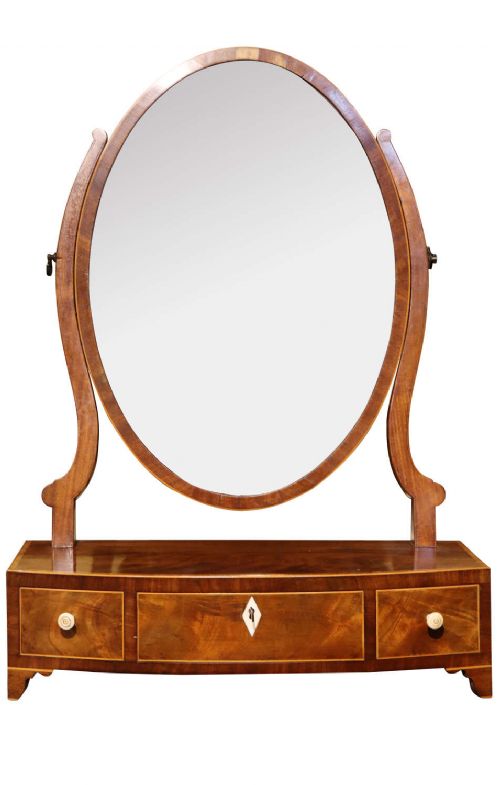
- A small mirror designed to sit upon a dressing table or chest of drawers, popular throughout the Georgian and Regency periods. These typically feature a pivoting glass plate mounted on a box base containing small drawers.
- Swing mirror
- A mirror plate hung on pivots between two upright posts, allowing the user to tilt the angle of reflection. This form is central to traditional dressing and vanity mirror designs.
- Gilt gesso
- A plaster-like material applied to a carved wooden base and coated in gold leaf to create ornate, reflective surface decoration. It frequently defines decorative frames from the eighteenth and nineteenth centuries.
- Crossbanding
- A decorative border technique where thin strips of veneer are laid across the grain of the primary wood. This method highlights the edges of table tops and mirror box bases on fine Georgian and Regency pieces.
- Ormolu
- Gilded bronze used for decorative mounts, feet, and structural hardware on French Empire and nineteenth-century pieces. It provides a bright golden finish that contrasts with dark mahogany or bronze structures.
Period Vanity Mirror: Frequently Asked Questions
How were toilet mirrors used?
Toilet mirrors were placed on top of tables, chests, or wash stands to assist with shaving, hairstyling, and dressing in bedrooms and dressing rooms.
The integrated drawers in box-base models also provided secure storage for small personal items, jewellery, and cosmetics.
How do I style a table mirror?
Table mirrors work effectively when placed on top of antique sideboards, dressing tables, or chest of drawers to add height and reflective light to a room.
Their compact scale allows them to sit comfortably in hallways, bedrooms, and living spaces alongside other period furniture.
How do I tell periods apart?
Distinguishing periods involves observing the wood choices, decorative motifs, and overall architectural lines of the frame and base. Georgian and Regency pieces often showcase clean mahogany or rosewood surfaces with subtle crossbanding, while Victorian and Edwardian examples may incorporate heavier revival styles or alternative timbers like satinbirch.