


Period Upholstered Wingback Chair
A period upholstered wingback chair offers deep comfort and draught-excluding wings, drawing on centuries of domestic seating design.
Period Upholstered Wingback Chair
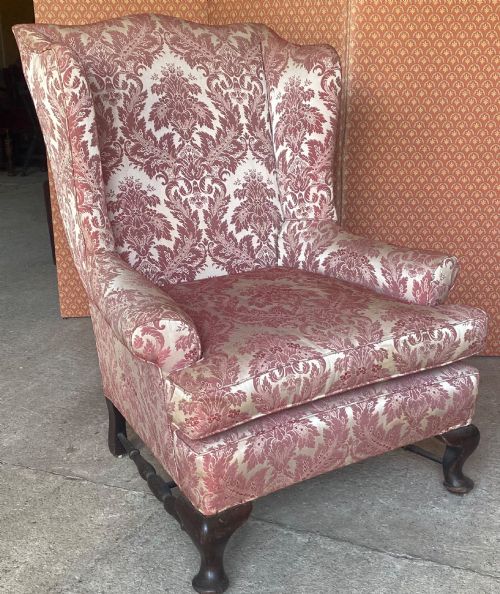
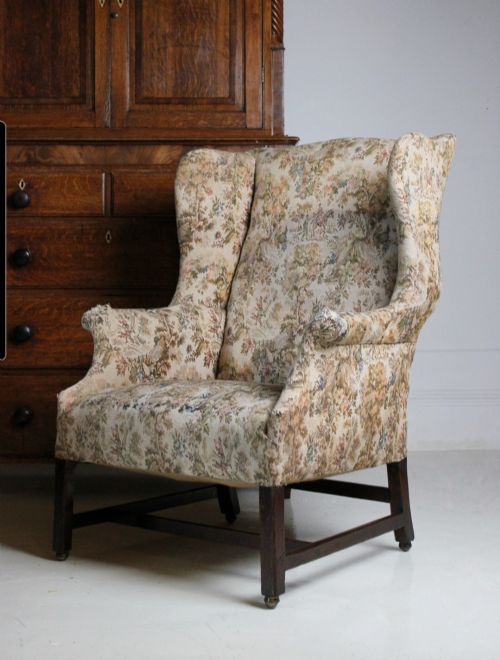
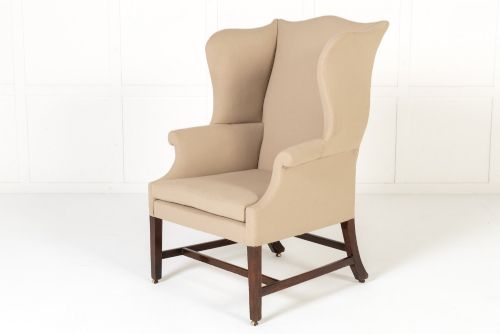
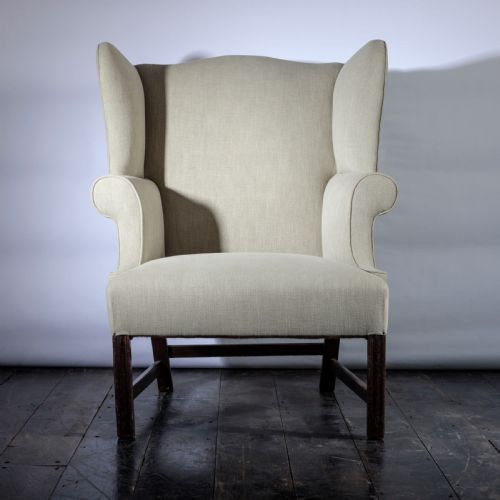
A period upholstered wingback chair combines high sides and padded wings designed to deflect draughts and trap heat from an open fire. These armchairs appear in forms ranging from eighteenth-century George III examples to Edwardian and 1930s interpretations.
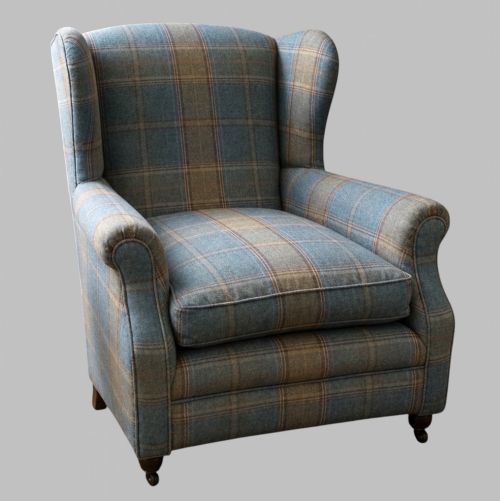
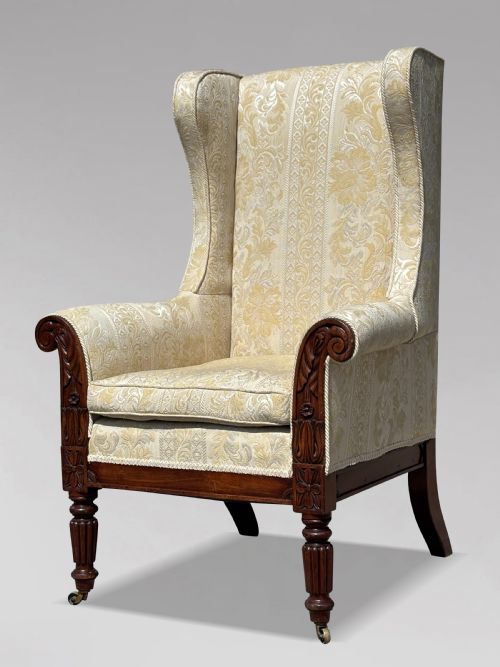
The most common versions met on this page are eighteenth-century mahogany pieces and Edwardian or later revivals. Formations span standard wingchairs, barrel backs, and library chairs upholstered in fabrics from calico and linen to damask and plaid.
Makers historically designed these chairs for parlours, libraries, and firesides where comfort was paramount. The survival of early frames alongside later twentieth-century reproductions shows a continuous thread of traditional seating forms.
Materials and construction
Frames rely on sturdy timbers such as mahogany, walnut, and general wood to support the substantial upholstered body. These structural woods provide the necessary rigidity for deep-sprung or webbed interiors.
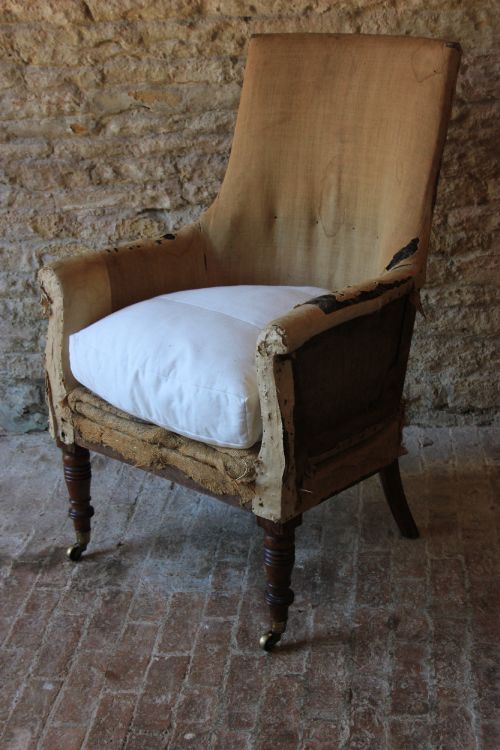
Upholstery layers utilise traditional foundation materials including hessian, calico, and brass tacks alongside modern or period top covers like linen, damask fabric, and wool plaids. The combination of dense internal stuffing and tight surface textiles gives each chair its distinct silhouette.
The wings were originally designed to trap fireplace heat, proving that eighteenth-century engineers understood the physics of a cosy night in.
Judging quality and proportion
Quality rests in the elegance of the timber frame and the balance of the wings relative to the seat. Finer examples display harmonious proportions and uncompromised structural integrity in the arms and legs.
The standard of upholstery and the choice of covering fabric significantly alter the character of a piece. Original or sympathetic restoration preserves the integrity of the maker's initial design.
The Period Upholstered Wingback Chair Glossary
- Wingback
- An armchair featuring protective side panels attached to the arms and back. These wings originally blocked cold air drafts in unheated rooms.
- Barrel back
- A seating form where the back and arms form a single continuous semicircular curve. This enclosed design offers enhanced thermal retention.
- Damask
- A reversible figured fabric traditionally woven with patterns visible on both sides. It provides a formal decorative surface for period upholstery.
- Hessian
- A coarse woven fabric typically utilised for internal scrim and foundational webbing. It supports the stuffing layers hidden beneath the final top cover.
- Bergère
- An enclosed armchair with stuffed or cane sides. This French-influenced style appears in various Edwardian interpretations.
Period Upholstered Wingback Chair: Frequently Asked Questions
What is a wingback chair?
A wingback chair is an upholstered armchair featuring characteristic side panels designed to shield the sitter from drafts. Early versions kept warmth near the body in rooms heated only by open hearths.
Over centuries, the form evolved through Georgian, Victorian, and Edwardian periods. Today, these chairs remain popular for fireside seating and reading corners.
How do I date a wingback chair?
Dating relies on observing timber types, leg styles, and construction methods hidden beneath the upholstery. Eighteenth-century frames often employ dense mahogany and distinct stretcher arrangements.
Later Edwardian and 1930s pieces typically show machine-cut components or different secondary woods. Comparing stretcher shapes and leg turnings against known period examples helps clarify the era of manufacture.
What fabrics were used originally?
Period seating utilised durable textiles suited to heavy domestic use. Damask fabric, wool, and heavy linen frequently covered formal parlour chairs.
Hidden internal layers relied on hessian, calico, and stuffing secured with brass tacks. Many surviving chairs have since been re-upholstered to suit contemporary interiors.
Are these chairs comfortable?
Wingback chairs were engineered specifically for relaxed sitting and draught protection. The high back supports the head while the wings cushion the upper body.
Comfort levels in antique pieces depend heavily on the condition of the internal webbing and padding. Restored chairs often provide a supportive sit comparable to modern armchairs.