

Period Storage Coffer
A period storage coffer brings centuries of solid craftsmanship and robust utility directly into a modern room.
Period Storage Coffer
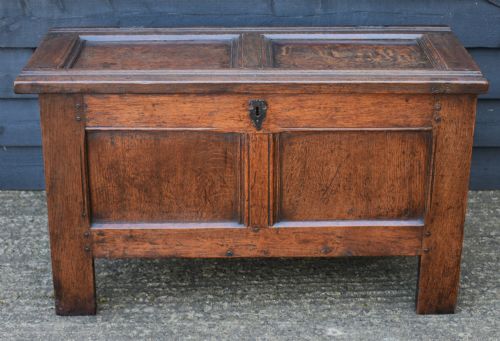
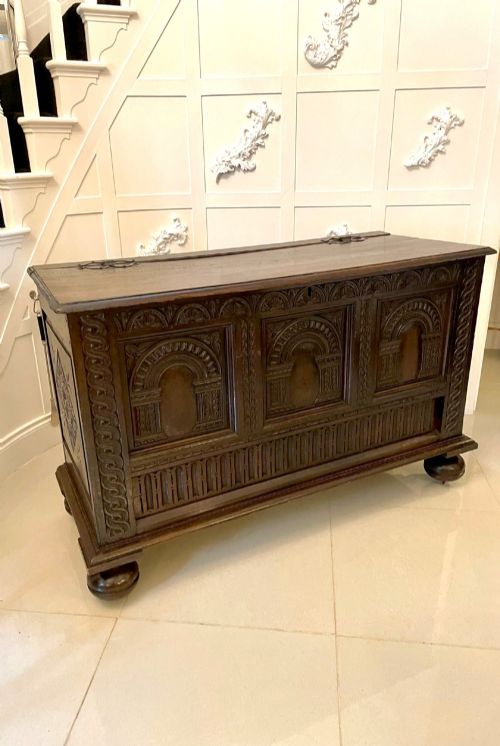
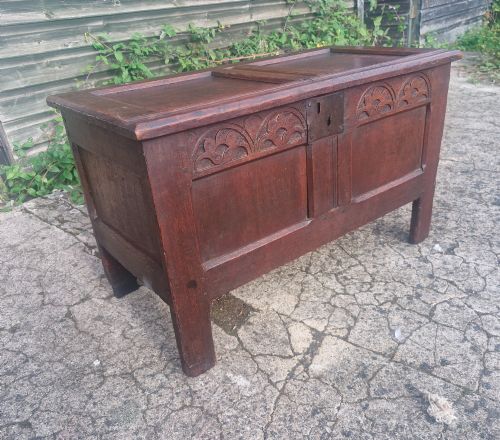
When you search for a period storage coffer, you are looking at heavy timber boxes built to hold household goods, textiles, and valuables before fitted closets existed. The examples you meet most often on this page date from the seventeenth and eighteenth centuries, constructed primarily from native oak with traditional panelled or boarded sides.
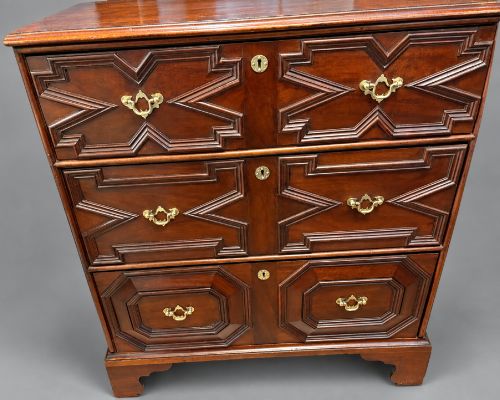
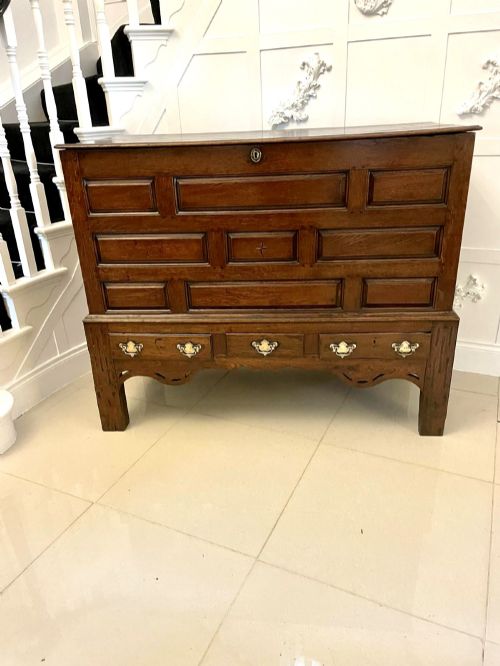
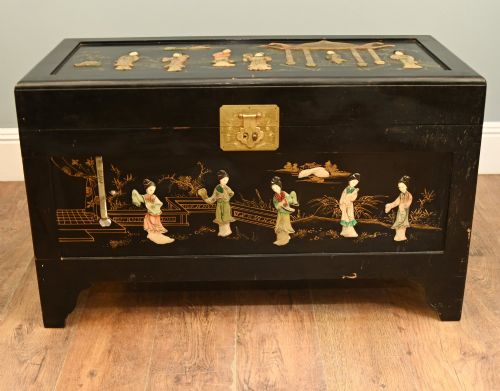
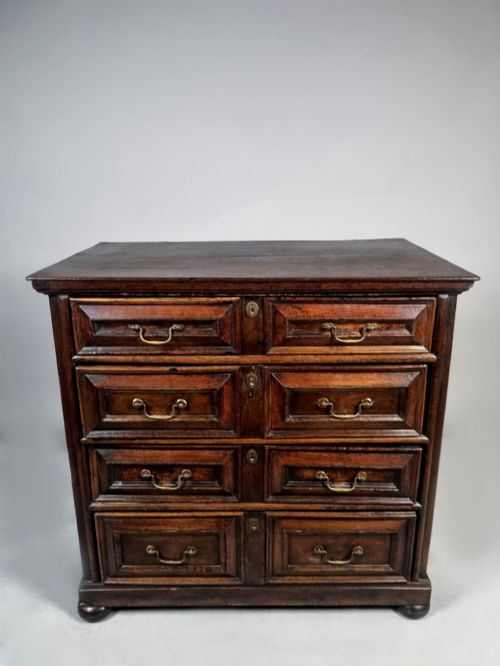
Many survivors display regional characteristics, such as Welsh or West Country origins, whilst others take the form of mule chests fitted with lower drawers. Alongside these British country pieces, you will encounter smaller document boxes, joined chests, and occasional later imports such as Chinese lacquer storage boxes.
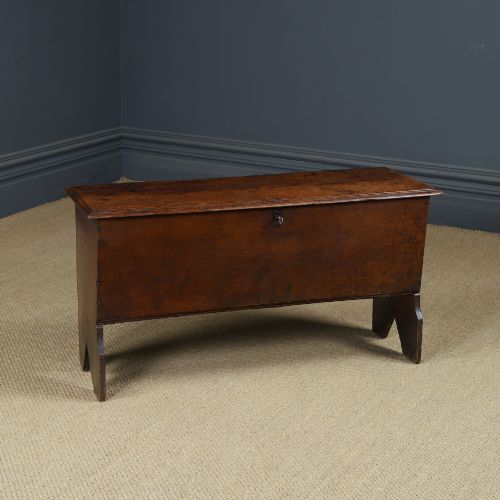
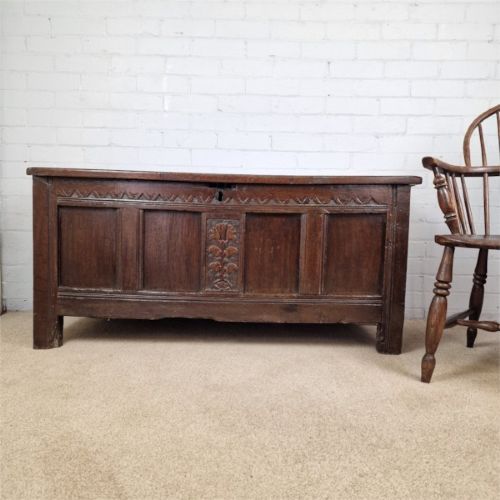
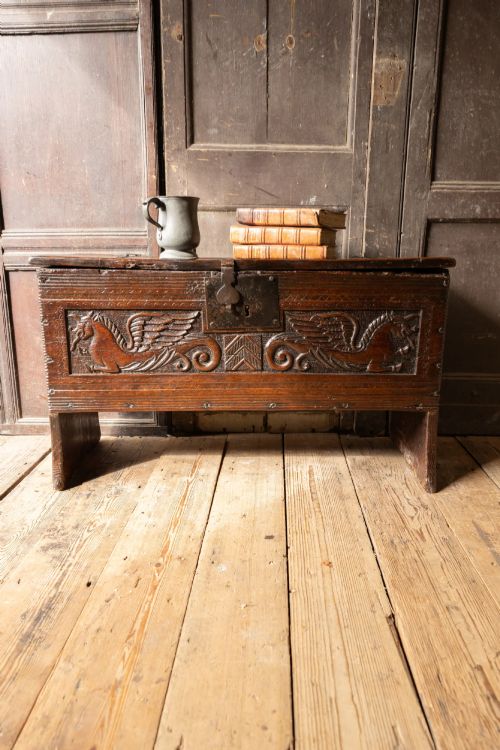
The form evolved slowly from simple six-plank constructions held together by pegs and iron hardware into sophisticated joined frames with carved panels. Whether standing on simple stile feet or raised upon a later base, each piece reflects the domestic storage needs of its era.
Materials and Construction
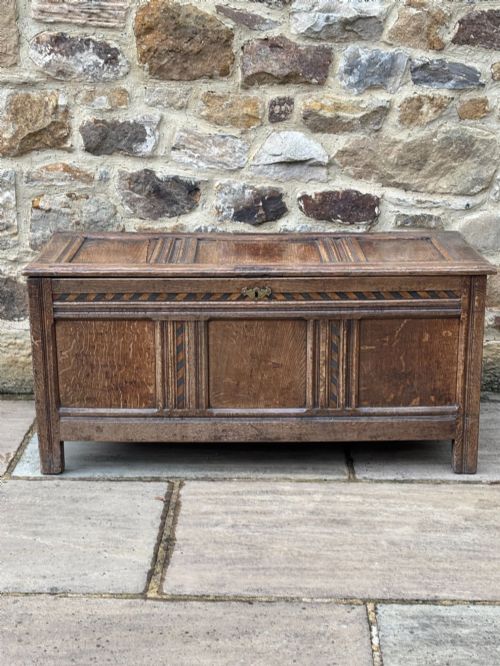
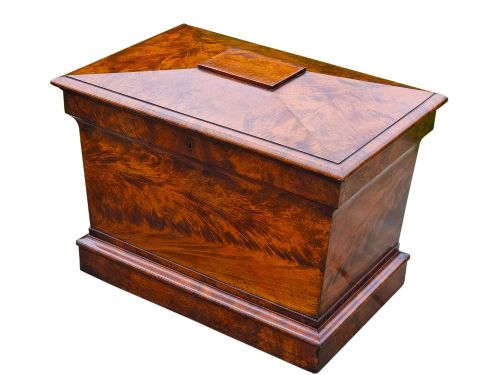
Carpenters relied principally on native oak, supplemented by elm and mahogany in later Georgian examples, shaping the timber with hand saws and adzes. Panels were set into grooved frameworks, known as frame and panel construction, allowing the wood to expand and contract naturally through seasonal changes in humidity.
Joints were secured using wooden pegs rather than metal nails, ensuring structural stability without splitting the green or seasoned timber. Iron strap hinges and brass escutcheons reinforced the lids and lockplates, providing both functional security and decorative contrast against the dark wood.
Period Storage Coffer Retail Price Guide 2026
Typical asking prices for period storage coffer among the pieces listed under this phrase on Sellingantiques today, from the lower quarter to the upper quarter. They describe what is for sale here now, not the wider market.
Materials appearing across current stock include solid oak, mahogany, elm, brass, iron, and imported Chinese lacquer.
Judging Quality
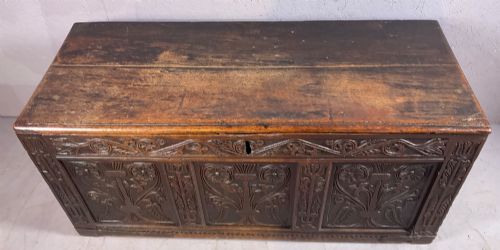
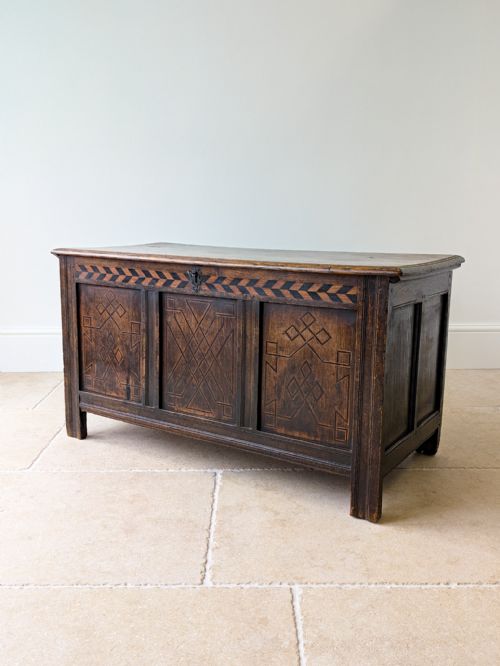
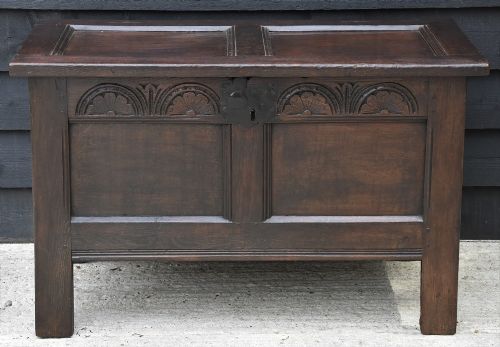
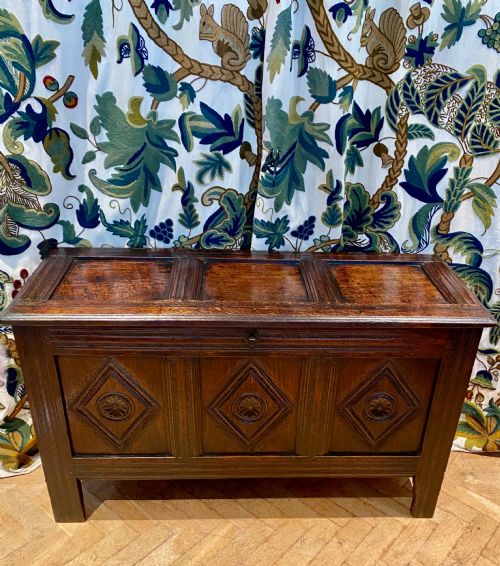
Quality rests in the integrity of the original timber and the crispness of any carved decoration, such as geometric moulding or stylized foliage. Pieces that retain their original boards, floors, and hinges command greater attention from collectors than those rebuilt with replacement panels or modern hardware.
Proportion and surface appearance dictate the standing of a coffer within its type, particularly when deep patination shows decades of careful waxing and handling. The presence of marquetry inlay, distinctive regional carving, or documented provenance elevates an ordinary utility box into a notable example of period cabinet-making.
J Moorcroft
The Period Storage Coffer Glossary
- Boarded chest
- A simple storage box constructed from thick planks nailed or pegged together at the edges, representing an early and rustic form of furniture.
- Joined coffer
- A chest built using a sturdy timber frame with fitted floating panels, offering greater structural strength and resistance to warping.
- Mule chest
- A storage coffer featuring one or more drawers built into the base beneath the main compartment, bridging the transition to the modern chest of drawers.
- Stile
- The vertical upright member in a framed panel construction that forms the legs and structural backbone of the piece.
- Marquetry
- Decorative inlay work using various tinted woods to create geometric or floral patterns across the surface of the timber.
Period Storage Coffer: Frequently Asked Questions
What were coffers originally used for?
These heavy wooden boxes served as the primary storage vessels in medieval and early modern households, holding valuable textiles, church plate, and family documents. Because taxation and travel required portable security, families kept their worldly goods locked inside them.
Over time, as homes gained permanent cupboards and closets, the coffer transitioned from a general wardrobe into a blanket chest or marriage dowry piece. Wealthier households placed them at the foot of beds or in reception rooms to display status.
How do I tell a seventeenth-century coffer from an eighteenth-century one?
Seventeenth-century examples typically feature heavier joined oak construction with deep, hand-carved geometric patterns, arcading, or stile feet extending directly from the frame. The timber surfaces often show the tool marks of early hand-planing and use wooden peg fastenings.
Eighteenth-century versions tend to have cleaner lines, sometimes incorporating mahogany, simpler panel layouts, or added drawers in the base. The carving becomes sparser or gives way entirely to plain fielded panels and brass key escutcheons.
How do I care for antique oak furniture?
Keep timber pieces away from direct heat sources, radiators, and strong sunlight, which dry out the wood and cause ancient joints to shrink or split. Maintaining a stable indoor humidity helps preserve the structural integrity of the oak.
Feed the surface occasionally with a traditional beeswax polish applied sparingly and buffed with a soft cloth. Avoid modern silicone sprays or heavy liquid cleaners that can penetrate the open grain and damage the historic patina.
Can I use a period coffer as a coffee table?
Many people utilise low-proportioned coffers as coffee tables because their flat lids provide a sturdy surface for books and decorative objects. Their internal volume also offers convenient hidden storage for living room blankets and board games.
When selecting one for this purpose, check the height and length against your seating to ensure comfortable access. Ensure the lid remains stable and level when closed so items placed on top do not slide.