

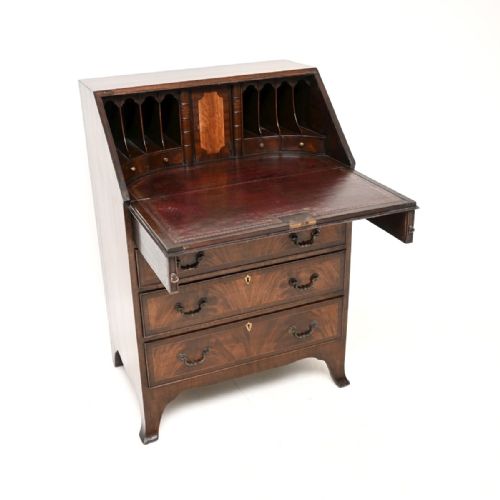


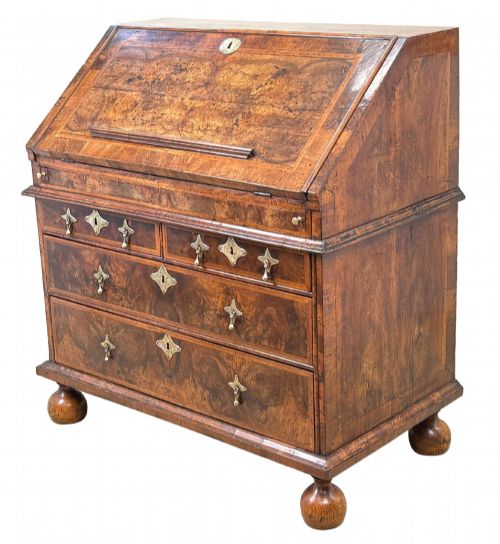


Period Slope Desk
A period slope desk brings tactile domestic order through timber and brass, offering a dedicated surface for correspondence.
Period Slope Desk
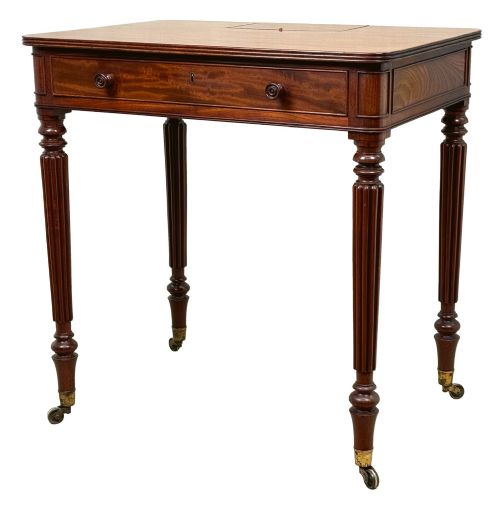
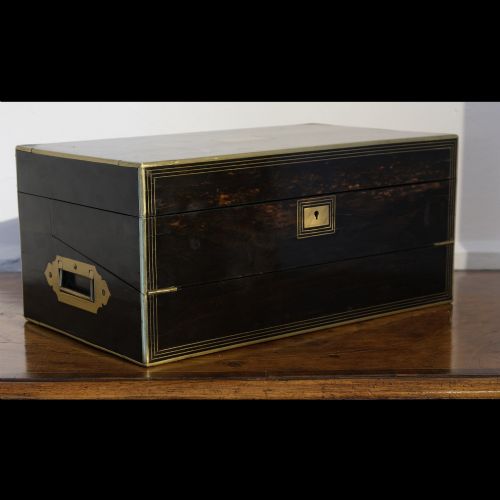
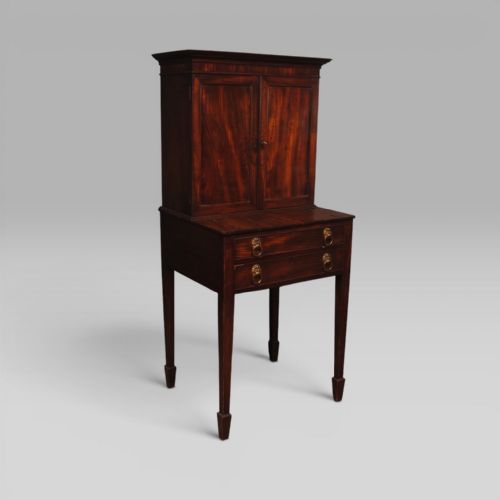
A period slope desk encompasses writing boxes, slant front bureaux, and Davenport desks spanning the seventeenth through the nineteenth centuries. These pieces provided private storage for paper and pens in domestic and professional settings alike.
The most common forms on this page include mahogany and oak boxes from the eighteenth century alongside Regency rosewood writing slopes and Davenport desks. Smaller table top versions and larger cabinet formats also appear across these centuries.
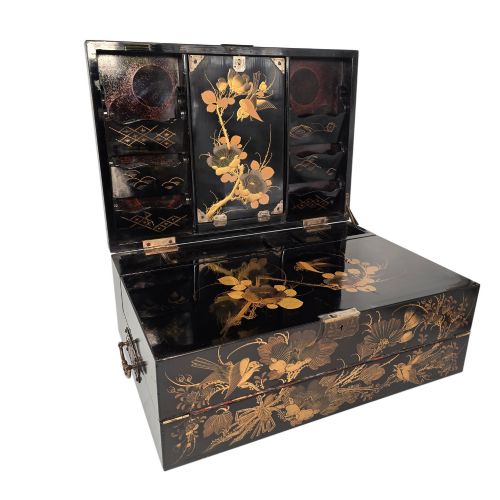
Originating from English, European, and Japanese workshops, these items reflect the shifting writing habits and cabinet-making fashions of the period.
Materials and construction methods
Cabinet makers utilised dense timbers such as mahogany, oak, walnut, and rosewood, often applying veneers of satinwood or coromandel over secondary woods. Brass hinges, escutcheons, and inlaid stringing reinforced structural corners while providing decorative contrast.
Interiors frequently incorporated secret drawers, pigeonholes, and leather lined writing surfaces inset into the hinged lid. Joinery relied on dovetail construction for drawers and sturdy peg or nailed joints in earlier oak and elm items.
Period Slope Desk Retail Price Guide 2026
Typical asking prices for period slope desk among the pieces listed under this phrase on Sellingantiques today, from the lower quarter to the upper quarter. They describe what is for sale here now, not the wider market.
The listings on this page span the 17th century through the Victorian era, utilising oak, mahogany, walnut, rosewood, and coromandel.
Assessing construction and material quality
The degree of refinement in timber selection and secondary wood usage distinguishes simpler pieces from finer cabinet work. Dense grain patterns in walnut and figured mahogany indicate superior material selection by the maker.
The integration of brass inlay, fitted interior compartments with working secret mechanisms, and original leather writing surfaces reflect the maker's original investment of time and skill.
Giles Grendey·Lefebvre of Belgium
The Period Slope Desk Glossary
- Slant front bureau
- A desk featuring a hinged sloping lid that opens to reveal fitted interior drawers and pigeonholes above base drawers.
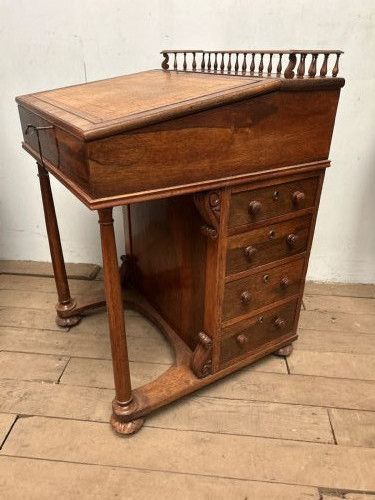
- Davenport desk
- A compact writing desk featuring a side opening set of drawers and a sloping top, popular during the Regency and Victorian periods.
- Writing slope
- A portable box with a hinged sloping lid designed to hold writing materials and provide a slanted writing surface.
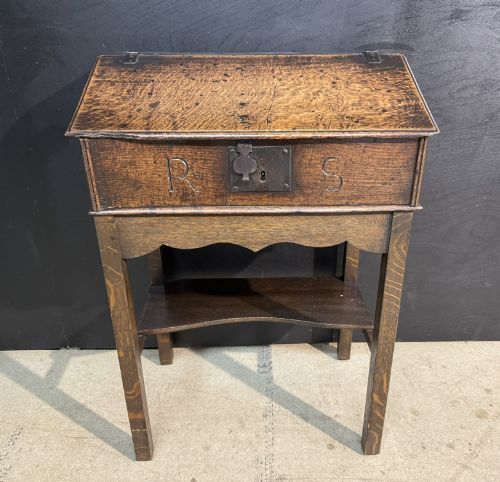
- Bible box
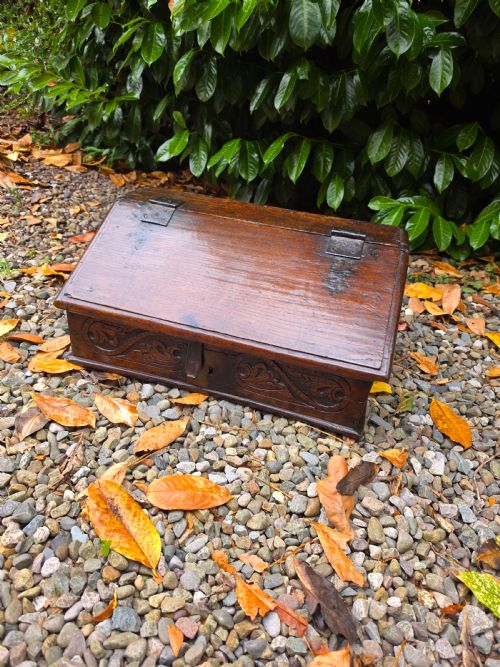
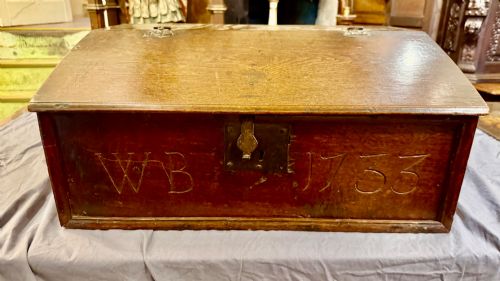
- A sturdy wooden box, often seventeenth century oak, originally used for holding family texts and later adapted for writing.
- Escutcheon
- A protective plate surrounding a keyhole, frequently cast in brass on period furniture.
Period Slope Desk: Frequently Asked Questions
What is a period slope desk used for?
These pieces served historical households as private receptacles for correspondence, financial accounts, and personal documents. The angled lid created a comfortable writing plane before the widespread use of flat topped library tables.
Today, owners utilise them to store modern stationery, display decorative objects, or maintain a compact writing station within a study.
How do I identify eighteenth century desks?
Eighteenth century examples typically feature solid mahogany or oak construction with hand cut dovetails and vernacular secondary woods. Stylistic markers include bracket feet, fitted pigeonholes, and restrained brass hardware.
Examining the interior drawer construction and timber shrinkage provides reliable indicators of seventeenth and eighteenth century origins.
Where should I place a Davenport desk?
Davenport desks suit smaller rooms or corners due to their compact footprint and integrated side drawers. Placing them away from direct sunlight protects vulnerable rosewood and walnut veneers.
Ensure adequate natural light falls across the sloping writing surface for comfortable daily use.
What is the difference between a box and a bureau?
A writing box is generally portable with a sloping lid designed to rest upon a table. A bureau incorporates its own integrated storage base with drawers resting directly on the floor.
Both forms provide internal compartments for paper, but bureaux offer significantly greater overall capacity for household storage.