




Period Serving Tray
A period serving tray brings centuries of craftsmanship to the table, offering both practical service and historical elegance.
Period Serving Tray
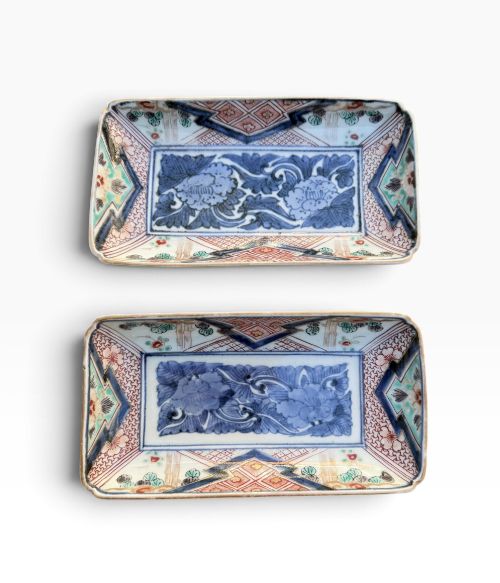
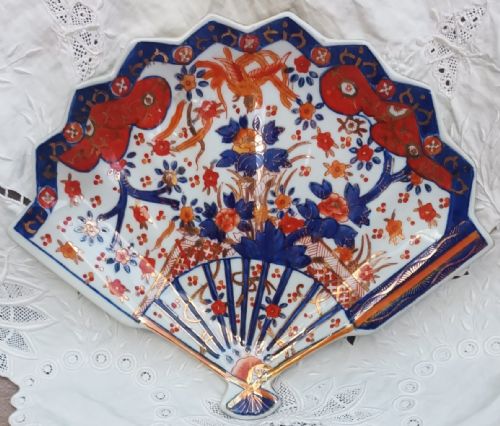
A period serving tray encompasses a diverse range of items from the seventeenth century through the early twentieth century, spanning British cabinetmaking and Asian export wares. Buyers searching for a period serving tray encounter traditional British mahogany butler trays on stands and tier dumb waiters alongside Japanese papier-mâché, lacquer, and Imari porcelain pieces.
The domestic British examples focus heavily on utility and social ritual, particularly the George III and Regency mahogany trays designed for tea or spirit service. Meanwhile, the international examples introduce intricate cloisonne enamel, gold leaf, and Kutani porcelain platters that reflect distinct Eastern artistic periods.
This selection bridges formal European entertaining with decorative Asian export art, offering functional stands and flat decorative dishes alike. Each piece carries the distinct structural signatures of its originating century, whether the folding frame of a Georgian butler's tray or the deep sheen of a Regency lacquered surface.
How they were made
The wooden items rely on solid mahogany, shaped into oval trays or fitted with hinged sides for butler stands, often paired with multi-tiered supporting structures. Cabinetmakers utilised timber grain and turned columns to give stability and visual depth to serving furniture.
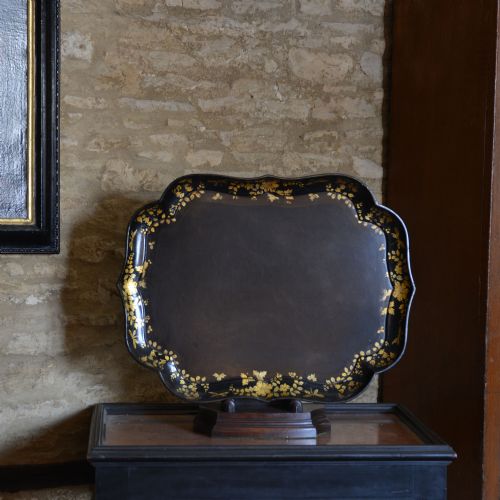
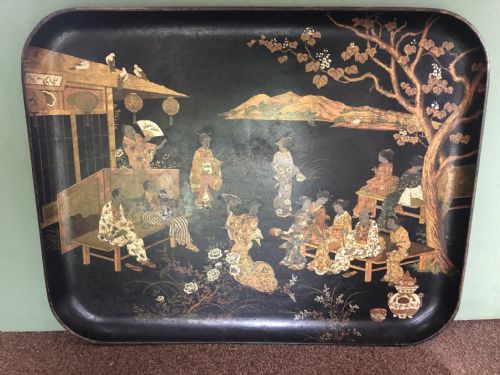
Papier-mâché and lacquer pieces involve layered paper pulp treated with specialised binders and finished with dark gloss coatings, frequently accented by gold leaf details. This technique creates a lightweight yet resilient base capable of holding intricate painted or gilded designs.
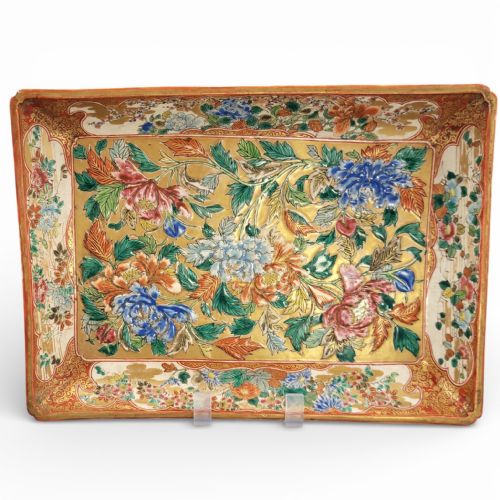
Ceramic and enamel versions utilise fired porcelain and copper foundations, decorated with hand-painted blue and white pigments, polychrome enamels, or cloisonne wirework. Artisans fired these pieces at high temperatures to achieve the durable, glossy surfaces seen in Imari, Nanking, and Kutani wares.
Period Serving Tray Retail Price Guide 2026
Typical asking prices for period serving tray among the pieces listed under this phrase on Sellingantiques today, from the lower quarter to the upper quarter. They describe what is for sale here now, not the wider market.
Periods represented span from the seventeenth-century Genroku era through Georgian, Regency, and Meiji times to the early twentieth century.
What varies in quality
Quality rests in the crispness of the hand-carved mahogany mouldings, the integrity of the structural joints on stands, and the finesse of the turned woodwork on dumb waiters. Superior examples maintain balance and proportion without relying on excessive restoration to their folding mechanisms or tiers.
In papier-mâché and lacquer pieces, excellence is visible in the smoothness of the dark ground, the preservation of the gold leaf application, and the depth of the painted scenes. Pieces signed by notable makers demonstrate superior hand-finishing compared to unsigned commercial production.
Ceramic and enamel trays are judged by the registration of the painted cobalt, the precision of the cloisonne wire cells, and the absence of firing distortions in the porcelain body. Finer platters retain vibrant, unblemished enamel colours and crisp baseline detailing from their original period.
Jennens & Bettridge·Clay·Don Pottery·Shoza
The Period Serving Tray Glossary
- Butler's tray
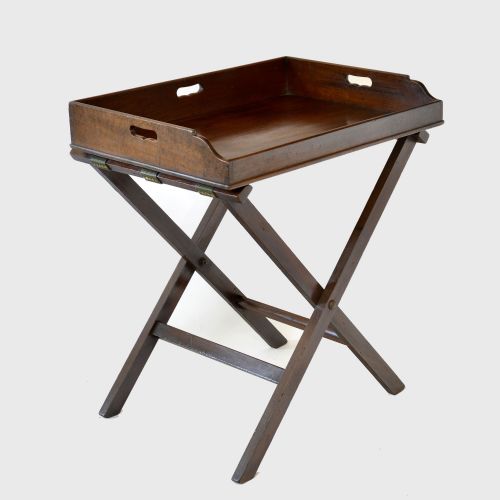
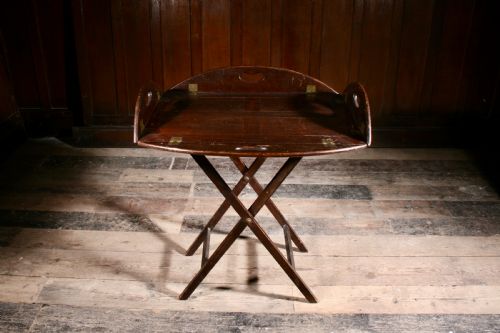
- A portable wooden tray with hinged or fixed sides, traditionally set upon a separate folding X-frame stand for serving drinks or meals. These trays date primarily to the Georgian and Victorian eras.
- Dumb waiter
- A freestanding tiered piece of furniture with revolving or stationary circular trays supported by a central column, used to hold dishes during dining without servants present. They appear frequently in mahogany across the eighteenth and nineteenth centuries.
- Cloisonne enamel
- A decorative metalwork technique where thin metal wires form raised partitions on a copper base, creating cells filled with vitreous paste and fired. This method produces intricate, multi-coloured patterns such as birds and koi.
- Papier-mâché
- A composite material made from paper pulp mixed with binders, pressed into moulds, and dried to form a rigid blank suitable for lacquering and painting. Regency makers utilised this technique for lightweight, highly decorated serving trays.
- Imari porcelain
- Japanese export porcelain decorated in underglaze blue and overglaze iron red, gold, and other colours, produced from the Edo period onward. These wares gained immense popularity in European interiors.
Period Serving Tray: Frequently Asked Questions
What is a butler tray on a stand?
A butler tray on a stand consists of a removable rectangular or oval wooden tray resting on a folding X-frame base. This design allowed domestic staff to carry provisions to a room and mount the tray securely on legs for easy service.
Most surviving examples date from the Georgian and Victorian periods and are constructed from solid mahogany. The hinged sides on the tray prevented items from sliding off during transit.
How do I care for a lacquer tray?
Lacquer and papier-mâché surfaces require gentle handling to protect the delicate gloss coating and gold leaf detailing. Keep them away from direct sunlight, excessive heat, and moisture to prevent the surface from cracking or warping.
Dust the tray softly with a dry, lint-free cloth rather than using liquid polishes or chemical cleaners. Placing felt pads underneath items set upon the tray helps protect the historic finish from scratches.
What is a dumb waiter used for?
A dumb waiter is a multi-tiered piece of serving furniture designed to hold spare dishes, glasses, and silverware during a meal. The rotating or fixed tiers allowed diners to access food and tableware independently without requiring servants in the room.
These pieces typically feature three graduated circular trays mounted on a central wooden pillar with tripod legs. They served as both functional dining room accessories and fine examples of period cabinetmaking.
How do I identify a Regency tray?
Regency trays often utilise papier-mâché with deep black lacquered finishes, frequently embellished with gilt decoration or hand-painted scenes. Makers during this era achieved lightweight yet sturdy construction using compressed paper pulp.
Many high-quality Regency pieces bear the impressed or written signatures of prominent makers on the underside. Their aesthetic combines smooth, dark reflective surfaces with classical motifs popular in early nineteenth-century design.