
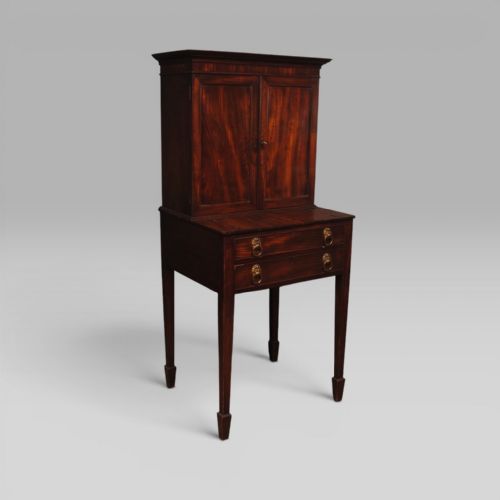


Period Secretaire Desk
A period secretaire desk brings ingenious hidden writing drawers and fall-front surfaces together in timeless mahogany, satinwood, and walnut forms.
Period Secretaire Desk
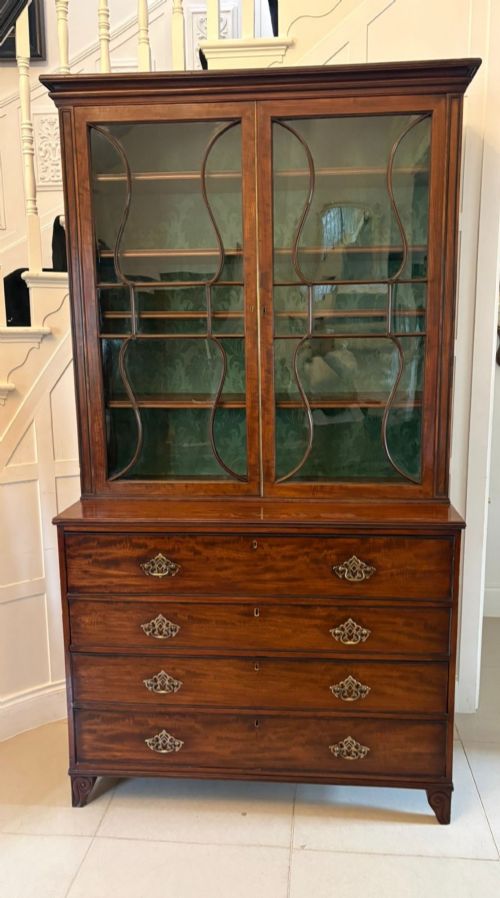
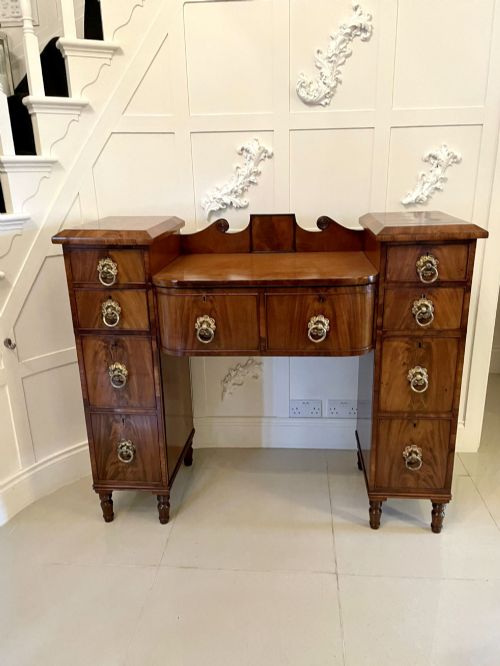
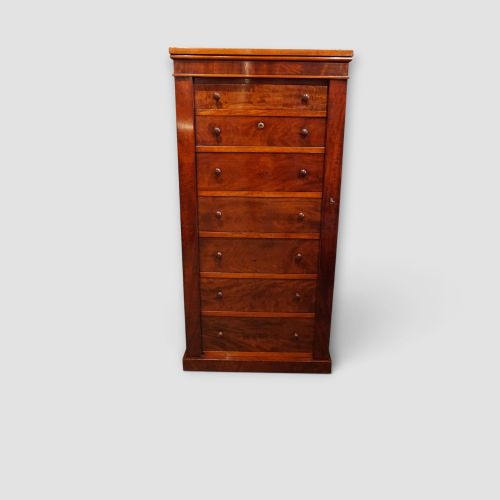
A period secretaire desk encompasses sophisticated writing furniture designed to conceal writing surfaces and fitted compartments behind deceptively simple exterior facades. The forms span tall bookcases, chests of drawers, tallboys, Wellington chests, and sideboards originating from the Georgian, Regency, Victorian, and Art Deco eras.
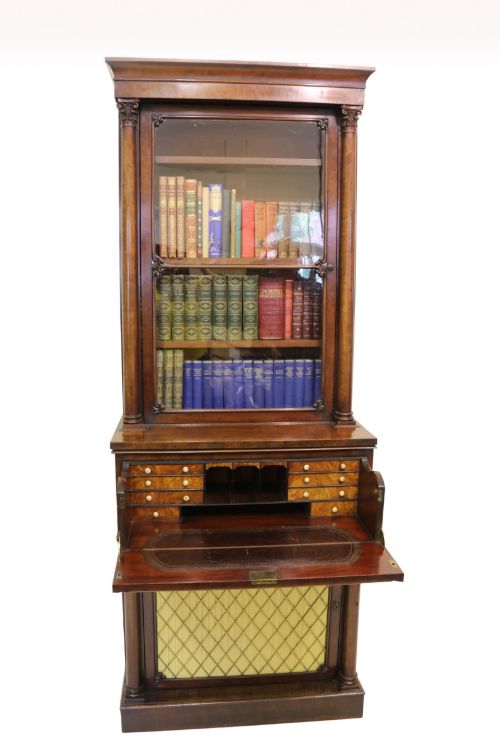
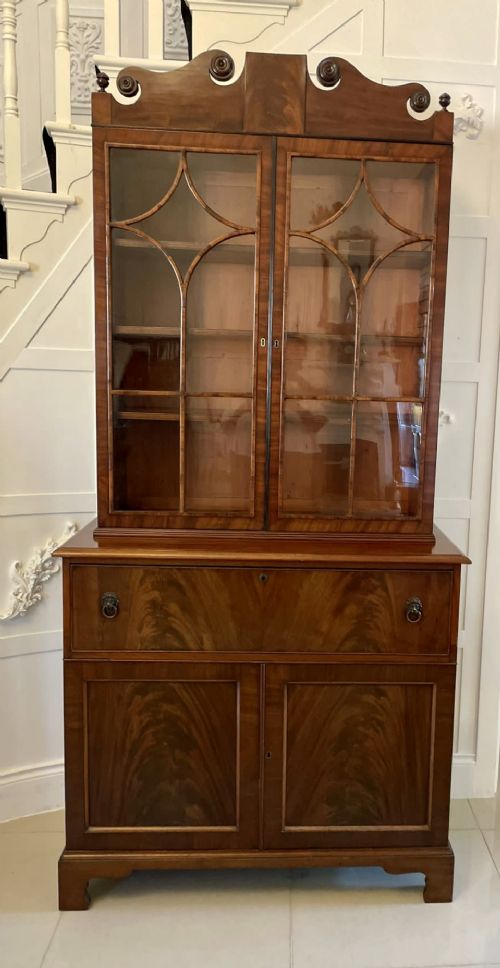
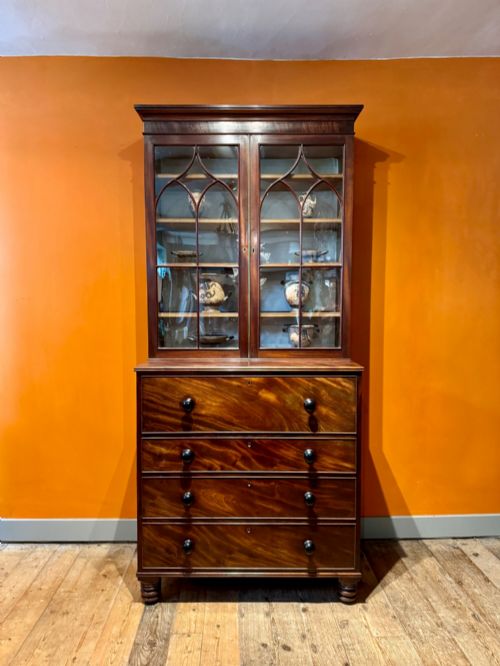
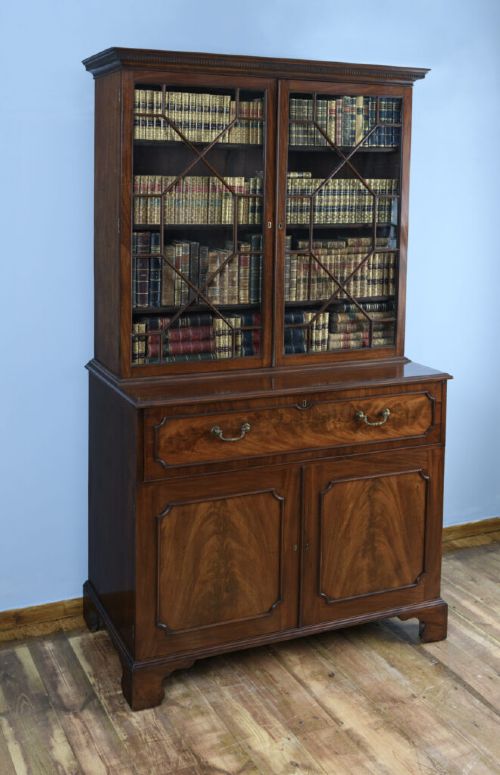
The version most frequently met on this page is the tall mahogany bookcase featuring glazed upper doors and a pull-out writing drawer fitted with small drawers and pigeonholes. These pieces combine practical storage with elegant display and writing utility, reflecting the refined tastes of eighteenth and nineteenth century interiors.
Beyond the standard bookcase variants, collectors encounter compact chests, chiffoniers, and monumental breakfront cabinets spanning styles from Chippendale and Sheraton to Thomas Hope designs and later Art Deco interpretations.
Materials and construction methods
Cabinetmakers utilised dense timbers such as mahogany, satinwood, walnut, and oak, frequently applying flame mahogany veneer to large flat surfaces to create striking grain patterns. Secondary timbers like oak lined the drawer interiors of finer examples, demonstrating meticulous attention to hidden structural details.
Some secretaire drawers hide tiny spring-loaded secret compartments designed to safeguard love letters and currency from prying eyes.
Distinctions in craftsmanship and design
The standard of timber selection and veneer matching defines the visual hierarchy, with finely figured mahogany and vibrant satinwood marking out superior workshop output. Subtle crossbanding, stringing, and decorative inlay demonstrate advanced cabinetmaking skill compared to plain timber constructions.
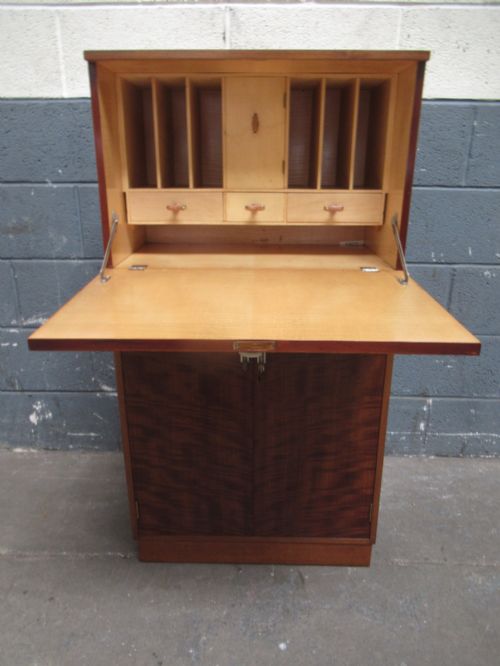
Internal complexity sets apart the finest examples, where fitted writing interiors incorporate secret compartments, miniature drawers, and leather-lined writing surfaces alongside robust locking mechanisms. Proportions also dictate value, with smaller secretaire chests and cabinets of diminutive proportions commanding particular regard.
Gillows of Lancaster
The Period Secretaire Desk Glossary
- Secretaire
- A piece of furniture containing a concealed writing drawer or fall-front desk compartment. This drop-front mechanism opens to reveal a fitted interior of small drawers and pigeonholes.
- Astragal
- A narrow moulding used to divide glass panes within cabinet doors. These wooden strips form geometric patterns characteristic of eighteenth and nineteenth century bookcases.
- Tallboy
- A tall chest of drawers made in two sections, where a larger chest sits beneath an upper chest. In these listings, the top section often incorporates a secretaire writing drawer.
- Wellington chest
- A tall, narrow chest of drawers secured by a single vertical locking flap on one side. This secure locking mechanism often guards a secretaire drawer within the stack.
- Crossbanding
- A decorative border of veneer laid around the edges of a panel so the grain runs perpendicular to the centre. This technique frames drawer fronts and tabletops on finer pieces.
Period Secretaire Desk: Frequently Asked Questions
How do I identify a genuine period secretaire desk?
Examine the secondary timbers inside the drawers, such as oak linings, and inspect the dovetail construction for hand-cut irregularity. Look for period-appropriate brass hardware and natural ageing within the internal pigeonholes.
Check the mechanism of the fall-front flap or writing drawer to ensure the hinges and interior supports match traditional cabinetmaking methods from the Georgian or Regency eras.
What is the difference between a secretaire bookcase and a secretaire chest?
A secretaire bookcase combines a tall display cabinet with glazed upper doors sitting atop a dedicated writing drawer and lower storage. These large pieces served as multi-functional library furniture.
A secretaire chest functions primarily as a set of drawers where the uppermost drawer drops down to reveal a writing interior. These lower, more compact units suited bedroom or parlour use.
How were secretaire desks used originally?
Owners used these desks for correspondence and the management of household or business accounts. The drop-front flap provided a clean writing surface while keeping sensitive papers locked away.
The surrounding drawers and upper bookcase compartments stored personal stationery, inkwells, and the family library in an orderly, concealed fashion.
How do I care for mahogany and satinwood surfaces?
Maintain the timber by keeping the piece away from direct sunlight and sudden temperature shifts that cause veneer to crack. Apply traditional beeswax polish sparingly to nourish the grain without building up heavy residues.
Dust regularly with a soft, dry cloth and avoid placing damp items directly onto antique leather or polished wooden writing surfaces.