




Period Salon Armchairs
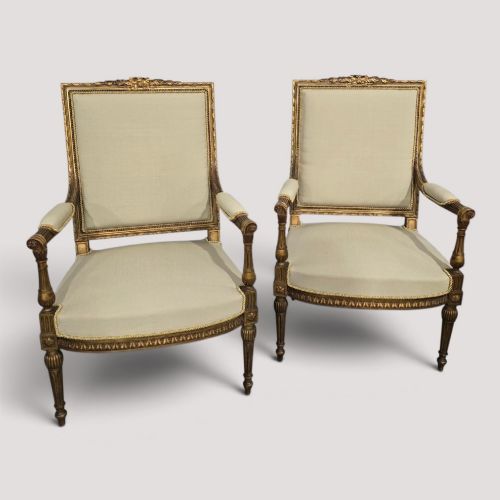
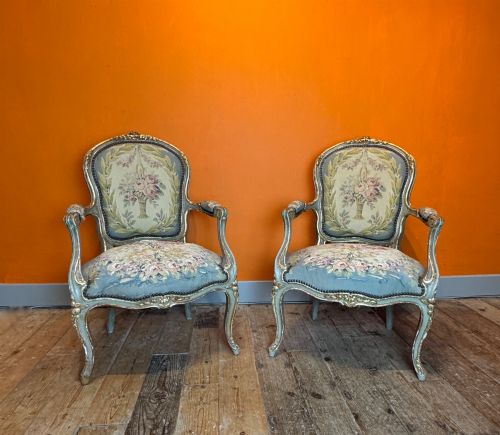
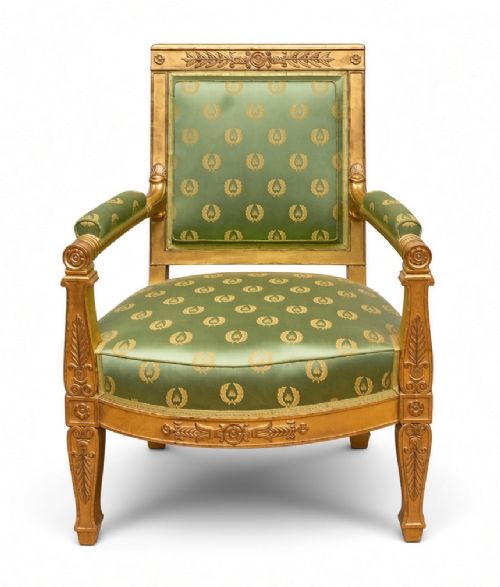
Period salon armchairs bring refined French and English seating to a room, offering ornate carved frames and plush upholstery designed for formal entertaining.
Period Salon Armchairs
Period salon armchairs are formal seating designed for drawing rooms and reception spaces, originating primarily from French and English workshops across the eighteenth, nineteenth, and early twentieth centuries. Buyers search for these pieces to introduce classic character and historic craftsmanship into domestic interiors.
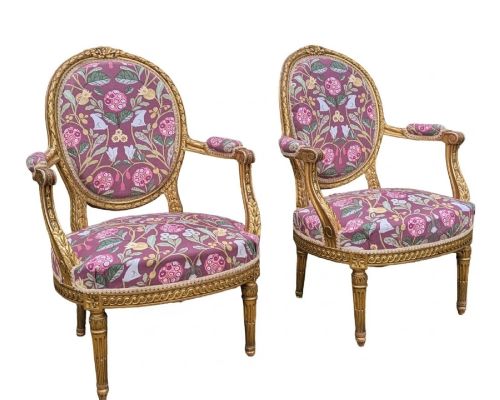
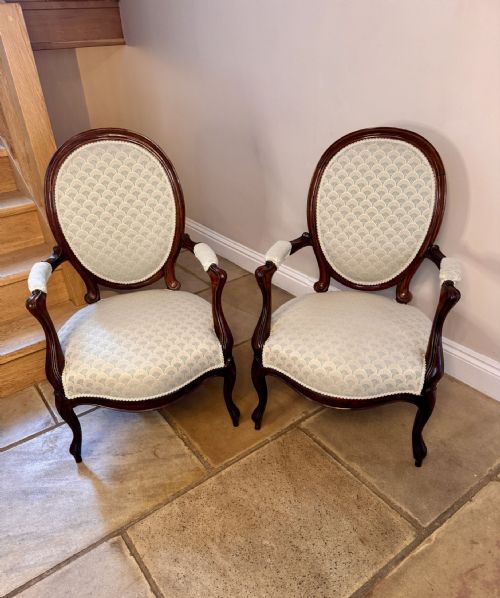
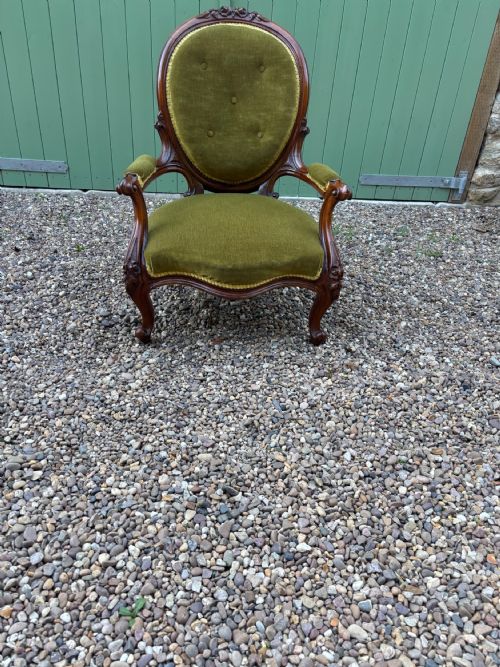
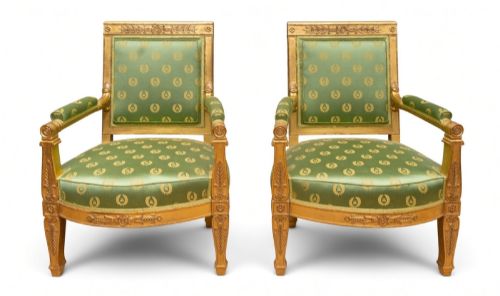
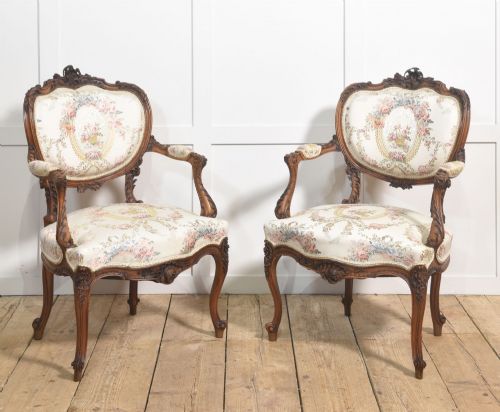
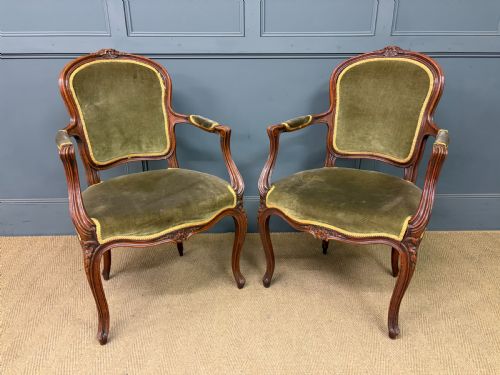
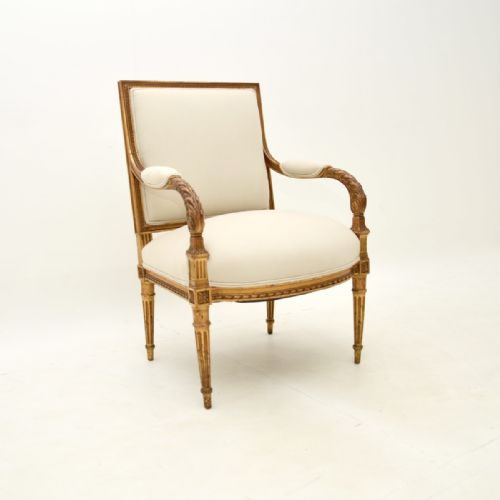
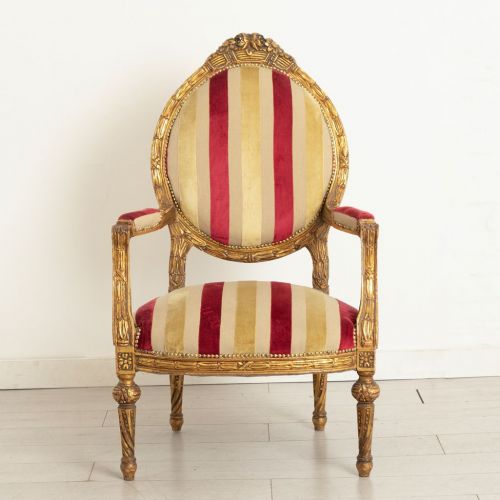
The selections available here predominantly feature French stylistic influences, ranging from Louis XVI and Louis XV revival designs to Victorian, Edwardian, and Restauration interpretations. Common forms include giltwood bergères, carved fauteuils, and matched salon suites constructed in walnut, mahogany, and beech.
Pieces span a considerable chronological range, with nineteenth-century interpretations of earlier royal styles appearing alongside Edwardian variations and eighteenth-century originals. Buyers encounter both single statement chairs and matched pairs or larger sets intended for coordinated parlour schemes.
How They Were Made
Frames are constructed from dense timbers such as mahogany, walnut, beech, and rosewood, chosen for their structural strength and capacity to hold intricate hand-carved relief details. Artisans also utilised giltwood and applied gold leaf over gesso to achieve the opulent metallic finishes characteristic of formal French seating.
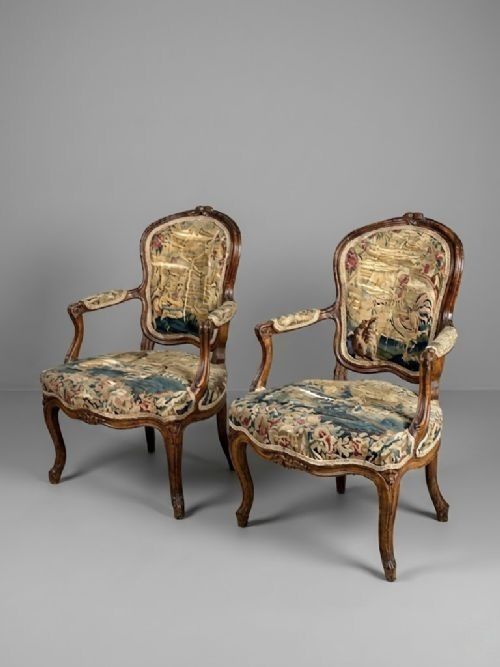
Surface ornamentation relies on traditional woodworking techniques including carving, parcel gilding, paint finishing, and delicate string inlay. Upholstery methods incorporate period textiles such as silk velvet, damask fabric, and hand-worked tapestry secured over supportive interior padding.
Period Salon Armchairs Retail Price Guide 2026
Typical asking prices for period salon armchairs among the pieces listed under this phrase on Sellingantiques today, from the lower quarter to the upper quarter. They describe what is for sale here now, not the wider market.
Listings feature eighteenth, nineteenth, and early twentieth-century pieces, spanning walnut, mahogany, giltwood, and painted beech frames.
What Varies in Quality
Quality rests principally in the crispness and depth of the hand-carving upon the wooden frame, where superior examples exhibit sharp relief work and fluid lines without softness or mechanical uniformity. The choice of primary timber also dictates merit, with dense hardwoods and authentic period gilding marking out finer commissions.
The integrity of the original structure and the fidelity of the upholstery materials further separate standard production from exceptional pieces. Chairs retaining period textiles like tapestry or damask, paired with robust joinery, represent the upper echelon of surviving salon seating.
Jacob-Desmalter·Blaise Maucuy·Jas James Shoolbred
The Period Salon Armchairs Glossary
- Fauteuil
- An open-framed upholstered armchair with exposed wooden arms originating in France. These chairs typically feature padded armrests and carved wooden rails.
- Bergère
- An enclosed upholstered armchair featuring solid upholstered sides integrated with the backrest and seat. This form offers a deeper and more enveloping sit than an open armchair.
- Giltwood
- Timber coated with a thin layer of gold leaf or gold paint over a prepared gesso ground. This finish provides the bright metallic lustre seen on formal nineteenth-century salon furniture.
- Restauration
- A French design period spanning the early nineteenth century that bridged the gap between Empire styles and later revivals. Furniture from this era often combines restrained classical lines with rich mahogany or giltwood.
- Tapestry
- A heavy hand-woven or jacquard textile depicting pictorial scenes or botanical patterns. It appears frequently as original upholstery on nineteenth-century French salon armchairs.
Period Salon Armchairs: Frequently Asked Questions
Where were period salon armchairs placed?
These chairs were positioned around the perimeter of formal drawing rooms and reception spaces, brought into conversation circles as guests required.
Their decorative frames and finished backs ensured they looked appropriate from any angle within large entertaining rooms.
How do I distinguish Louis XVI style from Louis XV?
Louis XVI pieces display straight tapering legs, geometric symmetry, and neoclassical oval or rectangular backrests.
Louis XV designs feature flowing cabriole legs, asymmetrical curves, and more exuberant rococo carved ornamentation.
Can I use these armchairs in modern rooms?
Yes, their historic silhouettes provide a striking contrast against contemporary neutral interiors and minimalist spatial layouts.
They function effectively as reading chairs in studies or as statement seating in modern living areas.