

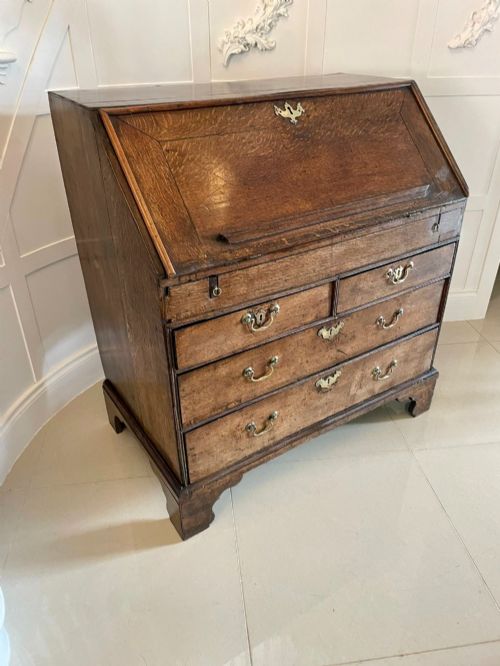
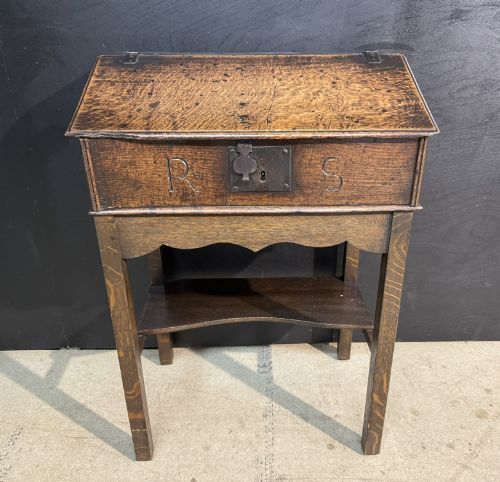


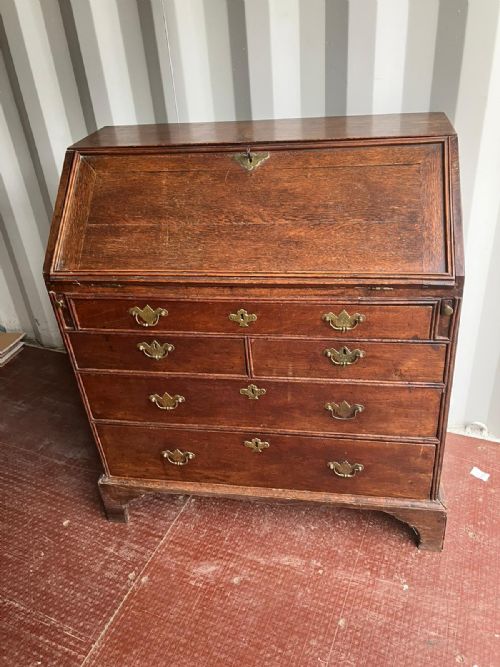


Period Oak Writing Bureau
A period oak writing bureau brings centuries of working history straight into a room, offering a hinged fall front that opens to reveal fitted pigeonholes and drawers.
Period Oak Writing Bureau
A period oak writing bureau serves as a traditional workstation where a slanted writing flap drops down to create a flat surface for correspondence and ledger work. When closed, these desks conceal internal compartments, small drawers and pigeonholes designed to keep papers and writing implements orderly.
The versions most commonly met across these listings span from the seventeenth century through the Georgian and Edwardian eras, appearing in forms such as compact table top bureaux, secretaire chests of drawers and pedestal writing desks. These pieces showcase various regional interpretations and stylistic influences, ranging from straightforward country carpentry to sophisticated urban joinery.
Makers often combined oak as the primary carcass material with secondary woods, brass handles and leather writing inserts, creating robust furniture intended for daily domestic administration. Each example reflects the prevailing taste of its period, whether that manifests in the austere panelling of earlier decades or the refined proportions of the eighteenth century.
How they were made
Craftsmen built these bureaux predominantly using solid oak, often incorporating walnut, mahogany or iron details to accent the construction and hardware. Timber selection prioritised dense, figured boards for visible surfaces, while secondary woods supported internal partitions and drawer linings.
Joinery techniques relied on traditional hand-cut joints, panelled construction and pegged frames to accommodate the natural movement of timber over centuries of use. Brass escutcheons, drop handles and working locks completed the construction, securing the fall front and internal drawers against unauthorised access.
Period Oak Writing Bureau Retail Price Guide 2026
Typical asking prices for period oak writing bureau among the pieces listed under this phrase on Sellingantiques today, from the lower quarter to the upper quarter. They describe what is for sale here now, not the wider market.
Many of these desks conceal tiny secret drawers behind pigeonholes, designed for hiding love letters or family cash from prying eyes.
What varies in quality
The distinction between standard and exceptional pieces rests in the architectural proportion of the exterior and the complexity of the interior joinery. Superior examples feature densely figured timber, well-organised internal secret compartments and harmonious scaling between the upper fall front and the lower drawers.
Execution of hardware and secondary timbers also dictates the standing of a desk, where original brasses and clean, unwarped writing flaps elevate the piece. The depth of carving, subtlety of moulding profiles and integrity of the original oak structure separate utilitarian workshop output from master cabinetwork.
The Period Oak Writing Bureau Glossary
- Bureau
- A writing cabinet featuring a sloping flap that lowers to form a desk surface, positioned above a bank of drawers. This form evolved to manage personal correspondence and household accounts in private chambers.
- Fall front
- The hinged writing flap of a bureau that folds down into a horizontal position for writing and lifts vertically to conceal the interior. It often incorporates a leather or baize insert.
- Secretaire chest
- A chest of drawers where the top drawer pulls out and drops down to reveal a fitted writing interior. This design maintains the external appearance of a standard drawer chest while offering desk functionality.
- Pigeonhole
- A small, open compartment within the interior fitments of a bureau used for sorting letters and documents. These compartments frequently sit above hidden drawers.
- Kneehole pedestal
- A configuration where two columns of drawers support a central writing surface with a recessed space for the user's legs. This layout provides generous storage alongside a dedicated seating position.
Period Oak Writing Bureau: Frequently Asked Questions
What is a period oak writing bureau?
A period oak writing bureau is a traditional item of antique furniture featuring a hinged writing flap that conceals internal compartments and drawers.
These desks were designed for household administration and correspondence, combining substantial oak construction with functional storage for paper and ink.
How were these desks used historically?
Owners used these desks for writing letters, managing household accounts and storing important personal documents securely behind locked fall fronts.
The fitted interiors allowed families to keep stationery and ledgers organised in dedicated compartments away from common living areas.
How do I live with a bureau?
Integrating a bureau into a modern room works well when you use the drop-front surface for a laptop or occasional writing while utilising the internal storage for office supplies.
The compact footprint allows these pieces to function effectively in sitting rooms, studies or hallways without overwhelming the surrounding floor space.
How can I tell different periods apart?
Distinguishing between periods involves observing the structural joinery, moulding profiles and hardware styles, such as seventeenth-century panelled construction versus eighteenth-century bracket feet and figured veneers.
Earlier pieces typically display heavier timber framing and geometric moulding, whereas later Georgian and Edwardian examples lean towards refined proportions and lighter inlay work.