


Period Oak Low Stools
Period oak low stools bring compact historic character to a room, offering sturdy timber seating and centuries of traditional English craftsmanship.
Period Oak Low Stools
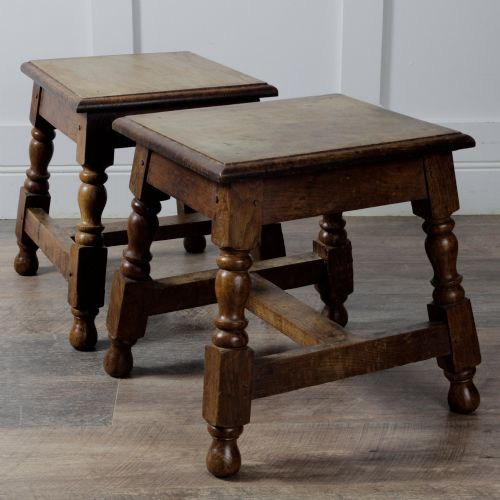
When you search for period oak low stools, you encounter a varied selection of antique seating ranging from seventeenth-century joint stools to Georgian footstools and later Arts and Crafts interpretations. These low timber forms served diverse domestic functions, operating variously as perches, stands, or footrests by the hearth.
The pieces represented here span several centuries, including seventeenth-century examples alongside eighteenth-century Georgian forms and nineteenth-century revivals. Joint stools and boarded trestle constructions sit alongside upholstered variations featuring fabric, leather, tapestry, or textile coverings.
How they were made
Makers constructed these pieces primarily from solid oak and complementary hardwoods, employing traditional joinery methods suited to heavy timber. Joints relied on pegged mortise and tenon construction, creating rigid frames designed to withstand daily domestic use.
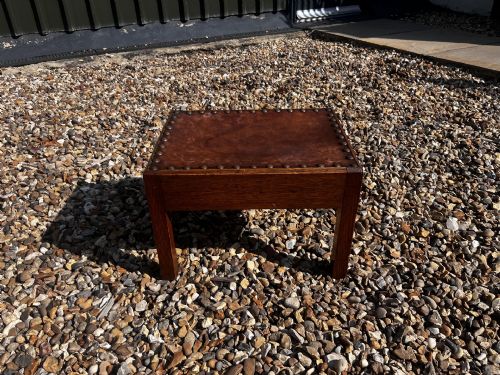
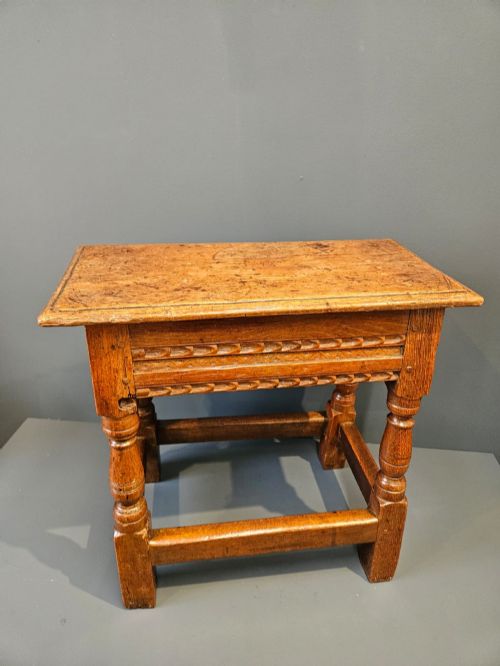
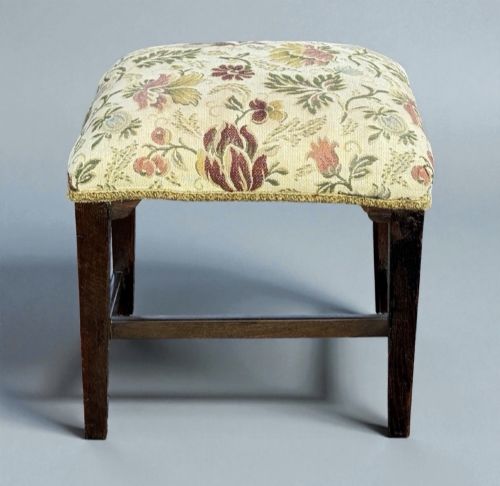
Surface decoration on seventeenth-century and revival pieces often incorporates carved detailing, while upholstered variants integrate supporting webbing or squab cushions covered in leather, tapestry, or fabric, sometimes secured with brass tacks.
The selection includes joint stools, side tables, footstools, and boarded trestle forms.
What varies in quality
Distinction across the range lies in the integrity of the timber framing and the crispness of any hand-carved detail. Earlier seventeenth-century examples display the tool marks and structural honesty characteristic of period vernacular carpentry, whereas later revivals vary in stylistic fidelity.
The survival of original surface patination and uncompromised structural joins elevates an example above pieces with heavily replaced elements or sanded surfaces that obscure the age of the wood.
Arthur Simpson Of Kendal
The Period Oak Low Stools Glossary
- Joint stool
- A sturdy wooden stool constructed with pegged mortise and tenon joints rather than turned legs alone. This form dates back to the sixteenth and seventeenth centuries and often served multiple household purposes.
- Boarded stool
- A primitive seating form made from thick planks joined together in a trestle arrangement. These early pieces rely on simple side boards rather than individual legs.
- Jacobean style
- A design aesthetic spanning the early seventeenth century characterised by heavy proportions and geometric or strapwork carving. Revival pieces from later centuries often copied these robust motifs.
- Mortise and tenon
- A traditional woodworking joint where a protruding tenon fits snugly into a corresponding hole or mortise. Pegs frequently secure these connections in period furniture.
- Patina
- The surface sheen and colour developed by aged timber through decades of handling, polishing, and exposure to light. A desirable patination reflects genuine age and usage.
Period Oak Low Stools: Frequently Asked Questions
What is a joint stool?
A joint stool is a sturdy wooden seat built with pegged mortise and tenon joinery rather than turned legs. These pieces were common in sixteenth and seventeenth-century households.
They frequently served multiple domestic purposes, acting as small tables or stands in addition to providing seating.
How do I date an oak stool?
Dating relies on examining the construction methods, tool marks, and style of the woodwork. Seventeenth-century pieces typically display hand-riven timber and pegged joints.
Later nineteenth-century revivals often replicate earlier Jacobean or Gothic motifs but utilise different machine-sawn timber characteristics.
Were these stools used for sitting?
While many served as primary seating at the table, others functioned as footstools or low stands for household items. Their low height made them versatile additions to early domestic interiors.
Upholstered variants from the Georgian period onward provided more comfortable resting places for the feet near the fire.
What is a boarded stool?
A boarded stool is an early form constructed from thick planks arranged in a trestle shape rather than using standard legs. These pieces represent some of the simplest surviving domestic seating.
The side boards often feature shaped feet or decorative cutouts characteristic of early vernacular woodworking.