




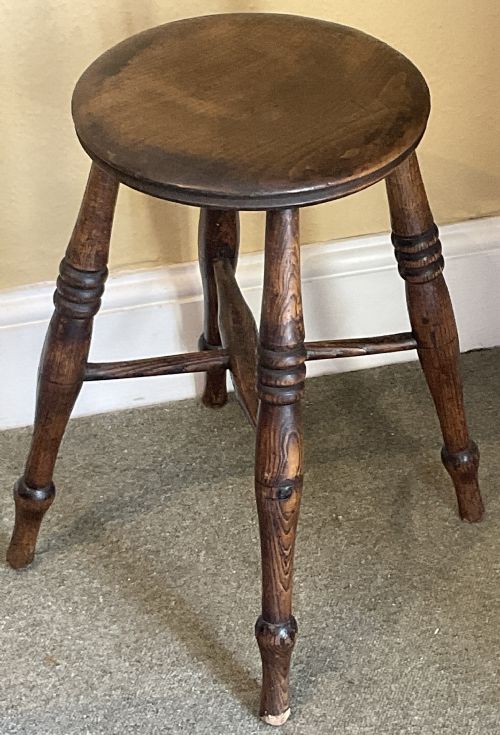


Victorian Oak Side Stools
Victorian oak side stools are sturdy nineteenth-century seats and low stands, offering compact utility and character that suit modern rooms.
Victorian Oak Side Stools
Victorian oak side stools bridge the gap between practical seating and low occasional tables, originating primarily in the nineteenth century. Buyers seeking victorian oak side stools encounter forms ranging from joint stools in the seventeenth-century style to Gothic revival pieces and rustic country examples.
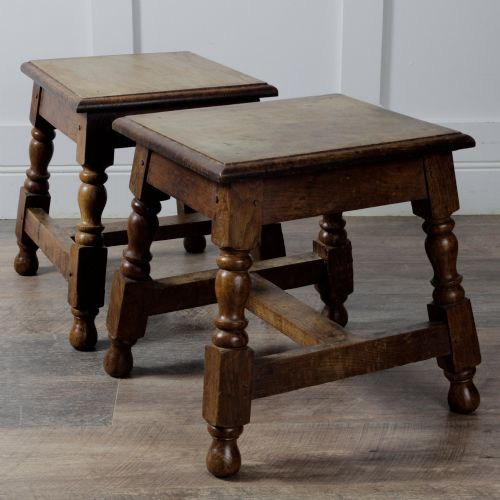
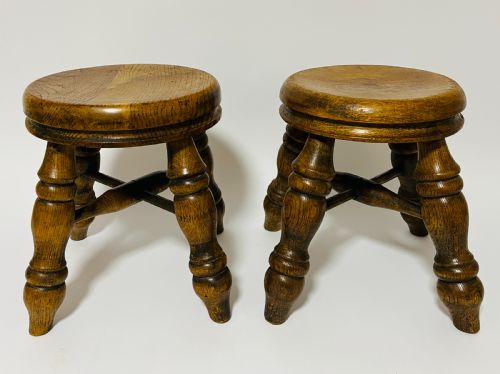
The selection frequently includes paired items, small stands, and carved work seats produced across various decades of the Victorian era. Woods such as pollard oak and standard oak dominate, occasionally accompanied by walnut or ebonised elements.
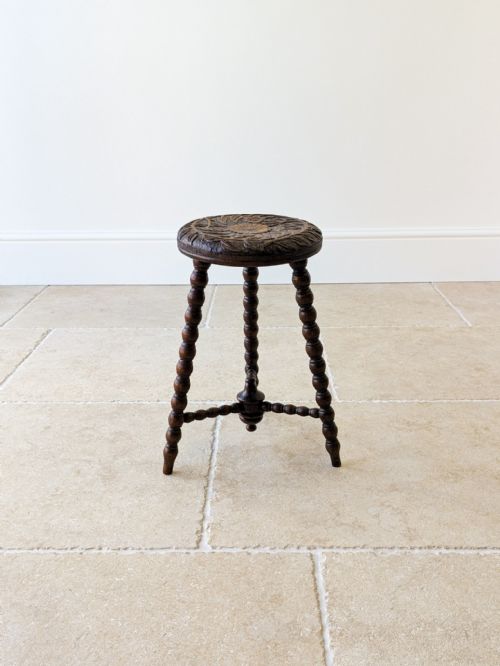
Moorish revival influences and Arts and Crafts ideals also appear among the listed variations, alongside bobbin-turned legs and draught tops. These diverse origins provide numerous options for placing a compact historic seat beside a chair or in a hallway.
Materials and Construction
Carpenters built these pieces predominantly from solid oak, frequently utilising turned structural members and pegged joints for durability. Pollard oak surfaces add decorative grain patterns to tabletops and seats, while secondary timbers such as elm and ash support country forms.
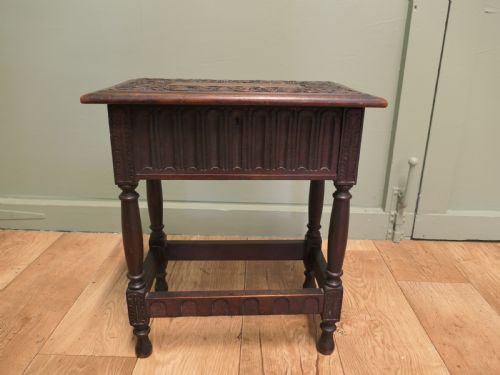
Detailing often involves hand carving, bobbin turning, and occasionally leather or brass accents, reflecting revival styles from Gothic to Moorish tastes. These construction methods ensured the heavy timber frames withstood daily domestic use across generations.
Listings feature items spanning the nineteenth century, incorporating oak, walnut, pollard oak, and ebonised wood across various revival styles.
Assessing Quality and Character
Quality in these pieces rests upon the crispness of the timber carving, the integrity of the joints, and the selection of figured oak. Superior examples display thoughtful proportions and genuine period patination on the wood surfaces.
Lesser items may show simpler joinery or heavier later alterations, whereas finer survivals retain their original turning and structural stability without excessive replacement timber.
Liberty
The Victorian Oak Side Stools Glossary
- Joint Stool
- A sturdy wooden seat constructed with mortise and tenon joints, common in early English vernacular furniture. These forms were frequently revived during the nineteenth century.
- Bobbin Turning
- A method of lathe work producing a series of rounded spheres or discs resembling bobbins along a furniture leg or stretcher. This decorative technique appears on many small nineteenth-century tables and stools.
- Pollard Oak
- Timber taken from trees that have been pollarded, producing dense, highly figured wood with intricate grain patterns. Cabinet makers utilised this timber for decorative tabletops.
- Gothic Revival
- An architectural and design movement drawing inspiration from medieval forms, featuring pointed arches, tracery, and heavy carved detail. This style heavily influenced Victorian seating and side tables.
- Moorish Revival
- An exotic design trend incorporating geometric patterns and Islamic architectural motifs into nineteenth-century British furnishings. Items in this style often display intricate woodwork.
Victorian Oak Side Stools: Frequently Asked Questions
What is a joint stool?
A joint stool is a rigid wooden seat made with pegged mortise and tenon joinery rather than glued joints. These items served multiple domestic purposes in historic homes.
During the Victorian period, makers reproduced these seventeenth-century styles for decorative domestic use. Their sturdy frames make them suitable as small side tables today.
How were side stools used?
These small seats provided portable resting places near firesides or served as low surfaces for holding objects. Their compact footprints suited smaller Victorian rooms and hallways.
Owners frequently utilise them today as bedside stands or plant pedestals. Their robust construction allows them to function reliably in modern spaces.
How do I identify Gothic revival pieces?
Gothic revival items display architectural motifs such as pointed arches, quatrefoils, and heavy chamfered edges. Makers drew inspiration from medieval stonework and ecclesiastical joinery.
This aesthetic gives Victorian oak furniture a dramatic and substantial appearance. The dark oak finishes typical of these pieces enhance their historic character.
Where should I place a side stool?
A side stool fits well in a hallway, beside an armchair, or beneath a window as a low display surface. Their modest proportions prevent them from overwhelming tight spaces.
Keep solid oak furniture away from direct heat sources to prevent timber splitting. Regular polishing helps maintain the natural lustre of the nineteenth-century wood.