

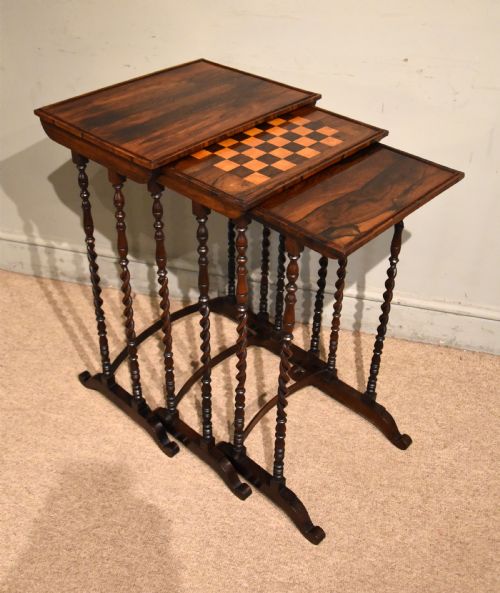


Period Nesting Tables
These period nesting tables are sets of graduated occasional tables designed to slide together efficiently when not in use.
Period Nesting Tables
When you search for period nesting tables, you encounter sets of graduated tables designed to slide smoothly beneath one another to save space. The pieces seen here span the Regency, Georgian, Edwardian, and Art Deco periods, alongside a single Japanese Meiji period inclusion.
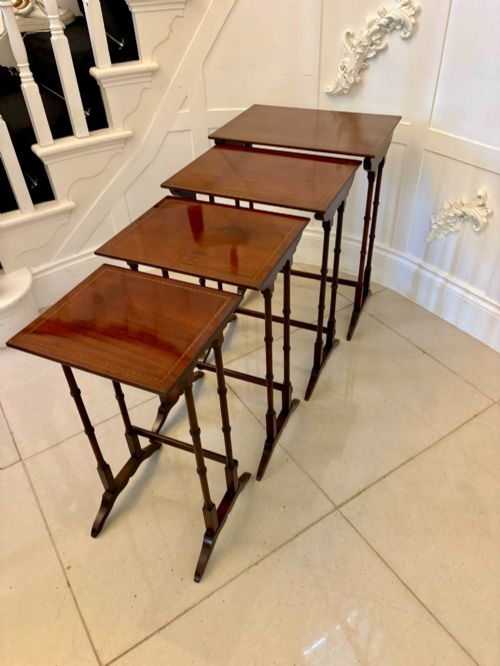
The most common form on this page is the quartetto, which traditionally consists of a set of four tables. These examples range from sets of three to sets of four tables, constructed in graduating sizes so the smaller tables fit entirely beneath the largest.
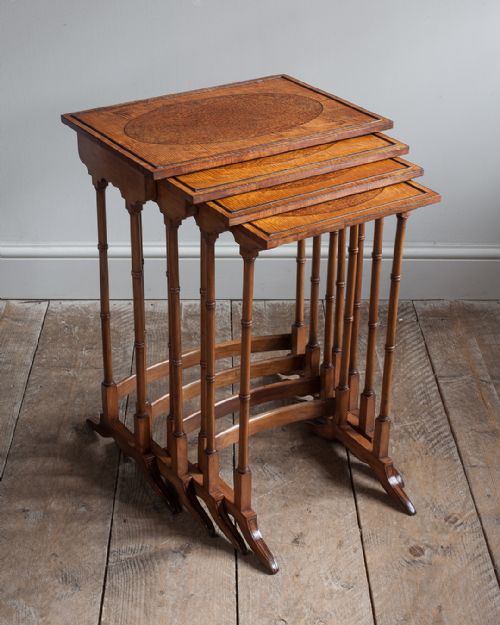
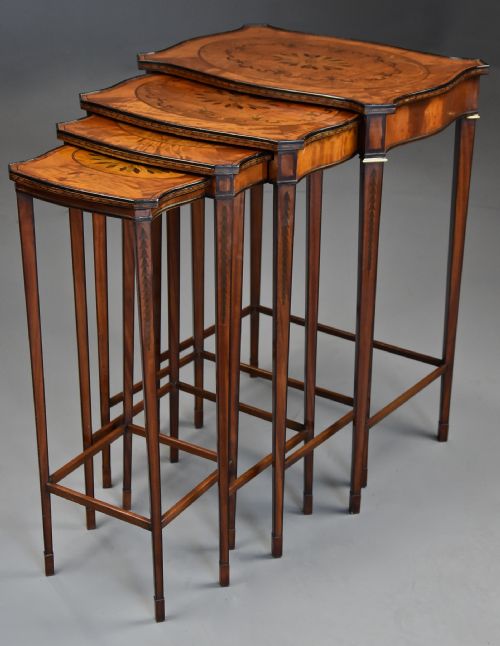
The materials and styles reflect prominent cabinet-making traditions, including Sheraton-influenced satinwood and substantial rosewood or mahogany builds. Buyers select these tables for their practical utility and their ability to be placed around a room for entertaining before returning to a compact footprint.
Materials and construction
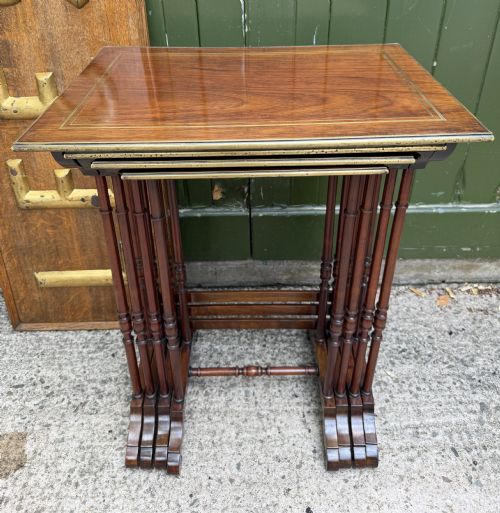
Cabinet-makers constructed these tables using solid timber and veneered surfaces, employing mahogany and rosewood as primary woods. Selected pieces incorporate satinwood and specialised decorative treatments such as brass inlay or simulated faux rosewood finishes.
The tables rely on precise carpentry to achieve the graduated dimensions required for successful nesting. Serpentine forms and delicate framing define the higher-style examples from the Edwardian and Regency periods.
One extraordinary listing includes a set of seven lacquer sake cups tucked into the mix of occasional tables.
What varies in quality
The distinction between standard examples and the finest pieces lies in the selection of timber veneers and the intricacy of the decorative inlay. Tables featuring brass inlay or figured rosewood sit at a higher level of craftsmanship than plain wood variants.
Proportional refinement and the crispness of the serpentine or graduated frames separate exceptional sets from more utilitarian productions. The integrity of the sliding mechanism and the uniformity across the graduated set also determine the standing of each piece.
The Period Nesting Tables Glossary
- Quartetto
- A set of four graduated tables designed to nest inside one another. This term appears frequently in Regency and Edwardian descriptions.
- Graduated
- Describing a set of tables where each successive piece diminishes in height and width to fit beneath the preceding one. This construction allows the entire set to occupy the floor space of a single table.
- Serpentine
- A curved shape featuring a convex centre flanked by concave ends. This contour is often applied to the edges of table tops for decorative effect.
- Inlay
- A technique where contrasting materials are inserted into recessed portions of the wood base to form a pattern. Satinwood and brass are typical inlay materials found in these listings.
Period Nesting Tables: Frequently Asked Questions
What is a quartetto table set?
A quartetto set consists of four individual tables built in graduating sizes to fit neatly together. They were originally designed for serving tea or playing games in drawing rooms.
The smallest tables slide entirely beneath the largest one to save floor space when not in use.
How do I identify a Regency nesting table?
Regency period tables typically feature rosewood or mahogany timbers, often enhanced with brass inlay or simulated graining. They date from the early nineteenth century and frequently use the quartetto format.
Look for slender turned supports and precise proportions that allow the graduated pieces to slide smoothly.
Were these tables used in formal rooms?
These tables served as versatile occasional furniture for entertaining guests in domestic settings. Hostesses deployed the smaller tables around the room for drinks or needlework.
Their modular design meant they could be quickly gathered into a single compact stack against a wall.
What woods were used for these tables?
Cabinet-makers relied primarily on mahogany and rosewood for durable construction and rich grain patterns. Satinwood provided a lighter, contrasting option for inlaid and decorative surfaces.
Some examples also utilise brass elements to accent the timber frames.