





1930s Nest of Tables
A 1930s nest of tables is a clever space-saving cluster of interlocking surfaces, offering Art Deco elegance that disappears neatly when floor space matters.
1930s Nest of Tables
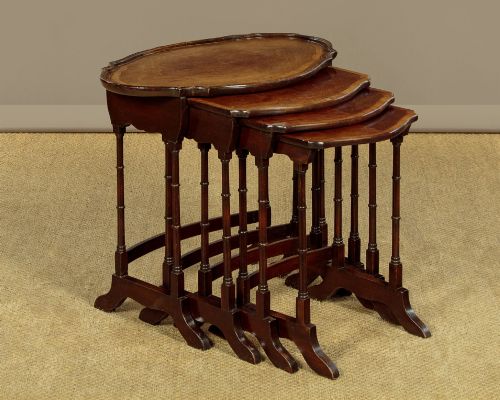
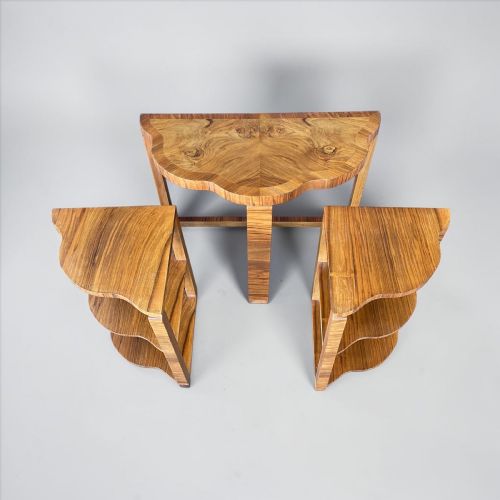
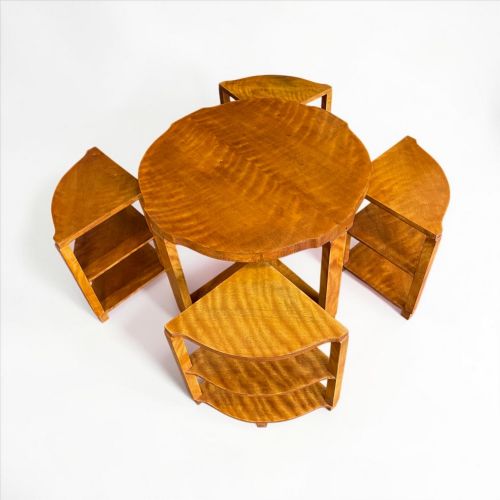
When you search for a 1930s nest of tables, you encounter matching sets of intermittent tables designed to slide one beneath another. Most examples on this page date from the 1930s, with a few reaching into the 1940s.
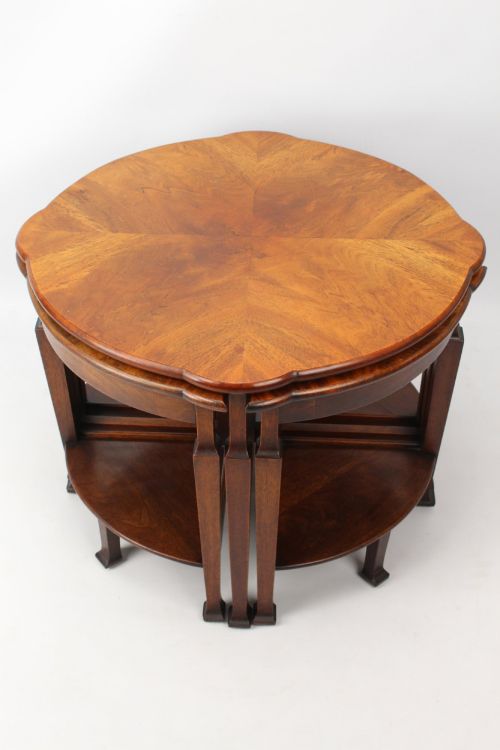
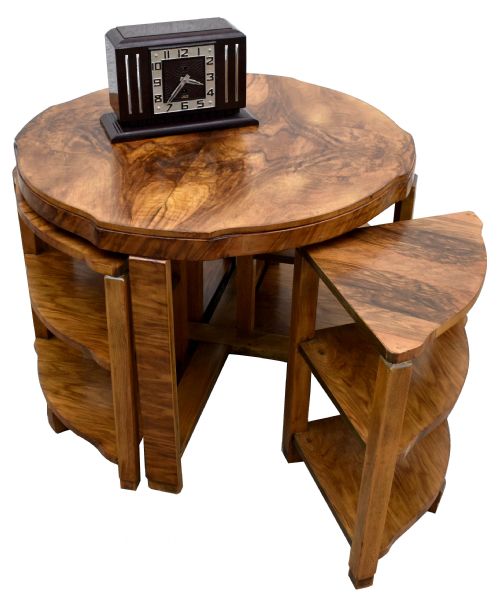
The dominant style is Art Deco, expressed through clean geometric forms and sets varying from three to five pieces. You find English and French origins, including occasional round formats and specialised designs like the Quintetto.
Sets are configured as nesting coffee tables, side tables, or lamp tables. These multi-tiered arrangements served living spaces efficiently by expanding surface area on demand.
How They Were Made
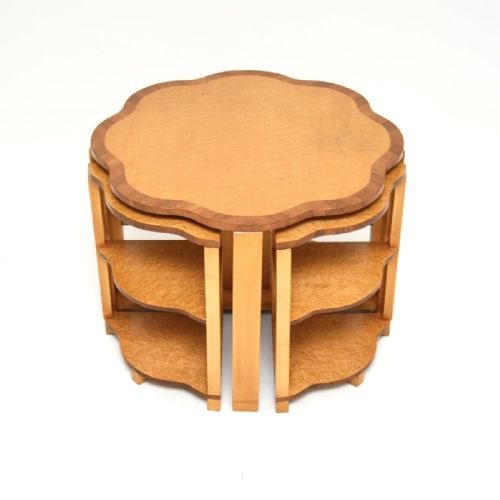
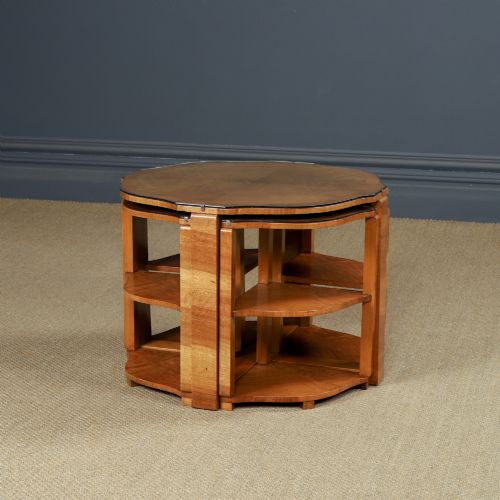
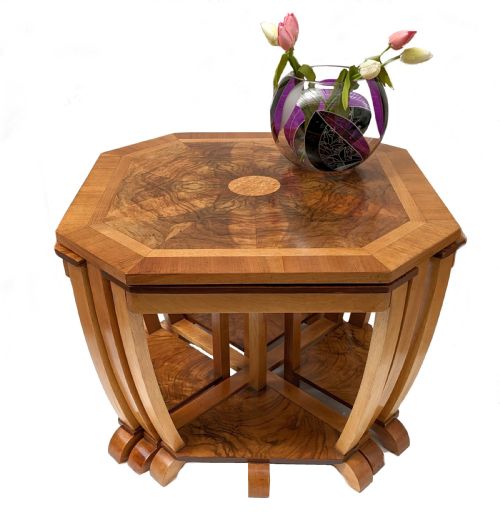
Cabinet makers utilised solid woods paired with decorative veneers to achieve striking surface patterns. Walnut and burr walnut dominate the construction, frequently enhanced by birds eye maple, figured wood, and satinwood veneer.
Glass panels also appear as inset surfaces within the wooden frameworks. These materials were shaped into stepped or curved Art Deco silhouettes that prioritized fluid, streamlined geometry.
1930s Nest of Tables Retail Price Guide 2026
Typical asking prices for 1930s nest of tables among the pieces listed under this phrase on Sellingantiques today, from the lower quarter to the upper quarter. They describe what is for sale here now, not the wider market.
Some five-piece sets include tiny subsidiary tables so small they seem designed strictly for an afternoon thimble of sherry.
What Varies in Quality
The distinction between standard production and exceptional work lies in the choice of timber and veneer selection. Makers who employed burr walnut, birds eye maple, or Indian rosewood achieved much richer visual depth than those using plain walnut.
Design complexity also separates the tiers, moving from simple sets of three up to intricate arrangements of five tables or specialised forms like the J Nest. The precision of the interlocking fit reflects the maker's underlying standard.
Harry and Lou Epstein·The Hille Furniture Company·Heal's
The 1930s Nest of Tables Glossary
- Art Deco
- A design style characterised by streamlined shapes, geometric symmetry, and modernist influences. It defined decorative arts during the interwar period.
- Nest of tables
- A set of graduated tables designed to fit closely together under the largest one. This arrangement maximised floor space in compact interwar interiors.
- Burr walnut
- A prized wood harvested from walnut tree growths that produce swirling, knotty grain patterns. It was favoured for high-end modernist furniture surfaces.
1930s Nest of Tables: Frequently Asked Questions
How were nesting tables used in the 1930s?
These tables served sitting rooms where space was at a premium during tea or social gatherings. Individual tiers could be pulled out to hold drinks or books and then returned to a single compact stack.
Their modular nature made them versatile furniture pieces for entertaining guests without permanently cluttering the room.
How do I identify a 1930s set?
Look for characteristic Art Deco geometric lines, stepped designs, and the use of walnut or exotic veneers. Maker signatures or stamps on the underside also help confirm the period.
Construction methods typical of the interwar era further distinguish genuine pieces from later reproductions.
Can I use them as coffee tables?
The main table often functions well as a low central surface, while the smaller pieces serve as side or lamp tables. Together they provide flexible surface layouts.
Arranging the tiers apart creates varied surface heights across a seating area.
What woods were commonly used?
Walnut is the most frequent timber, appearing both as solid wood and as walnut veneer. Cabinet makers also incorporated burr walnut, birds eye maple, satinwood veneer, and Indian rosewood.
Glass occasionally complemented the wooden frames on top surfaces.