



Period Music Canterbury
A period music canterbury holds scores and journals neatly, combining slotted partitions with a low drawer and sturdy turned legs.
Period Music Canterbury
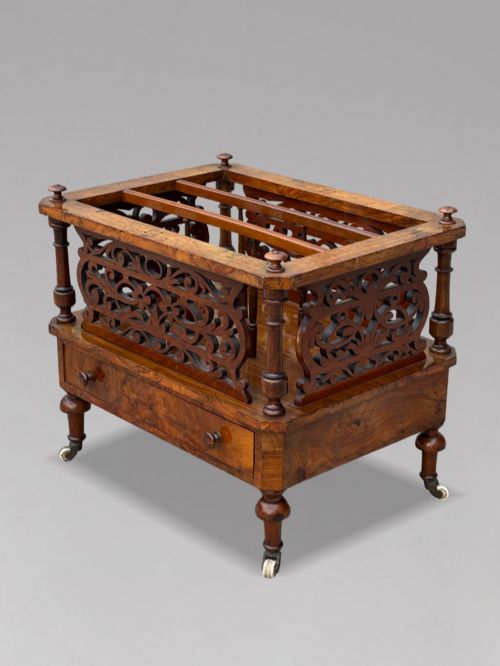
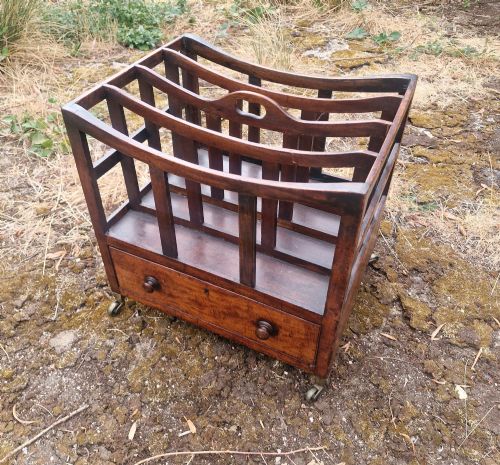
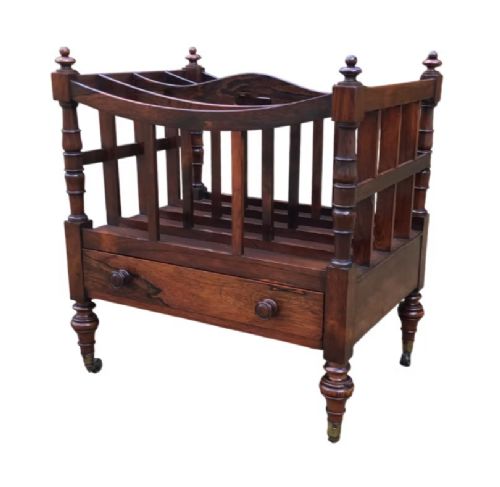
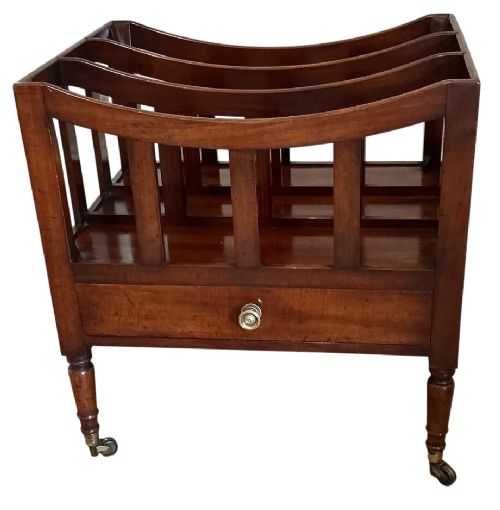
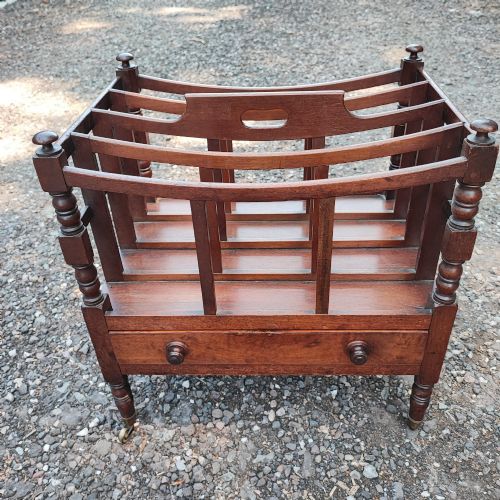
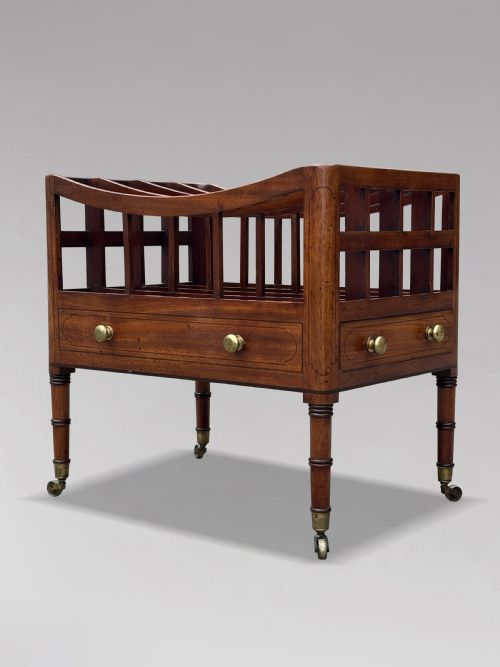
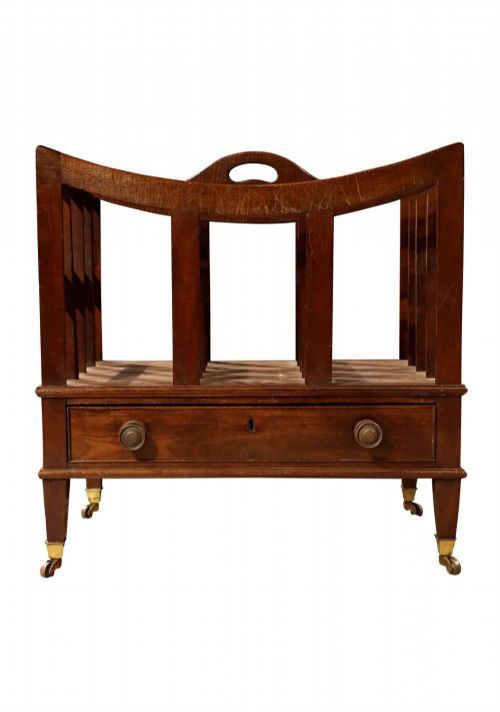
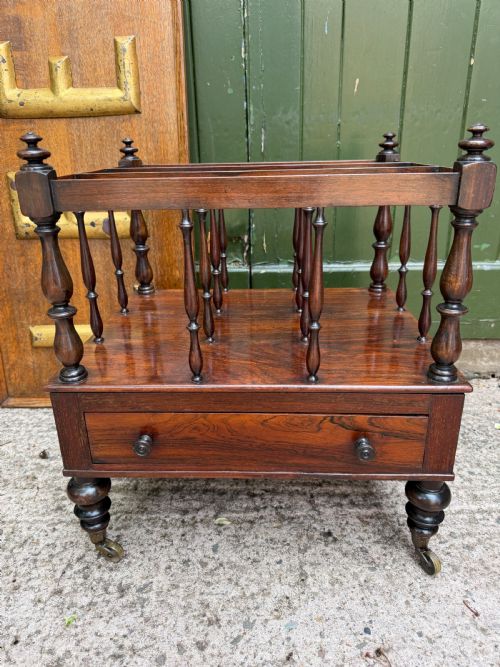
A period music canterbury is a dedicated stand designed for sheet music and folios, appearing most frequently in mahogany or rosewood from the Regency and Victorian eras. These pieces typically feature vertical slatted partitions divided into compartments, often anchored by a single drawer below and supported on small castors.
The form developed during the late eighteenth century and remained a staple of the domestic parlour through the nineteenth century, accommodating the era's enthusiasm for home performance. Buyers searching this phrase encounter examples ranging from austere George III designs to grand William IV and Victorian interpretations.
How they were made
Cabinet makers built these stands using dense hardwoods like mahogany, rosewood and walnut, frequently selecting figured veneers for top surfaces and drawer fronts. The vertical partitions demand precise joinery, often shaped with curved upper edges and joined to the base plinth by tenons.
Brass details such as castors, carrying handles and inlaid stringing appear frequently on finer pieces, while turned pillars or carved supports elevate the main compartment. Drawer construction relies on hand-cut dovetails, pointing to traditional workshop methods of the period.
Early makers ensured these stands could be moved easily around a crowded music room by fitting small brass castors beneath every leg.
What varies in quality
The distinction between standard utility items and superior examples rests upon timber selection and the ambition of the carving. Richly figured rosewood or burr walnut veneers paired with finely turned columns and original brass castors indicate a higher workshop standard.
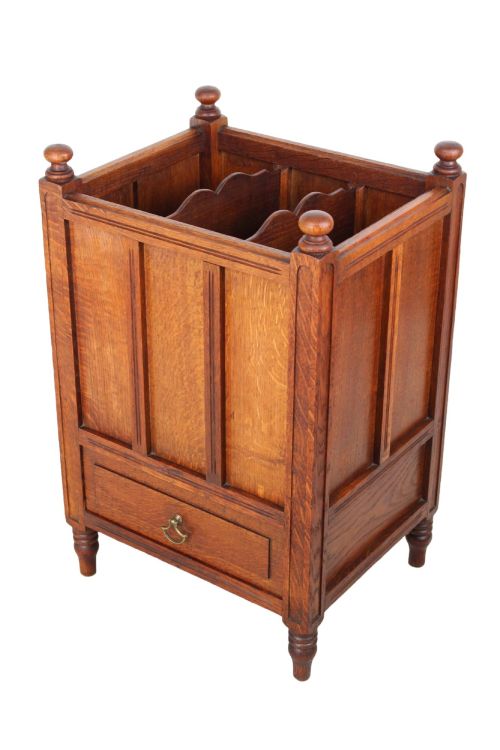
Proportion and restraint in ornament define the better pieces, where structural elements like the slatted dividers remain rigid and well-fitted. Simpler oak or mahogany versions serve identical domestic functions but lack the decorative detailing of the top tier.
A George IV Gillows Rosewood Canterbury
The Period Music Canterbury Glossary
- Canterbury
- A low stand with vertical partitions designed for holding sheet music, folios or periodicals. The name is traditionally linked to an Archbishop of Canterbury who requested such a piece for his music.
- Regency
- A stylistic period spanning the early nineteenth century, characterised by classical revival motifs and refined joinery. Pieces from this era often utilise rosewood and incorporate brass inlay.
- Etagere
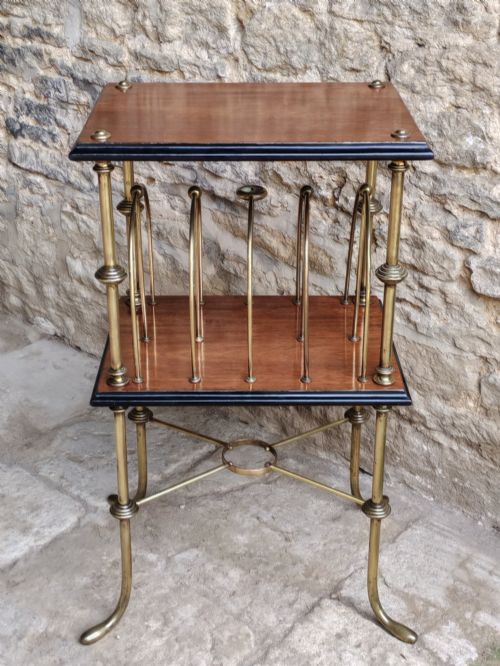
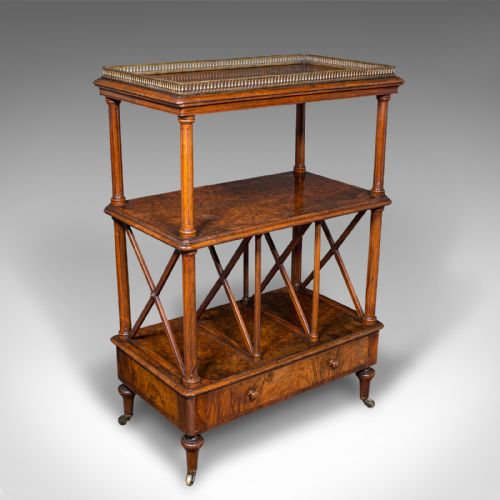
- A set of open shelves for displaying small objects or books, sometimes incorporated into the upper section of a music stand. These provide tiered storage alongside the main compartment.
- Dovetail
- A traditional interlocking joint used in drawer construction to ensure durable corners. Hand-cut examples help indicate the period and skill of the maker.
Period Music Canterbury: Frequently Asked Questions
What is a period music canterbury used for?
These stands were originally built to hold sheet music, songbooks and musical scores beside a piano or in a withdrawing room. Today they function equally well for modern magazines, journals and vinyl records.
The divided upright compartments keep tall soft-cover items upright and sorted, while the lower drawer holds smaller accessories or loose papers.
How do I tell a Regency canterbury from a Victorian one?
Regency examples typically display sharper architectural lines, rosewood timbers, brass stringing and elegant turned legs with brass castors. They often feature boat-shaped frames and classical proportions.
Victorian pieces tend to use heavier walnut or oak, incorporating denser carved details, darker finishes and a more robust overall stance reflecting later domestic tastes.
Are all canterburys fitted with drawers?
Many examples include a single shallow drawer beneath the main slatted compartments, designed for smaller music books or tuning keys. Other variations consist solely of the open rack or combine the rack with a small whatnot shelving unit above.
The presence of a drawer depends on the specific design and date, with many Regency and Victorian iterations featuring this storage addition.
How do I care for a rosewood or mahogany canterbury?
Keep the wood away from direct sunlight and strong heat sources to prevent the veneers from drying out or splitting. Gentle dusting with a dry cloth and occasional application of appropriate wax will maintain the finish.
Avoid placing damp items directly onto the timber surfaces, as nineteenth-century polishes can react to moisture.