

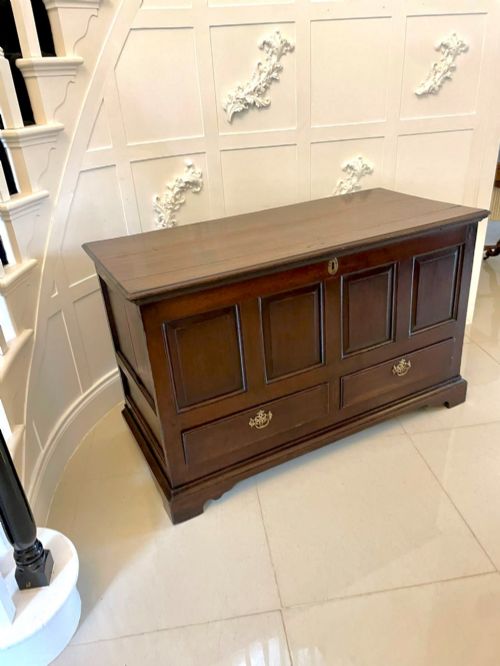
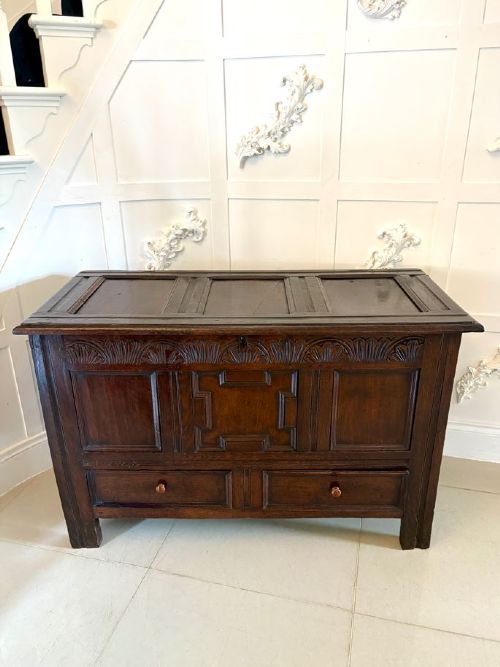
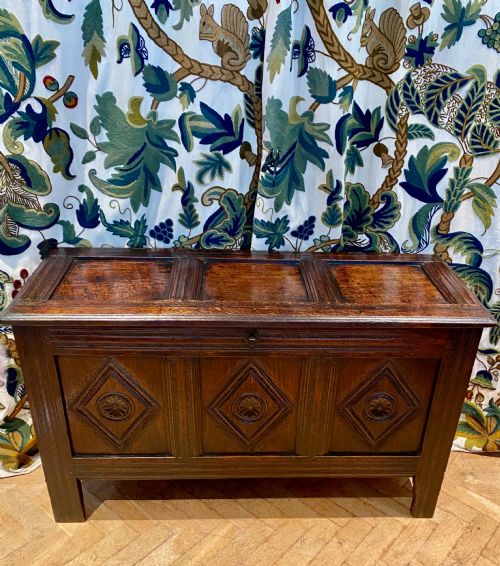
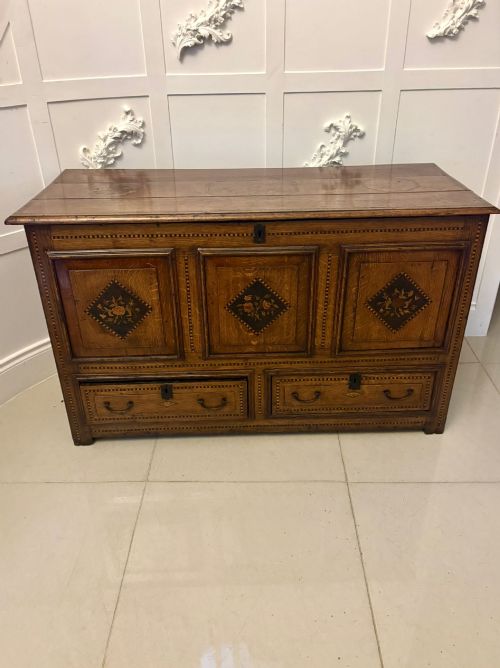
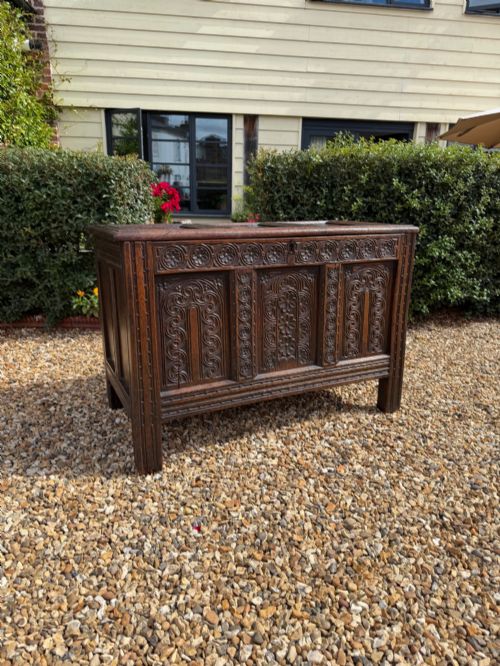
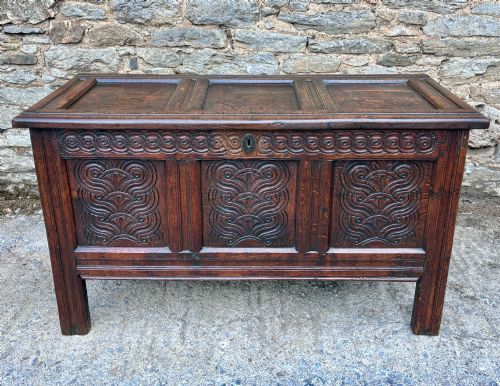
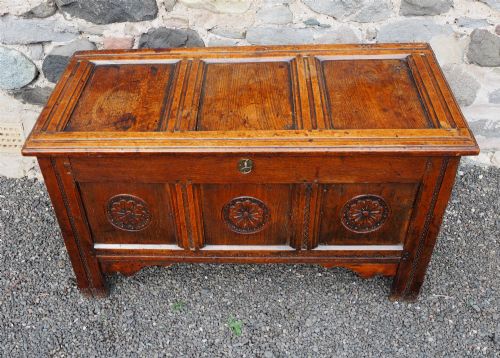
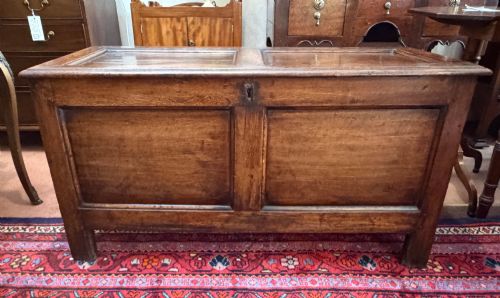

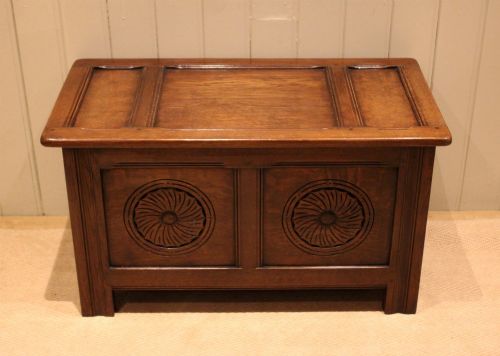
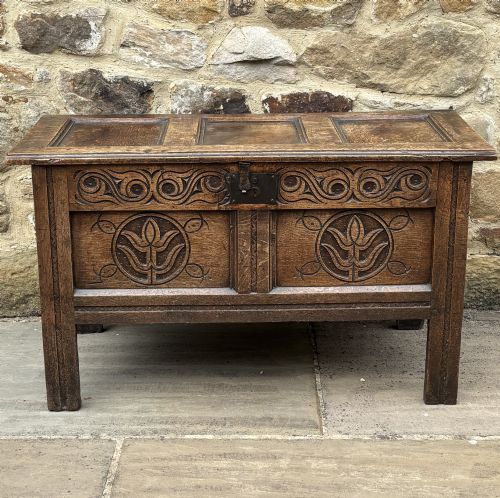
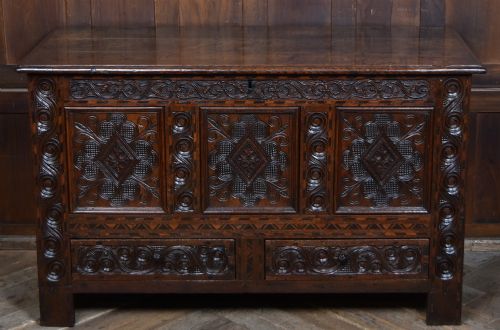
Period Mule Chest
A period mule chest is a sturdy domestic storage piece that combines a traditional lidded coffer with a lower drawer, offering both character and utility.
Period Mule Chest
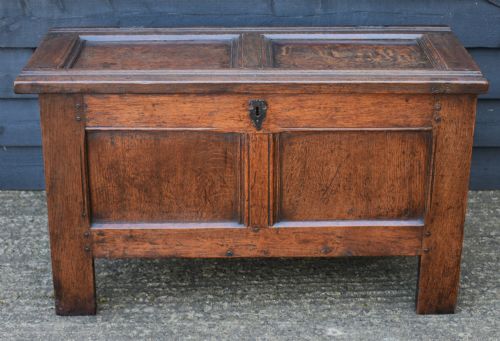
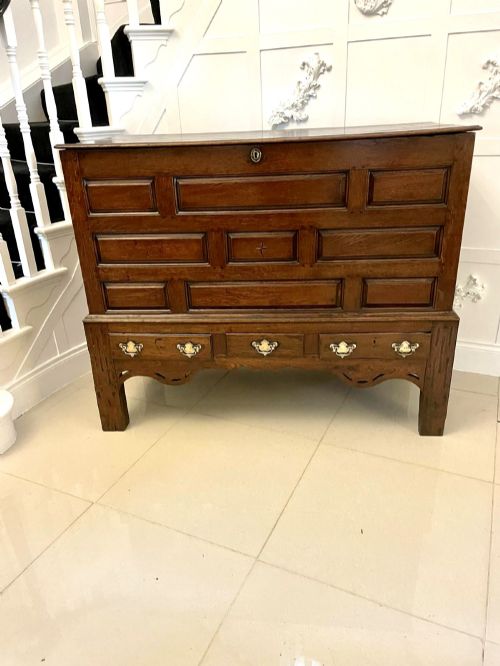
A period mule chest brings together deep upper storage and at least one bottom drawer, developing from simple coffers into more practical furniture over several centuries. These pieces reflect regional English craftsmanship, appearing in styles from Jacobean and Georgian eras through to English country traditions.
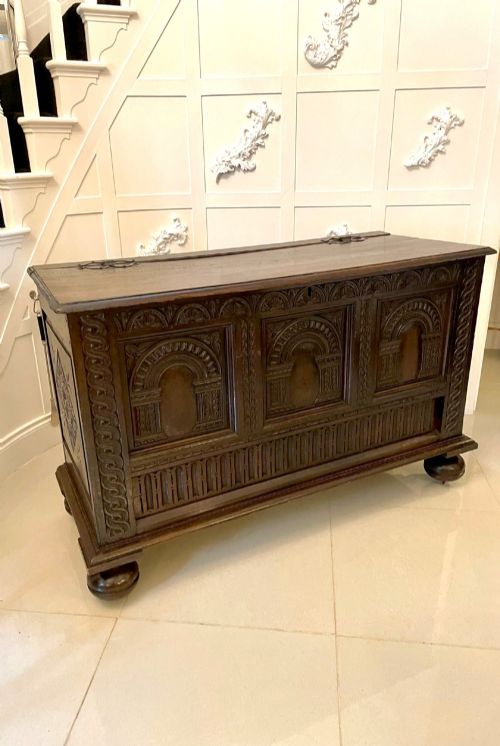
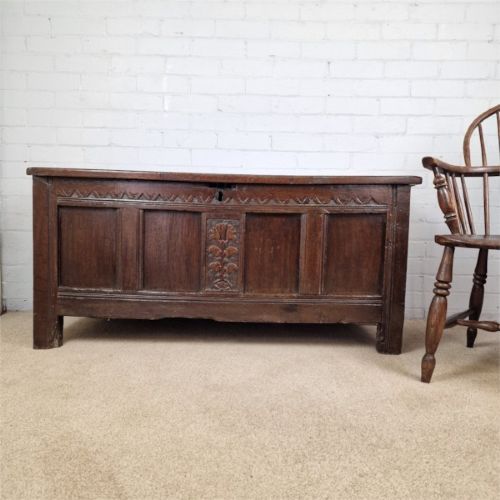
The versions most commonly met on this page date from the seventeenth and eighteenth centuries, constructed primarily from robust native timbers. They frequently display panelled construction, carved detailing, and occasionally internal fittings such as candle boxes.
Mule chests served essential household storage functions in past centuries, holding textiles, linen, and personal belongings. Their solid proportions make them enduring focal points for modern interiors.
How they were made
Makers relied heavily on English oak and elm, shaping sturdy planks and frames held together with traditional joinery methods. These durable woods provided the structural strength required for heavy domestic use over generations.
Surface ornamentation involved hand-carving, linen fold panels, and decorative marquetry inlay using contrasting wood types. Iron and brass hardware, including hinges and drawer pulls, secured the moving parts and completed the construction.
Period Mule Chest Retail Price Guide 2026
Typical asking prices for period mule chest among the pieces listed under this phrase on Sellingantiques today, from the lower quarter to the upper quarter. They describe what is for sale here now, not the wider market.
Some seventeenth century examples include tiny internal candle boxes, perfect for stashing modern loose change or secret love letters.
What varies in quality
The refinement of the carved decoration and the crispness of the joint work distinguish superior examples from plain utility pieces. Skillfully executed panels and integrated drawer construction demonstrate a higher level of joiner craftsmanship.
The preservation of original timber surfaces, patination, and hardware significantly influences the standing of a piece. Examples retaining their initial proportions and unblemished structural integrity hold greater archaeological and aesthetic interest.
The Period Mule Chest Glossary
- Mule chest
- A storage chest fitted with one or more drawers beneath the main lift-top compartment. This form bridges the traditional coffer and the chest of drawers.
- Coffer
- A heavy wooden box with a hinged lid used for storing valuables, textiles, or documents. Many early examples feature robust joined oak frames and panelled sides.
- Marquetry inlay
- Decorative patterns formed by fitting contrasting pieces of wood veneer into a prepared surface. This technique adds visual complexity to the front panels of select chests.
- Linen fold
- A carved wooden panel motif resembling folded drapery or linen cloth. It appears frequently on sixteenth and seventeenth century English panels.
- Joined oak
- Furniture construction utilising mortise and tenon joints secured with wooden pegs rather than metal nails. This method defined sturdy vernacular cabinet making.
Period Mule Chest: Frequently Asked Questions
What is the difference between a coffer and a period mule chest?
A coffer consists solely of a trunk with a top-opening lid for storage. A mule chest adds one or more drawers underneath that main compartment for easier access to stored items.
This evolution in design allowed households to retrieve items without disturbing the contents piled on top of the main storage well.
How are different centuries identified on these chests?
Cabinet makers altered construction methods, hinge types, and decorative motifs across generations. Sixteenth and seventeenth century pieces often display heavy joined oak frames and deep hand-carving.
Later eighteenth century examples shift towards smoother surfaces, refined proportions, and more complex drawer arrangements reflecting changing domestic fashions.
Where were these chests originally made?
Regional workshops across England produced these storage pieces using locally available timber such as oak, elm, and fruitwoods. Specific areas developed distinct carving traditions and structural quirks.
Regional variations help historians trace pieces to specific locales like Wales, Lancashire, or Dorset based on regional design traits.
How can I use a mule chest in a modern room?
The flat top surface makes these chests suitable for use as window seats, hallway benches, or blanket storage at the foot of a bed. Their sturdy construction supports everyday domestic seating.
Internal storage compartments swallow bulky household items while keeping living spaces clear of clutter and maintaining historical character.