


Period Mahogany Wine Cooler
A period mahogany wine cooler is a formal dining room container designed to hold bottles and ice, combining utility with architectural presence.

Period Mahogany Wine Cooler
A period mahogany wine cooler is a traditional dining room accessory used to chill wine and spirits for the table. When searching this phrase, buyers encounter several distinct historical forms spanning the Georgian, George III, and Regency eras. These containers serve both a practical cooling function and a display purpose within formal interiors.
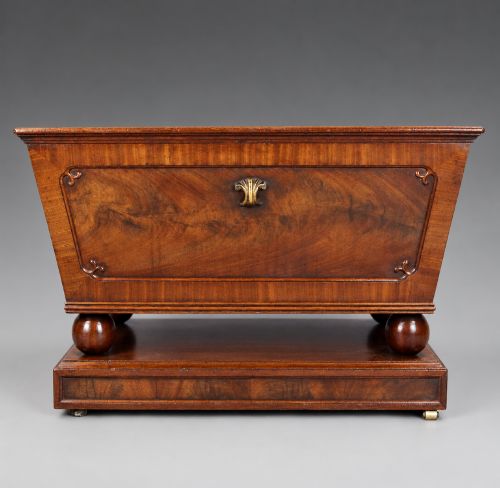
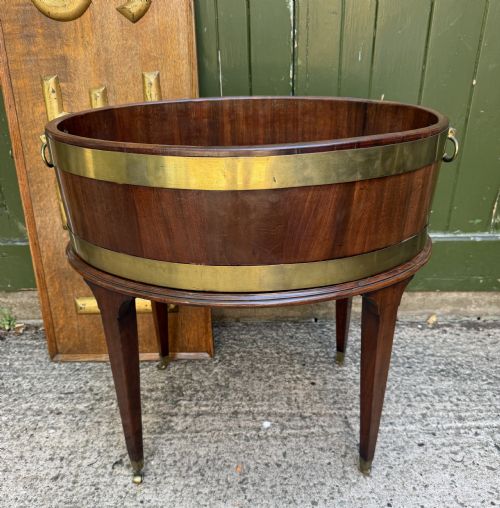
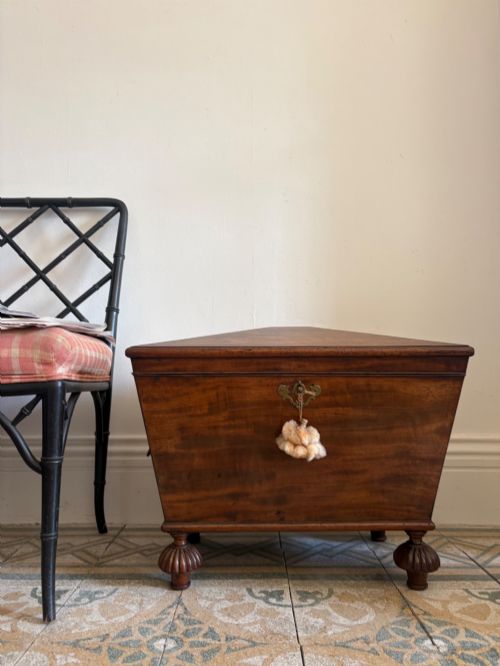
The most common formats on this page include classical sarcophagus shapes, oval or octagonal vessels on stands, and open wine coolers. Many examples date from the 18th and early 19th centuries, reflecting the high craftsmanship of Georgian and Regency cabinet makers. These pieces frequently double as jardiniere stands or cellarettes depending on their interior configuration.
Materials and Construction
Makers utilised solid mahogany, flame mahogany veneer, and occasionally walnut or Cuban mahogany to construct the bodies of these vessels. Surfaces often display rich grain patterns enhanced by decorative inlay or brass banding that secured the timber staves. Handles and paw feet cast in brass provide structural contrast and functional support.
Internal spaces required specialised linings to hold ice and melting water without damaging the timber. Craftsmen fitted these containers with original lead, zinc, or metal liners designed to preserve the wood and keep bottles cold during long dining sessions.
Several wine coolers double happily as planters, proving that formal dining vessels make remarkably dignified homes for household ferns.
Design and Execution
Quality in a period mahogany wine cooler depends upon the crispness of the cabinet work and the selection of the timber. Finely figured flame mahogany veneer and precise brass inlay separate high-tier workshop output from standard utility pieces. Architectural proportions and well-executed paw feet or stands elevate a design.
The survival of internal lead or zinc liners influences desirability among collectors. Original metal fittings and intact hardware demonstrate that a piece retains its functional integrity alongside its decorative merit.
Gillows·Wilkinson London·Thomas Hope
The Period Mahogany Wine Cooler Glossary
- Cellarette
- A lockable container used for storing and cooling bottles of wine near the dining table. They often mirror miniature sarcophagi or chests.
- Sarcophagus
- A monumental chest form with a domed or sloping lid popular during the Regency period. This shape draws inspiration from classical antiquity.
- Jardiniere
- An ornamental stand or container used to hold potted plants or flowers. Several wine coolers share this open form.
- Padouk
- A dense tropical timber with a reddish hue used in specific Regency Anglo Indian pieces. It offers exceptional durability and a distinct grain.
- Inlay
- The technique of embedding contrasting woods or materials into a solid surface to create decorative patterns. This ornament defines finer Georgian cabinetry.
Period Mahogany Wine Cooler: Frequently Asked Questions
What is a cellarette?
A cellarette is a lockable container designed to hold bottles of wine and spirits in the dining room. These vessels kept valuable vintages secure and close at hand during long meals.
Cabinet makers constructed them to match the prevailing furniture styles of the Georgian and Regency periods, often using mahogany and brass.
How were they used?
Servants filled the internal lead or zinc liners with ice and water to chill wine bottles before or during dinner service. The containers sat on the floor near the dining table for easy access.
Over time, many of these vessels transitioned into general plant stands or decorative storage chests within period interiors.
Are the liners original?
Many surviving wine coolers retain their original lead or zinc linings, which show signs of historical wear from ice and water. Finding an intact liner remains a notable feature for collectors.
Some pieces have had their internal metal linings replaced or removed entirely during later centuries of domestic use.
How to tell Regency from Georgian?
Georgian pieces often feature cleaner lines, oval or octagonal shapes, and sometimes brass banding reminiscent of Chippendale designs. They frequently rest on separate wooden stands.
Regency examples tend to adopt bolder classical forms like the sarcophagus, incorporating heavier mouldings, paw feet, and architectural proportions influenced by Thomas Hope.