

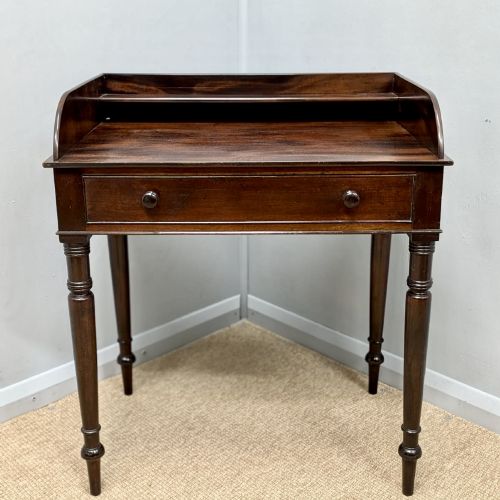
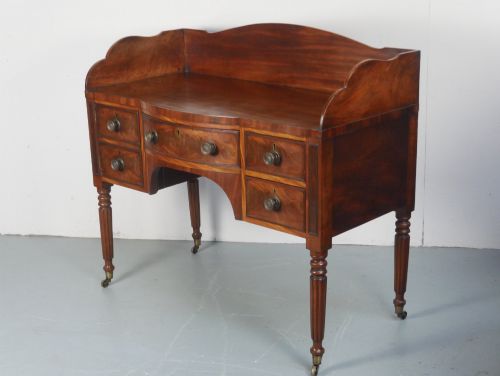
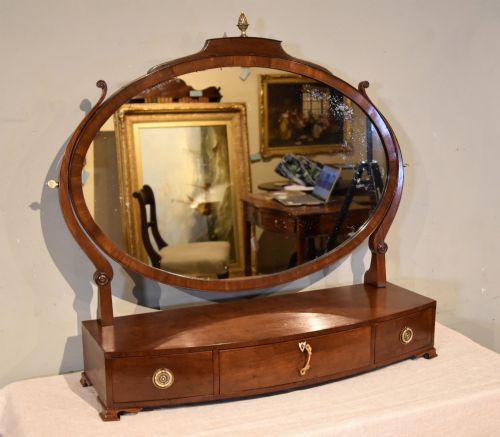
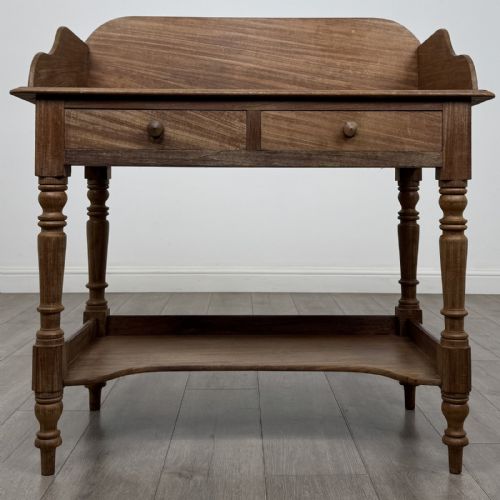




Period Mahogany Vanity Table
A period mahogany vanity table brings rich timber grain and classic craftsmanship to a bedroom.
Period Mahogany Vanity Table
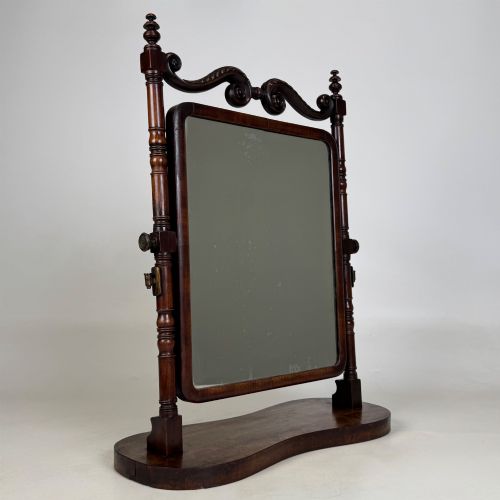
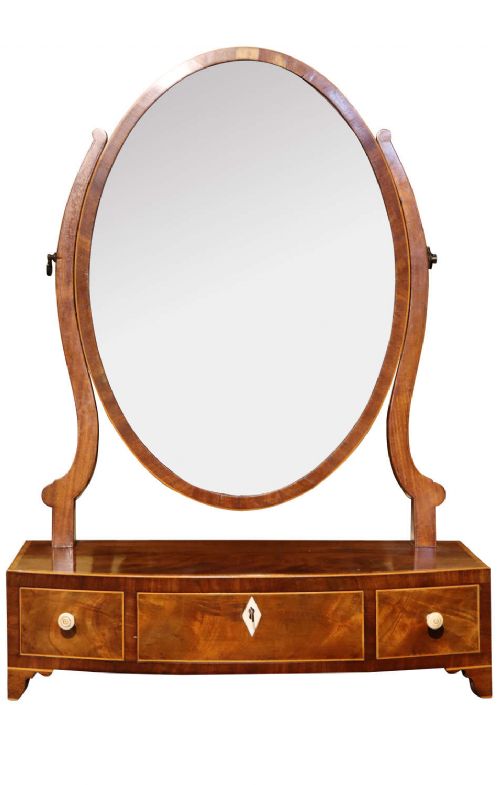
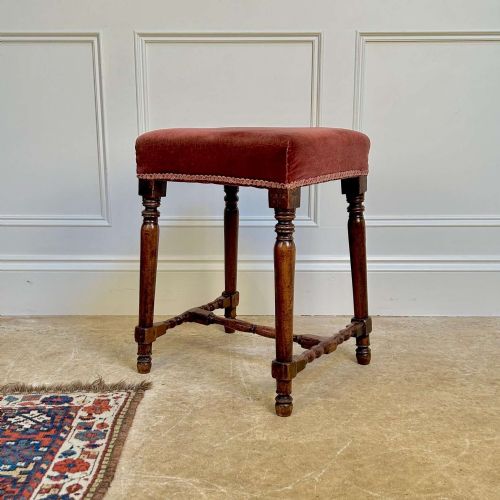
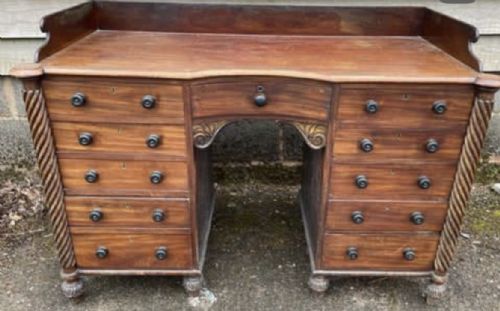
When you search for a period mahogany vanity table, you encounter a range of forms designed for grooming and personal dressing, spanning dressing tables, lowboys, and dressing mirrors. These pieces date across several historical eras, encompassing Georgian, Regency, Victorian, and Edwardian periods.
Materials and construction
Makers utilised solid mahogany and mahogany veneers over secondary timbers, frequently enhancing the surfaces with crossbanding, inlay, or marquetry. Brass fixtures, handles, and escutcheons appear across many pieces to secure drawers and support pivoting mirrors.
Joinery techniques included dovetailed drawer construction and turned or carved supports. Glass plates provided the reflective surface for toilet mirrors, while secondary elements occasionally incorporated bone or velvet details.
Period Mahogany Vanity Table Retail Price Guide 2026
Typical asking prices for period mahogany vanity table among the pieces listed under this phrase on Sellingantiques today, from the lower quarter to the upper quarter. They describe what is for sale here now, not the wider market.
Listings span the eighteenth, nineteenth, and early twentieth centuries, incorporating Georgian, Regency, Victorian, and Edwardian periods alongside styles like French Empire and Chippendale.
Judging the execution
Quality rests in the crispness of carved details, the precision of inlay work, and the structural integrity of the timber. Finer examples display carefully selected grain patterns and balanced proportions across drawers and legs.
The condition of the original mirror glass, the smoothness of drawer operation, and the presence of matching period brassware distinguish higher-grade specimens from later alterations or replacements.
The Period Mahogany Vanity Table Glossary
- Crossbanding
- A strip of veneer applied across the grain of the primary wood to form a decorative border along the edge of a table top or drawer front. This technique provides a neat visual contrast.
- Toilet mirror
- A smaller dressing mirror designed to sit atop a chest of drawers or a separate table rather than standing on the floor. These typically feature an adjustable swiveling glass frame.
- Lowboy
- A small dressing or side table with a low profile, generally equipped with one or more rows of drawers beneath the top surface. They served as compact personal tables in eighteenth-century rooms.
- Kneehole
- A desk or dressing table configuration featuring a central recess for the sitter's legs, flanked by banks of small drawers. This form allows the user to sit comfortably close to the surface.
- Marquetry
- The art of forming decorative patterns using fitted pieces of various coloured veneers. Craftsmen apply these intricate designs to table tops and drawer fronts.
Period Mahogany Vanity Table: Frequently Asked Questions
What is a toilet mirror?
A toilet mirror is a small tabletop glass housed in a pivoting frame, often mounted on a miniature set of drawers. It provided a dedicated surface for morning grooming before larger wardrobes became common.
These pieces sat comfortably on dressing chests or side tables, allowing users to adjust the angle of the glass. They remain practical for modern dressing areas.
How do I date a mahogany table?
Dating relies on observing construction methods, timber choice, and stylistic details such as leg shapes and hardware. Cabinetmakers changed their methods noticeably between the Georgian and Victorian eras.
Examining drawer linings and backboards reveals the age of the timber and the hand tools used by the maker. Comparing these traits to known historical periods clarifies the timeline.
Where were vanity tables used?
These tables belonged in private bedchambers and dressing rooms, where inhabitants kept powders, brushes, and personal documents. They functioned as private stations for morning and evening routines.
Today, they adapt easily into bedrooms or living spaces as writing desks or display surfaces. Their compact footprints suit modest spaces well.
What does a gallery surround do?
A raised gallery is a low wooden border running along the back and sides of a table top. It prevented small items like bottles and mirrors from rolling off the edge.
This practical feature also adds a neat architectural finish to the silhouette of washstands and dressing tables. It marks functional pieces designed for daily use.